
Built For Zero is an initiative created by Community Solutions that aims to “measurably and equitably end homelessness,” according to its website. It sets an achievable standard cities can work toward while addressing homelessness called “functional zero:” no more people going into homelessness at a given time than people getting housed.
The biggest advantage provided by a system like Built for Zero is the emphasis on data collection and data-driven action. Homelessness is a complex societal, medical and economic issue that oftentimes requires a myriad of smaller solutions to begin to solve the larger problem. An initiative like Built for Zero, which was launched in Northern Colorado 2019, aims to mitigate the issue in a realistic and achievable way.
A key group in addressing this issue is Outreach Fort Collins, which takes a direct approach in addressing homelessness within the city. In addition to collaborating with shelters, food banks and other resource programs, the outreach team responds to emergency calls from 8 a.m. to 6 p.m. Monday through Friday and specializes in de-escalation.
Lisa Dunworth, the community partnerships and behavioral health manager at Outreach, explained what makes the organization’s approach to homelessness unique.
“We are one of few organizations who actively find and assist people who are resource-resistant,” Dunworth said.
Annie Hill, sergeant of the Homeless Outreach & Proactive Engagement Team at Fort Collins Police Services, spoke about the unique approach Fort Collins takes toward homelessness.
“We are getting calls for service, for violations, and we’re going to address those from a police standpoint but also from a holistic standpoint on how do we get this person in a better spot than we found them,” Hill said.
Although Hill said Fort Collins has yet to hit its Built for Zero benchmark, she expressed optimism about the city’s current action.
“We’re all working in community and working together to really come up with a common solution, which is to find, you know, to get people housed, to get long-term resources and connections to people experiencing homelessness,” Hill said.
Nationwide, 14 counties have achieved this Built for Zero standard for at least one population. In Colorado, only Fremont County has achieved a zero net rate of homelessness among veteran populations.
In practice, Built for Zero’s process in assessing, assisting and assigning requires significant coordination. First responders must have the information and ability to connect homeless individuals with the resources and housing they need to succeed.
Both Dunworth and Hill highlighted the interconnectedness of Fort Collins’ programs.
“Every Monday we actually meet as a, like, community,” Hill said. “We have different representatives from natural areas, parks, code compliance, stormwater, the sustainability department — all kinds of different departments.”
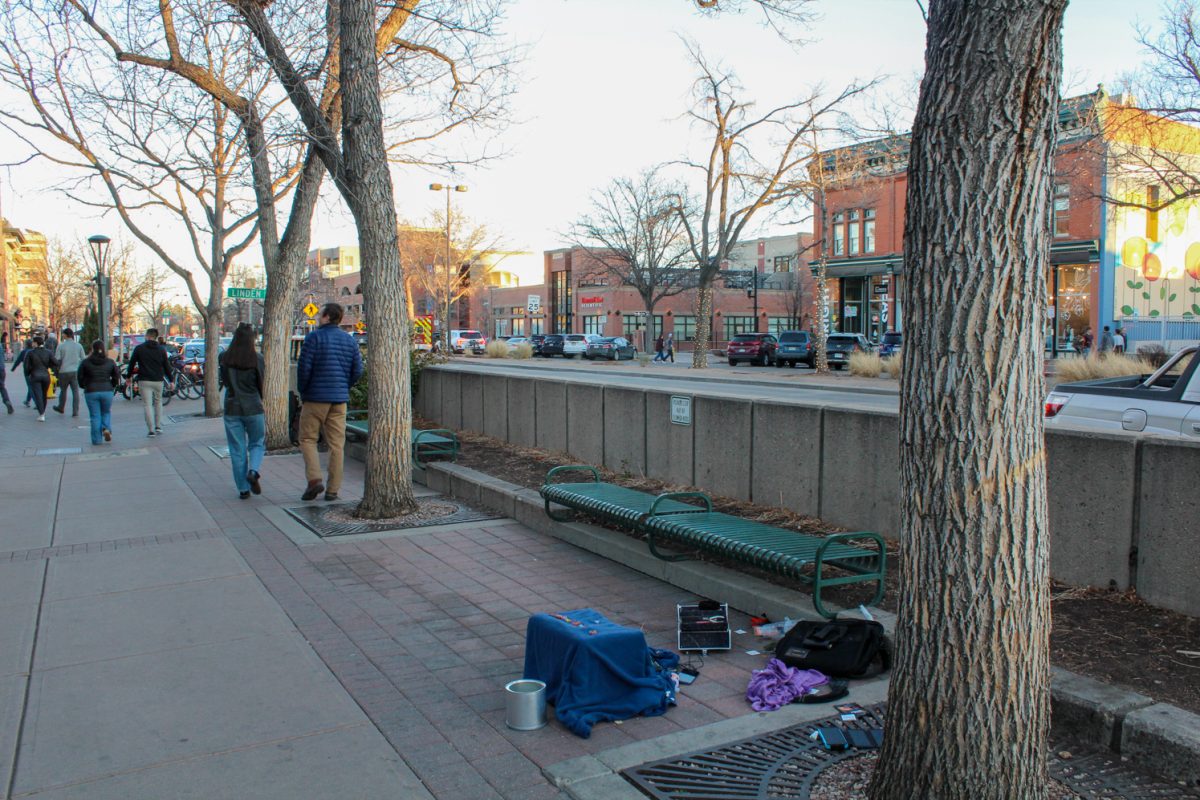
Beyond the Parks Department, businesses in Old Town, residents and tourists interact with the issue on a day-to-day basis. In a podcast by the Homeward Alliance, a local organization focused on addressing homelessness, David and Larry Rout discussed the many facets of homelessness.
“We sometimes think of it as a problem for those of us living in homelessness but even more often it’s a problem for those of us living outside of homelessness,” David Rout said.
In terms of growth opportunities within the City of Fort Collins, Hill identified a few areas for improvement.
Beyond providing shelters for people who don’t have a place to live, Hill said she hopes the city can establish infrastructure that supports what individuals experiencing homelessness already have, such as safe overnight parking.
“There’s a lot of people who, like, their car is their last thing before they’re completely on the street homeless, and keeping people in their cars is really beneficial to keep them mobile, to keep them working, or whatever it may be,” Hill said.
Dunworth also expressed a desire for a wider range of services to be provided by the city.
“There is need in places outside of where we currently serve,” Dunworth said.
Larry Rout said seeking a solution to such a complex issue is difficult, but it is also deeply necessary for both the people of Fort Collins and those experiencing homelessness.
“Studies have consistently shown that it is cheaper to solve homelessness than to manage it,” Larry Rout said.
Infrastructure like that proposed by Hill would go a long way toward providing stability and saving taxpayer dollars. With the Built for Zero standard and constant work across Fort Collins, efforts will continue to mitigate this important and controversial issue. Achieving it will require hard work, dedication and community involvement.
“Built for zero is not a one agency thing; it is a community effort,” Dunworth said.
Reach Ella Dorpinghaus at news@collegian.com or on social media @RMCollegian.