

Love is universal, but how it’s expressed varies deeply across cultures. While Valentine’s Day is often associated with romantic dinners, roses and chocolates, looking beyond a singular tradition reveals that love is far more expansive than a single day or gesture. Across the world — and within Colorado State University’s campus community — love shows up through language, family bonds, community care and meaningful action. Through listening to students from different cultural backgrounds, we can better understand how love is shaped by history, values and a collective identity.
In places such as the United States and parts of Europe, Valentine’s Day centers on romantic relationships. Couples exchange gifts, cards and flowers, while restaurants become busy hosting candlelit dinners. Over time, however, the holiday has expanded to include friendships, self-love and family, reflecting a broader understanding of what love can mean. This shift highlights growing recognition that love is not exclusive to romance, but instead something that exists in many forms.
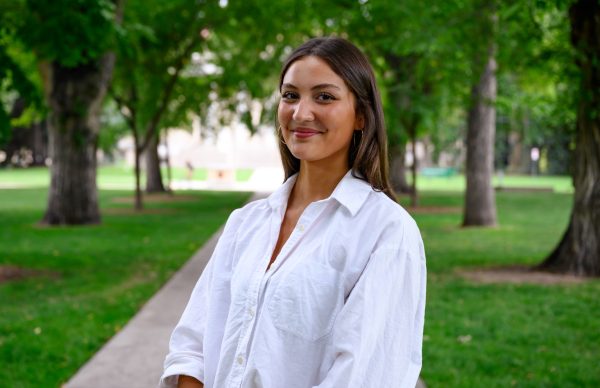
For many people in Hispanic and Latinx/é cultures, love often goes beyond romance and is deeply rooted in language and family. Melanie Palma-Perez, a CSU senior majoring in human development and family studies, explained how simple words carry layered meanings of affection.
“‘Te quiero’ translates directly to ‘I love you,'” Palma-Perez said. “‘Te quiero’ is more like, ‘I care about you; you mean a lot to me; you hold significant value to me.'”
She also emphasized how love within Hispanic cultures often begins at home.
“Family love is really big in Hispanic culture,” Palma-Perez said. “I think prioritizing family above all else is really common, which I think is beautiful.”
Familial love is often steady and enduring, built through presence, loyalty and shared responsibility rather than grand displays. This form of love emphasizes emotional closeness and long-term commitment, showing that affection does not always need to be loudly expressed to be deeply felt.
In Native American culture, love is often understood as inclusive and lifelong. Gabby Freemont, a student connected to the Native American Cultural Center on campus, described love as something that transcends bloodlines.
“We love all,” Freemont said. “Our family is blood or not. We are forever going to love that person.”
This perception highlights love as commitment to community and connection as something that is chosen, protected and honored over time. Rather than being transactional or temporary, love in this context is grounded in respect, responsibility and mutual care for one another.
In some Asian and Pacific Islander cultures, love is expressed less through verbal affirmation and more through action and shared experience. Joshelle Tul-id, a student from the Asian Pacific American Cultural Center at CSU, explained how love in the Philippines centers on community rather than individual expression.
“In the Philippines, we are very community-centered,” Tul-id said. “We are very collective, so love is shared less through words and more through food, celebration and being there for each other in a way that’s productive.”
Nicole Vicente echoed this statement, emphasizing how love often appears through effort and generosity.
“There are a lot of acts of service and a lot of big gestures in the Philippines like singing a song outside your window, cooking you a huge feast or going out of your way, like, consistently,” Vicente said.
Traditions like these show how love can be demonstrated through time, labor and intention rather than constant verbal affirmation. In these cultures, showing up for someone — whether physically or emotionally — carries more weight than simply saying the words “I love you.”
Across cultures, one thing becomes clear: Love is not limited to only be showcased on Valentine’s Day. Whether expressed through language, family devotion, community care or acts of service, love is woven into daily life. Valentine’s Day may offer a moment to pause and reflect, but the love itself is ongoing — found in shared meals, chosen families, quiet sacrifices and the ways people show up for one another every day.
Reach Gigi Young at life@collegian.com or on social media @RMCollegian.