
With temperatures soaring up to 78 degrees in areas of Colorado in February, it’s become increasingly clear this is not the winter climate residents are used to.
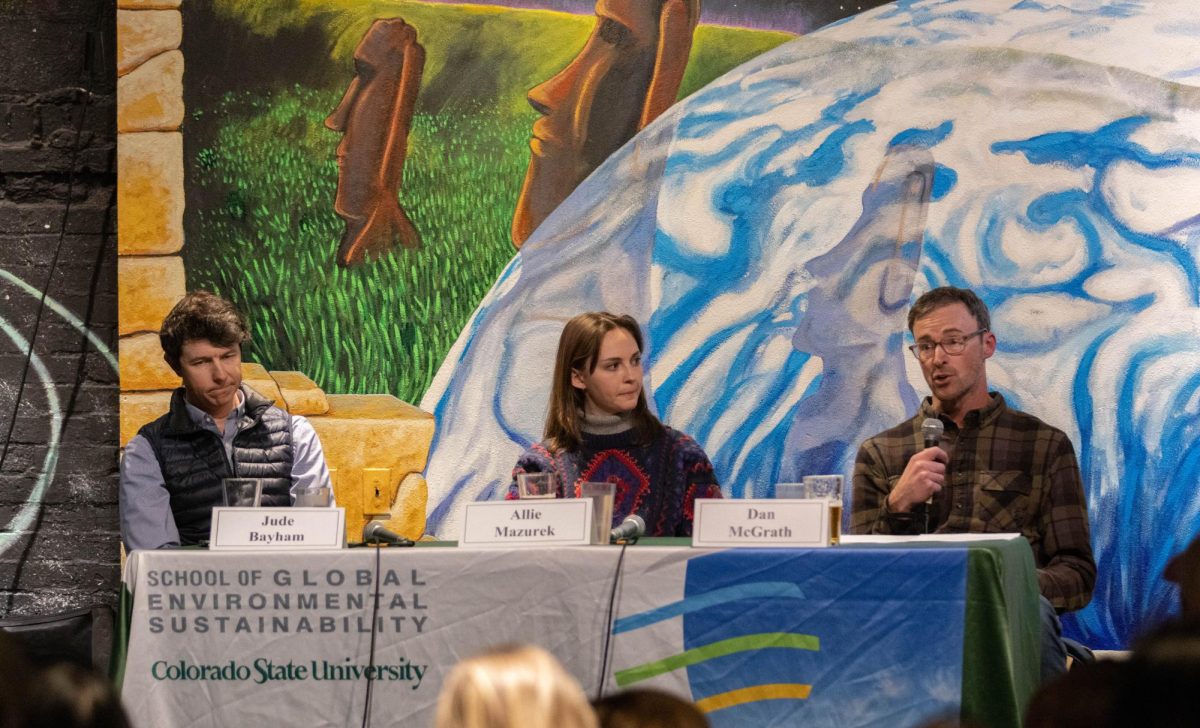
This season’s low snowpack affects all Coloradans, regardless of how they may interact with the snow on a daily basis. Fort Collins community members gathered at Avogadro’s Number Feb. 11 to ask experts Jude Bayham, Allie Mazurek and Dan McGrath questions about Colorado’s climate.
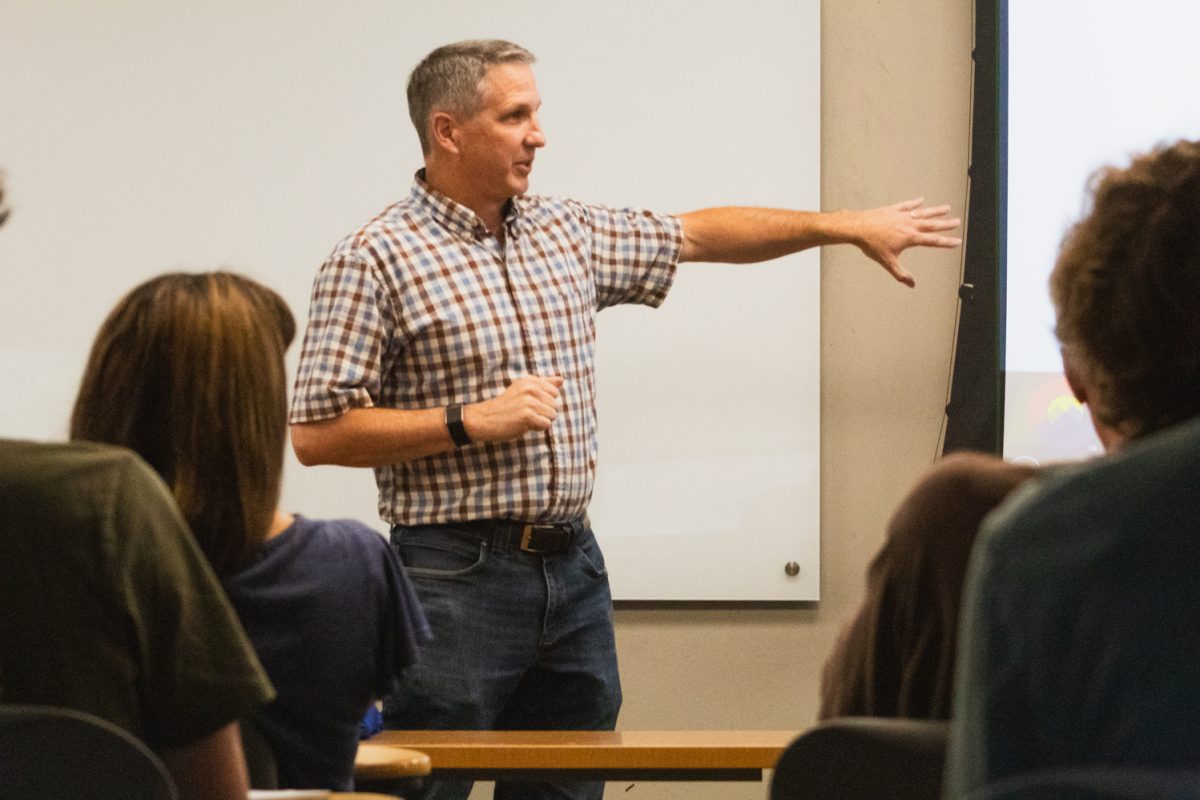
“Snow is such a critical resource in the Western U.S.,” said McGrath, an assistant professor of geosciences at CSU. “Approximately 50% of the runoff comes from snow melt, and in the mountainous regions of the west, that number increases to more than 70%.”
Low snowpack means low water levels throughout Colorado, especially as warmer seasons approach. This leads to alarmingly low rivers and reservoirs. Research published in 2021 predicts there will be about 25% less snow in the Western United States by 2050.
“We already see that the largest reservoirs in the Western U.S., Lake Mead and Lake Powell, are at historic lows,” McGrath said. “They’re at 34% and 25% of their capacity at present.”
“A lot of the towns around these ski resorts that thrive on winter tourism, the businesses in those towns, the restaurants, retail shops and things like that will also suffer from lower visitation (and) probably lower sales.” –Jude Bayham, agricultural and resource economics associate professor
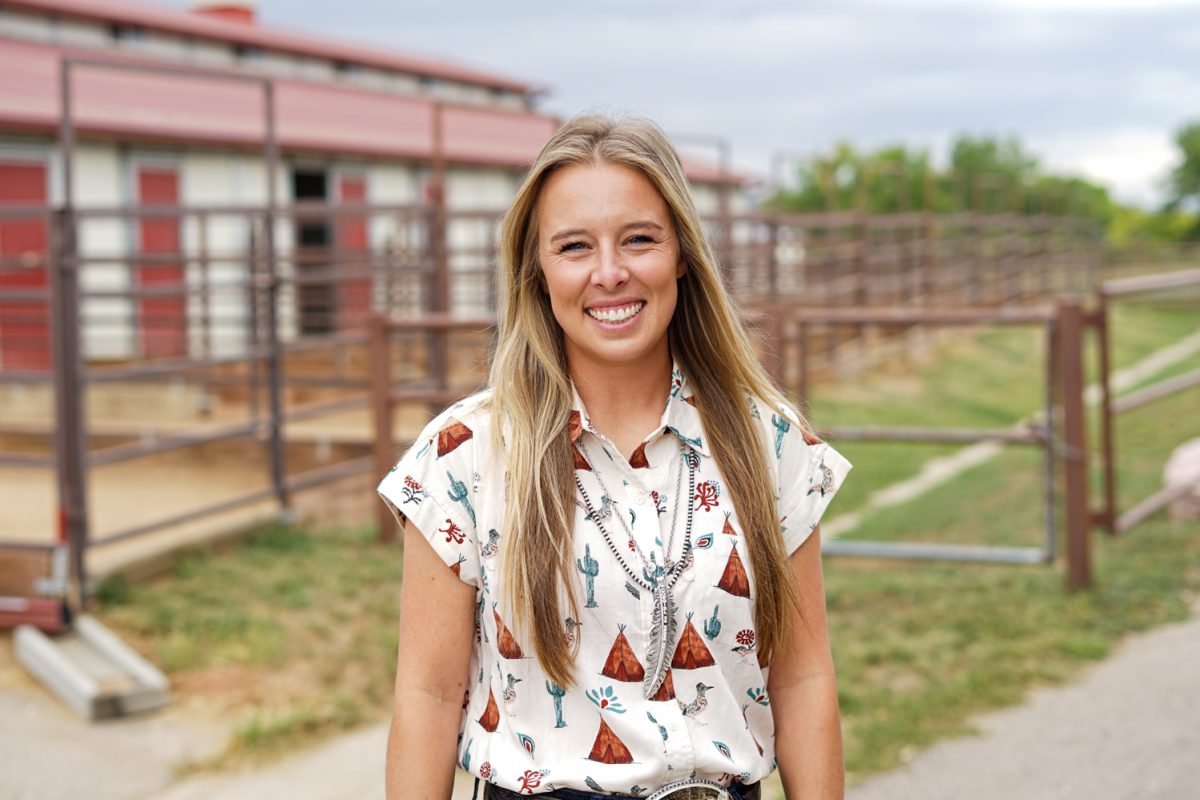
The United States is currently experiencing a La Niña climate pattern, which is likely part of the reason this is a dry year, said Allie Mazurek, an engagement climatologist at the Colorado Climate Center.
“We’re kind of under this high-pressure ridge that sort of keeps all of the moisture either to our west, out towards California, or the storm systems have passed too far to the north or to the east,” Mazurek said. “Because we’ve just been sitting in this constant pattern, we’ve missed out on a lot of the precipitation.”
As temperatures rise and oceans warm, more drastic natural events will occur. Extreme snowstorms in parts of the globe and prolonged dry spells in other regions are a result of this phenomenon.
“More dramatic events, some more extreme events, and that’s what we’re seeing — these droughts are extreme,” said Gene Kelly, deputy director of the Colorado Agricultural Experiment Station and professor of pedology. “I think the mistake we made was that we didn’t know how bad it was going to be.”
This issue bleeds into the economy as well. Lower snowpack impacts agriculture and crop output as well as the number of tourists that visit ski towns such as Vail, Winter Park and Breckenridge, among many others.
“A lot of the towns around these ski resorts that thrive on winter tourism, the businesses in those towns, the restaurants, retail shops and things like that will also suffer from lower visitation (and) probably lower sales,” said Bayham, an associate professor of agricultural and resource economics.
Diminished snowfall affects more than just winter ski towns; it plays a role in summer activities as well.
“(It) can have impacts on recreation, fishing and river rafting,” Bayham said. “Those types of activities and the communities that are dependent on those activities may experience impacts.”
Although there is an overarching trend of diminishing levels of snow, this year is not necessarily an outlier. Reports refer to record lows occurring decades prior to 2026.
“This is a very low year, but perhaps not the lowest,” McGrath said. “1976, 1977, 1980 and 1981 are commonly the lowest in the record, but we’re generally No. 2 or 3.”
This evidence provides an optimistic outlook for the upcoming winter seasons. While experts cannot predict future snowpack with certainty, this variability leaves room for the years ahead to exhibit higher snow levels.
“In the last 50 years, we have seen a couple scenarios where it’s been (similar to what) we’re seeing this year, so I don’t know, that maybe gives me the tiniest bit of hope and maybe it will give other people hope as well,” Mazurek said.
Reach McKenna Van Voris at science@collegian.com or on social media @RMCollegian.