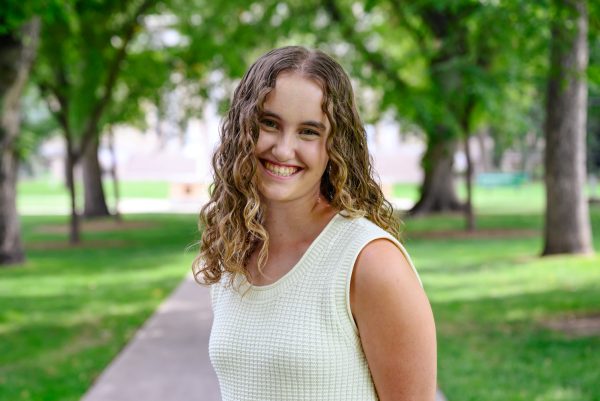

For Kalliopi Monoyios, Denver-based artist and former scientific illustrator, inspiration came from comparing the contents of her compost and garbage canisters — a stroke of intrigue that would lead to her being named the first artist-in-residence at Colorado State University’s Spur campus.
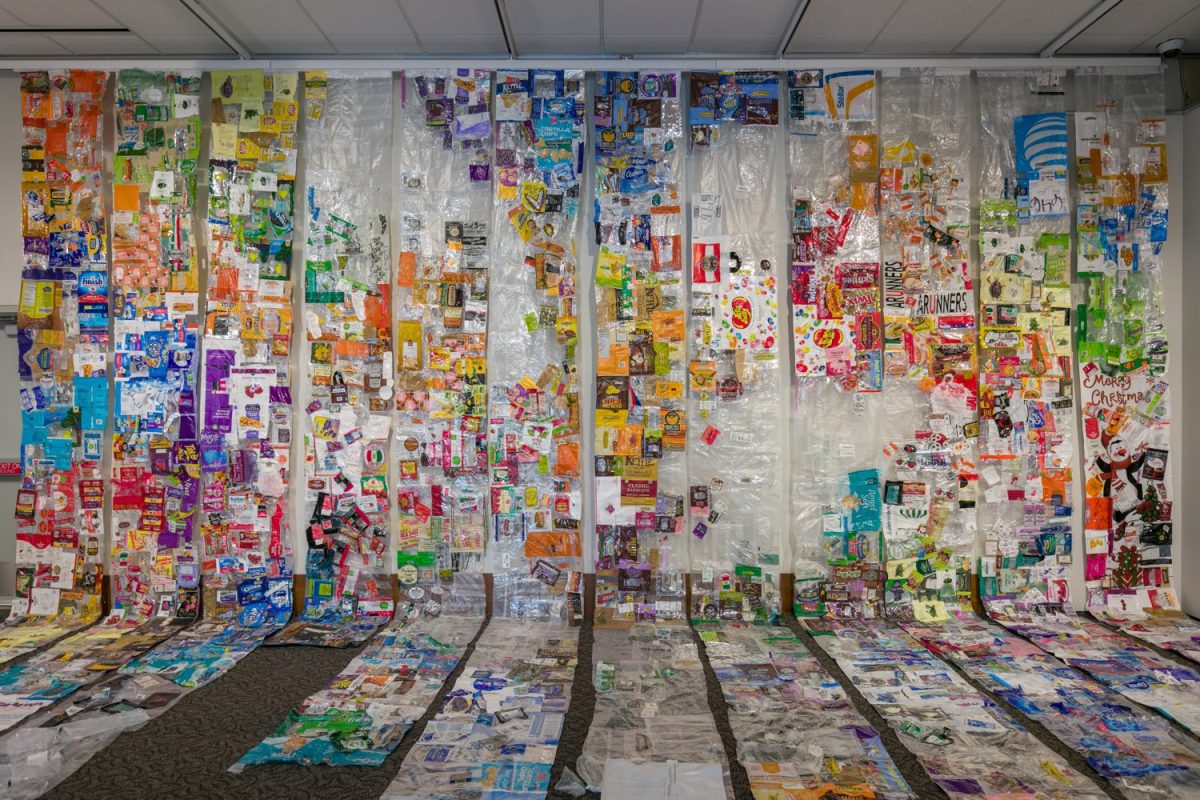
Noticing her garbage can was filled with mostly single-use plastics after Denver began its weekly composting service, Monoyios began to wonder, as she said, “If my trash can was filled with that much plastic packaging, I thought, gosh, what does everybody else’s look like?”
Thus began the theme of her work, which centers on exploring the extreme levels of plastic and single-use waste created by the American society and the societal systems that reinforce disposable products.
“My work right now is focused on American consumerism and how complex and nuanced our relationship is to things, and since most of the things that we use these days are plastic, that is a big part of the conversation,” Monoyios said.
While she said she grew up making art her entire life, Monoyios graduated from Princeton University with an undergraduate degree in geology, and found work at the University of Chicago as a fossil preparator under Neil Shubin, who encouraged her to pursue an interest, and eventual career, in science illustration — a field that revealed to her how science and art could blend together.
“I worked with him for over a decade, and that’s kind of where I learned that art can be a tool to bridge really technical, cutting-edge science, to bring it to the people who may be interested in science, but maybe not the super technical part,” Monoyios said.
Her collection “Patterns of Consumption“ aims to explore the physical volume of waste our society produces by using a variety of objects and materials, including some rescued from the trash, ranging from plastic packing and tape to discarded electric cord and Teflon-based dental floss.
“I am interested in pulling objects that are emblematic of planned obsolescence,” Monoyios said. “For example, I’ll take all the cords that come from devices. … Every time you swap out a computer, you also have to get a whole new set of chords.”
While these items are still fully functional, they are often discarded due to changing technology designs, trends or regulation changes.
“They still work, right? It’s just that we’ve moved the goal posts,” Monoyios said. “So my point is, how much utility are we throwing away on a daily basis, or how much utility are we throwing away because Apple tells us to, right? And with that comes bigger questions. How much money are we throwing away, right? … Where does this stuff go?”
She hopes when the public interacts with her work, which has previously been displayed at the Littleton Museum and Art Students League of Denver, they consider both their own actions and the systems that have led to waste being normalized.
“I get so much hope from the interactions that I’ve had around my art because I try to approach my art in a nonjudgmental way; we are all part of these systems,” Monoyios said. “We did not choose them personally, so we don’t have to feel guilty about them. We can look personally for different ways that we can be less impactful, and that’s great.”
The first to hold the title, she will continue working toward this goal during her residency at CSU Spur, which began this month and will run through Sept. 30. The program was created to help translate the facility’s research to the public through art, explained Lauren Bína, CSU Spur campus activation manager.
“The goal is to translate complex research, especially in areas like food, water and health, into creative, accessible experiences that resonate with a wide range of audiences,” Bína said.
The position’s search committee was composed of educators, CSU leadership, researchers and art professionals, who were searching for someone who could integrate into the campus’ interdisciplinary environment. Under these conditions, Monoyios’ perspective and artistic angle stood out during the search.
“She stood out for her ability to translate complex ideas into engaging, hands-on experiences,” Bína said. “She was thoughtful about audience engagement across ages, especially with students, and had a clear vision for how her work could evolve through collaboration with researchers. There was also a strong sense of curiosity and openness in her approach, which is essential for this kind of residency.”
Monoyios will be working out of The Shop, located in the Hydro building at Spur, which features The Makerspace, where her studio will be. As a public-facing role, she will also work with both the public who visits the campus and organizations within the facility, including researchers from the Colorado State Forest Service’s Urban and Community Forestry Hub.
“This partnership gives the artist direct access to ongoing research and initiatives related to urban forestry across Colorado,” Bína said. “That includes everything from tree canopy equity to climate resilience and community-based forestry efforts.”
Monoyios’ studio will be located near UCFH’s Research Grove, a collection of trees designed to help measure their conditions in an urban environment. As Jon Martin, Forestry Hub research scientist at Spur explained in an email-based interview, exposing residents to trees can have several benefits that will hopefully enhance Monoyios’ art.
“Tree canopy supports mental wellness, urban wildlife and buffers noise,” Martin said. “Acquainting residents with tree ecosystem services helps to build on an inherent and shared appreciation that almost all people have for trees by growing investment and commitment to the most important and costly aspect of urban forestry: stewardship.”
As Monoyios begins her tenure at Spur, she encourages anyone visiting the facility to stop by and find her.
“I’m just really excited to be at CSU Spur — my happy place is working with scientists and the public both,” Monoyios said. “So there’s a lot of amazing, amazing work being done.”
Reach Katie Fisher at entertainment@collegian.com or on social media @RMCollegian.