

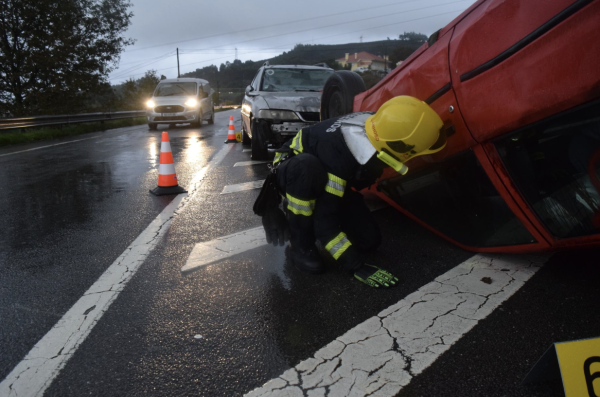
 The light turned green. Sarah clipped in, pushed off from the curb at Broad and Spring, and made it halfway across the bike lane before the sedan turning left never looked her way. She had time to think not again — this was mile eleven of an easy recovery ride — and then the impact folded her Trek against the passenger door. Hip, shoulder, pavement. The driver stood over her asking if she was okay. She sat up, tested her wrist, said yes because her heart rate was still 140 and adrenaline floods judgment.
Three days later her right hip hurt too much to tie her shoes. The half marathon she’d registered for eight months earlier was four weeks out. The ER had cleared her spine, stitched a road-rash patch on her forearm, told her to follow up if anything changed. Everything had changed.
Collision injuries wreck more than cars. For the runner training for Boston, the climber who drives two hours every Saturday to the crag, the rec-league player with Tuesday-night commitments and a carefully periodized program — a T-bone or a rear-end doesn’t just cost you a bumper. It costs you the season. And the insurance adjuster on the other end of the phone has never heard of a taper week.
According to NHTSA data, adults aged 18–44 account for nearly 40% of all occupant injuries in reported crashes nationwide, a demographic that overlaps heavily with recreational athletes and weekend warriors. The ER sees the fractures and the concussions. It doesn’t see the lost marathon entry, the forfeited coaching fees, or the fact that your VO₂ max is about to drop off a cliff while you sit on the couch icing a lumbar strain that wasn’t supposed to be there.
What Happens to Your Body When a Car Meets an Athlete
The physics are unforgiving. A 3,500-pound sedan hitting a cyclist at 25 mph delivers force the human skeleton isn’t built to dissipate, no matter how many squats you can do. Runners get clipped crossing to trailheads and land on hips that were already managing IT-band tension. Pickup-basketball players take a rear-end on the way to the gym and add whiplash to a neck that’s been tolerating overhead pressing for years. The body that was fine-tuning power output last week is now trying not to tear further when you roll over in bed.
Whiplash is the obvious one — sudden deceleration snaps your head forward and back, straining cervical ligaments and the small stabilizers that hold your spine in place during a deadlift or a box jump. For someone who’s been loading their neck under a barbell, that same tissue is now compromised at the worst possible time. Shoulders take it too, especially in cyclists who brace against the handlebars on impact. The labrum can tear, the rotator cuff can fray, and none of it shows on the X-ray the ER tech shot while you were still in shock.
Hip and pelvis fractures end running streaks. A crack in the acetabulum — the socket that holds your femur — might not displace, might not need surgery, but it will sideline you for six to eight weeks minimum. For someone who runs 40 miles a week, that’s not just rest. That’s detraining, muscle atrophy, and a cardiovascular base you spent six months building now evaporating faster than you can track it.
The other problem is lag. You walk out of the ER feeling sore but stable, and 48 hours later you can’t lift your arm past your shoulder or extend your knee without a hot wire of pain shooting up your quad. Adrenaline is a liar. It keeps your blood pressure normal, your breathing controlled, your pain tolerance high enough that you downplay the mechanism of injury to the triage nurse. Then the inflammation sets in. Swelling compresses nerves, hematomas stiffen, and the tissue that looked fine under fluorescent lights is now shouting.
Baseline fitness masks damage. Your resting heart rate is 52 bpm because you’ve been training. Your blood oxygen doesn’t dip even though you’re compensating for a rib injury by breathing shallow. The ER clears you because your vitals are rock-solid, but vitals don’t catch a partial ligament tear in your knee or early compartment syndrome brewing in your lower leg after the airbag pinned your shin against the center console.
The First 72 Hours — ER, Imaging, and the Diagnostic Gap
Triage priorities in a collision case are spinal clearance, internal bleeding, fracture survey. They will C-collar you, run a CT if there’s any question about your head, chest, or abdomen, and shoot plain films of anything that hurts when they palpate it. If nothing is broken and nothing is bleeding, you get discharge instructions: rest, ice, NSAIDs, follow up with your primary care provider if symptoms worsen. That protocol saves lives. It does not diagnose a meniscus tear.
Standard ER imaging is built for high-acuity trauma, not for the stuff that ends your season. X-rays catch fractures but miss soft tissue. A CT will show you a bleed or a vertebral fracture but won’t tell you that your MCL is stretched, your hip labrum is frayed, or that the rotator cuff you’ve been carefully strengthening for two years just partially tore when you braced against the door frame. MRI and ultrasound come later, if you’re lucky and your insurance approves them before the adjuster tries to close your claim.
Compartment syndrome is the nightmare scenario for someone with developed leg musculature. The fascia that wraps your calf or forearm doesn’t stretch. If bleeding or swelling raises the pressure inside that compartment faster than it can vent, you get ischemia, nerve damage, and permanent functional loss if it’s not caught in the first 12–24 hours. The ER will measure compartment pressure if they suspect it. If you walk in under your own power and your foot still has a pulse, they might not think to check — and by the time you come back two days later unable to dorsiflex your ankle, the window has closed.
Follow-up imaging changes the diagnosis more often than anyone wants to admit. You go back to your orthopedist a week later. They order an MRI because your shoulder still won’t abduct past 90 degrees. The report comes back: partial-thickness supraspinatus tear, AC joint separation, probable labral involvement. None of that was on the ER film. All of it matters if you’re trying to press a barbell or swim a mile without your arm going numb.
Documentation starts here. Keep every report, every image file, every discharge summary, even the ones that say “no acute findings.” When you eventually sit down with counsel — experienced personal-injury attorneys, including those who handle complex collision cases like a Wilson PC Chicago car accident lawyer, will tell you this — seemingly minor soft-tissue findings at Day Three can become the linchpin of a claim when they’re the reason you couldn’t compete six months later. The insurance company will argue you were never that hurt. Your MRI report, dated four days post-collision, says otherwise.
Why “Rest and Ice” Isn’t a Recovery Plan for Active Bodies
The discharge paperwork says rest for 7–10 days, ice 20 minutes every few hours, take ibuprofen as needed, avoid strenuous activity. That advice works if your baseline is a desk job and a dog walk. It does not work if your baseline is a 90-minute trail run on Saturday mornings or a 5×5 squat program that’s been running for sixteen weeks.
Rest is not the same as strategic deload. Active bodies are adapted to load — your tendons are stiffer, your bones are denser, your proprioceptors are tuned to catch you when you stumble on a root. Telling someone who trains six days a week to sit still for two weeks doesn’t just slow healing. It starts a detraining cascade. VO₂ max begins measurable decline after 10–14 days of inactivity. Muscle cross-sectional area shrinks. The athlete who could deadlift 315 pounds three weeks ago will struggle with 275 after a month on the couch, and the struggle isn’t just strength — it’s neuromuscular coordination, proprioception, and confidence under load.
Sports-focused rehab is different. A good physical therapist who works with athletes will start you on pain-free range of motion the day after the collision if it’s safe, progress you to isometric holds, then eccentric loading, then sport-specific drills. Plyometrics come back in phases. Proprioception work — single-leg balance on unstable surfaces, eyes closed if your vestibular system wasn’t concussed — rebuilds the feedback loops that keep you from re-injuring the joint when you plant and cut.
Chiropractic and soft-tissue work can help if they’re part of a plan, not a substitute for one. Active-release therapy and instrument-assisted massage can break up adhesions in a strained hamstring faster than ice alone. Chiropractors who understand collision biomechanics can address rib subluxations or thoracic restrictions that limit your ability to rotate through a golf swing or reach overhead in a snatch. But if your neck hurts because you have a herniated disc compressing a nerve root, no amount of adjustment will fix it, and delaying an MRI to “see if this works” just extends your timeline.
The best outcomes happen when your providers talk to each other. That means finding a clinic or a network where the DC, the PT, and the referring physician coordinate imaging, manual therapy, and rehab rather than siloing their work. Facilities that serve active patients — like an Atlanta accident injury clinic with providers who understand athletic recovery timelines — can often fast-track imaging and integrate treatment in a way that treats collision injuries as dynamic, not static. The desk-job model assumes you heal in one direction. The athlete model assumes you heal toward a performance target, and the plan has to account for it.
The Hidden Cost — Losing Fitness While You Heal
Detraining is brutal. Cardiovascular adaptations reverse faster than they built. After two weeks off, your VO₂ max drops by roughly 4–6%. After a month, you’ve lost measurable capillary density in your working muscles, and your lactate threshold — the pace you used to hold for an hour — now breaks you in twenty minutes. Strength holds a little longer, but not much. Muscle protein synthesis slows when you stop loading the tissue. Atrophy starts in the first week. By week three, you’re looking at 5–10% loss in the muscles you aren’t using, and if one leg is immobilized, the asymmetry only gets worse.
Proprioception decays faster than most people realize. Your ankle doesn’t just hold you upright; it senses micro-adjustments a hundred times a second when you run on uneven ground. Four weeks in a walking boot, and that joint has forgotten how to talk to your brain. The first trail run back, you’ll roll it on a rock you would have cleared without thinking two months ago. Rehabbing proprioception is slower than rehabbing strength.
The psychological toll is real and it’s not soft. If you’ve built your identity around racing, around training partners who text you on Sunday mornings, around the dopamine hit of a tempo run executed to pace — losing that for two months feels like losing a language. You watch your team compete without you. You watch your race-day weather turn perfect while you sit on the couch with an ice pack on your hip. The term “loss of enjoyment of life” sounds like legal boilerplate until you’re the one living it.
Insurance friction makes it worse. Many policies cap physical therapy at 20–30 visits per year. If you need twice-weekly PT for three months to get back to pain-free running, you’ll burn through that cap before you’re cleared. And if your PT is writing notes that say “patient tolerated single-leg box step-downs without compensation,” the adjuster will read that as “patient is fine” and start pressuring a settlement. The reality is that tolerating a step-down and running a 10K without limping are not the same thing, but the insurance company doesn’t bill for the difference.
Building a Legal and Medical Paper Trail That Protects Your Comeback
Everything that happens in the first month after the collision becomes evidence. The police report establishes fault. Witness statements corroborate mechanism of injury. ER records document acute findings. Follow-up imaging changes the narrative when the first X-ray missed it. Every PT session, every chiropractic note, every follow-up with your orthopedist — those are not just treatment. They’re proof.
Active plaintiffs need to articulate functional losses with specificity. “I have general discomfort” loses to “I cannot complete a long run past six miles without sharp pain in my right hip that radiates into my groin and forces me to walk.” The second version maps to a diagnosis. It also maps to a training plan you can’t execute, races you can’t run, and a baseline you haven’t returned to. The adjuster wants vague. You need concrete.
Keep a training log if you weren’t already. Write down what you could do the week before the collision: mileage, lift numbers, pace, how you felt. Write down what you can do now. Write down every appointment, every imaging study, every week you couldn’t train. Save your race registrations, your gym membership records, your Strava exports if you use them. If you had a coach, keep the invoices and the programming notes that show what you were building toward.
What to keep:
- Police report and witness contact information
- ER records and all discharge summaries
- Imaging reports (X-ray, MRI, CT, ultrasound)
- Every PT session summary and home-exercise handout
- Appointment summaries from orthopedics, neurology, chiropractic
- Training logs, race registrations, entry-fee receipts
- Coaching contracts or programming plans
- Gym membership records or team fees
- Mileage or workout data from apps (Strava, TrainingPeaks, Garmin Connect)
What to avoid:
- Social media posts where you “look fine” or are smiling at a team event you attended but didn’t compete in
- Strava uploads of short test runs that make it look like you’re back to normal volume
- Downplaying pain in casual texts or posts (“just a little sore, no big deal”)
- Telling the adjuster you’re “doing better” before you’re actually cleared to return to sport
The claims adjuster’s favorite move is to argue that if you’re fit, you can’t be hurt. They’ll pull your Instagram, find a photo of you at a 5K start line where you were cheering for your teammate, and claim you were competing. They’ll see you posted a 3-mile shakeout run at 9:30 pace and ignore the fact that your normal easy pace is 7:45 and you had to stop twice because your hip locked up. Context disappears in their hands. Don’t give them the ammunition.
Returning to Training Without Reinjury — or Tanking Your Claim
A smart comeback is phased. Start with pain-free range of motion. If your shoulder will go overhead without a stab, you can start scapular stability work. If your knee will flex and extend without swelling, you can begin isometric quad sets. Load tolerance comes next: can you hold a plank without your back spasming? Can you stand on one leg for 30 seconds without your ankle giving out? Then you add volume. Then intensity. Then sport-specific stress.
The trap is feeling good and jumping back to 100%. You go out for a run at your old easy pace, you feel fine for four miles, and on mile five something deep in your hip pulls and now you’re back on the couch for another two weeks. Compensation injuries are common when you return too fast — you favor the injured side, overload the other, and suddenly your good knee or your good shoulder is trashed because it’s been covering for the bad one.
Posting race results or PRs mid-claim is a minefield. If you run a half marathon six weeks post-collision and finish strong, the insurance company will use it to argue you’re fully recovered, even if you’re running on residual fitness and gritting through pain that’s going to flare for three days afterward. The nuance is that staying active within medical limits is good — your doctor probably wants you moving, wants you rebuilding, wants you maintaining some base. But there’s a difference between “I jogged two miles easy and felt okay” and “I raced a 10K and posted a season best.” One is rehab. The other is evidence you’ll regret.
Your providers should be clearing each phase. Your PT should sign off before you go back to plyometrics. Your orthopedist should clear you before you return to contact or high-impact sport. If you jump the gun and re-injure, you extend your timeline and complicate your claim. Patience now means racing later. Impatience now means watching from the sidelines again in three months.
When to Lawyer Up — and What to Ask
The threshold is lower than most people think. If you’ve missed more than two weeks of training because of collision injuries, talk to an attorney. If imaging shows structural damage — fractures, ligament tears, disc herniations — talk to an attorney. If the other driver’s insurer is calling you three days post-collision offering a quick settlement that “covers your medical bills,” do not sign anything until you’ve talked to an attorney. If your own policy is capping PT visits before your orthopedist has cleared you to return, you need someone who can fight that.
Personal-injury attorneys in collision cases usually work on contingency, meaning the consult costs nothing and they only get paid if you win. The question is whether they understand cases where lost athletic function is part of the damages. Not every PI shop does. Ask:
- Have you handled cases where the plaintiff’s primary damages included loss of ability to compete or train?
- Can you work with sports-medicine providers who bill outside standard networks or who use modalities insurance doesn’t always cover?
- Have you won settlements that included future race-entry fees, coaching costs, or adaptive equipment when the plaintiff couldn’t return to their prior level?
- What does your process look like for documenting non-economic damages like loss of enjoyment when the plaintiff is young, employed, and doesn’t fit the “disabled” box?
If the attorney’s first question is “How much work did you miss?” and they don’t ask about your training history or your race schedule, keep looking. The right lawyer will understand that for an active plaintiff, losing a season is not trivial. The wrong one will plug your case into a formula that assumes your real damages are medical bills plus three days of sick leave.
What a Settlement Should Actually Cover
A fair settlement has layers. Past medical expenses are the floor — every ER visit, every imaging study, every PT session, every specialist consult. Future medical expenses come next if your injuries require ongoing care: more PT, follow-up MRIs, injections, possible surgery down the line. Lost wages if you missed work. Property damage for your bike, your car, your gear that was destroyed.
Then come the non-economic damages, and this is where active plaintiffs get shortchanged if they’re not careful. Loss of enjoyment of life is a real category, but insurers lowball it unless you make them see it. For an athlete, loss of enjoyment means the Ironman entry you forfeited, the $600 you spent on coaching and a training plan you couldn’t execute, the rec-league season you sat out, the trail races you can no longer safely run because your ankle won’t hold on technical descents. It means the fact that your social life was built around Sunday long runs with a crew, and now you can’t keep up.
Document it with specificity. Show the race-entry receipt. Show the email where you told your coach you had to pause programming. Show the texts where your teammates asked when you’d be back and you didn’t know. The adjuster will argue that you can still enjoy life — you can still walk, right? The response is that your baseline wasn’t walking. Your baseline was 50 miles a week and a 3:15 marathon PR you were chasing, and now you’re cleared for 15 miles a week if your hip doesn’t flare. That gap is the damage.
Future diminishment matters too. If you’re 28 and your collision injuries gave you post-traumatic arthritis in your knee, you’re looking at a joint that will degrade faster than it should have. You might never run another marathon. You might need a knee replacement at 50 instead of 70. That’s not speculative; that’s a known sequela of intra-articular injury, and it belongs in your settlement demand.
The Long View — Chronic Pain, Early Arthritis, and Your Athletic Future
Post-traumatic osteoarthritis is the shadow that follows joint injuries. If you fractured your hip socket or tore your shoulder labrum in the collision, research suggests you have a significantly higher risk of developing arthritis in that joint within 10–15 years, even if the acute injury heals well. Cartilage doesn’t regenerate. Once it’s damaged, the joint wears unevenly, inflammation becomes chronic, and the pain that was manageable at 30 becomes debilitating at 45.
For competitive athletes, this can mean the end of high-impact sport long before your body would have aged out naturally. Runners face it with knees and hips. Climbers face it with shoulders. Cyclists who took a hard fall can end up with wrists or elbows that won’t tolerate the load of a long ride. Some people adapt — they switch to swimming, they take up rowing, they find lower-impact ways to stay fit. The settlement should reflect that altered baseline. You didn’t choose a new sport. You were forced into it.
The concussion variable is worth noting for anyone who also plays contact sports. If you took a head impact in the collision and you also play rugby, hockey, or football, you’re now stacking subconcussive hits on top of a diagnosed TBI. The research on cumulative brain trauma is still emerging, but the risk is real. Some athletes make the call to retire from contact sport entirely after a collision-related concussion. That decision has a cost, and it’s not just emotional.
Chronic pain rewires your nervous system. If pain persists for more than three months, you’re into central sensitization territory — your brain is amplifying signals that shouldn’t hurt, and the injury site itself may have healed but the pain hasn’t. Active people are used to working through discomfort, which makes them vulnerable to ignoring the signs that acute pain is becoming chronic. The fix isn’t just rest. It’s often a combination of PT, pain psychology, and sometimes medication. That’s a longer, more expensive road than the insurance company wants to acknowledge.
Case in Point — What Happens When Active Plaintiffs Win
Consider the marathoner who herniated a lumbar disc in a rear-end collision six months before her goal race. The ER cleared her spine. An MRI two weeks later showed an L4-L5 herniation with nerve-root compression. She couldn’t run more than a mile without sciatica shooting down her left leg. Her settlement included three years of projected physical therapy at twice-weekly visits, the cost of a race she’d already registered for and couldn’t run, reimbursement for a coaching contract she couldn’t fulfill, and compensation for the fact that her running volume — previously 60 miles a week — was now capped at 20 even after PT. She didn’t get back to her old mileage. The settlement acknowledged that.
Or the cyclist who was doored on a downtown commute, fractured his clavicle, and tore his rotator cuff. Surgery, four months of PT, a new bike because the frame was totaled. The settlement covered all of it, plus compensation for a century ride he’d trained for and missed, plus future orthopedic monitoring because a clavicle fracture that heals poorly increases the risk of shoulder dysfunction down the line. The defense tried to argue he was back to riding within six months, so no harm done. His Strava data showed he was riding a third of his previous volume at two-thirds of his previous power output. That gap was the harm.
These outcomes required detailed records and counsel who understood that “return to baseline” for an athlete doesn’t mean walking to the mailbox pain-free. It means the training volume, intensity, and competition schedule you had before the collision. Anything short of that is a loss, and the settlement should account for it.
Moving Forward — You’re Not Just Healing, You’re Rebuilding
The insurance system treats your body as a liability to be minimized. Every dollar they pay out is a dollar they’d rather keep. They will lowball your claim. They will argue you weren’t that hurt. They will point to your fitness as evidence you’re fine, not as evidence of what you’ve lost.
You treat your body as the tool that lets you live the life you built. You trained for years to run that fast, lift that much, climb that hard. The collision didn’t just injure you. It interrupted a trajectory. Getting back to the start line — whether that’s a literal start line or the first lift at working weight or the first trail run where your ankle doesn’t roll — takes more than time. It takes documentation, aggressive rehab, and a legal strategy that protects your right to get there.
The first run back on a familiar trail feels different. Your legs are weaker. Your lungs burn sooner. The pace that used to be easy now takes everything you have. But you’re moving again. The first race bib you pin on post-collision is evidence that you didn’t just survive the impact. You rebuilt. And the settlement that made that rebuild possible — covering the PT visits insurance wouldn’t, reimbursing the coaching fees and the race entries and the months you couldn’t train — isn’t a windfall. It’s what you were owed.
You’re not healed when the pain stops. You’re healed when you can do the thing you trained for, at the level you trained for, without wondering if your body is going to betray you halfway through. That’s the standard. That’s the goal. And informed, aggressive recovery — medical and legal — is what gets you there.