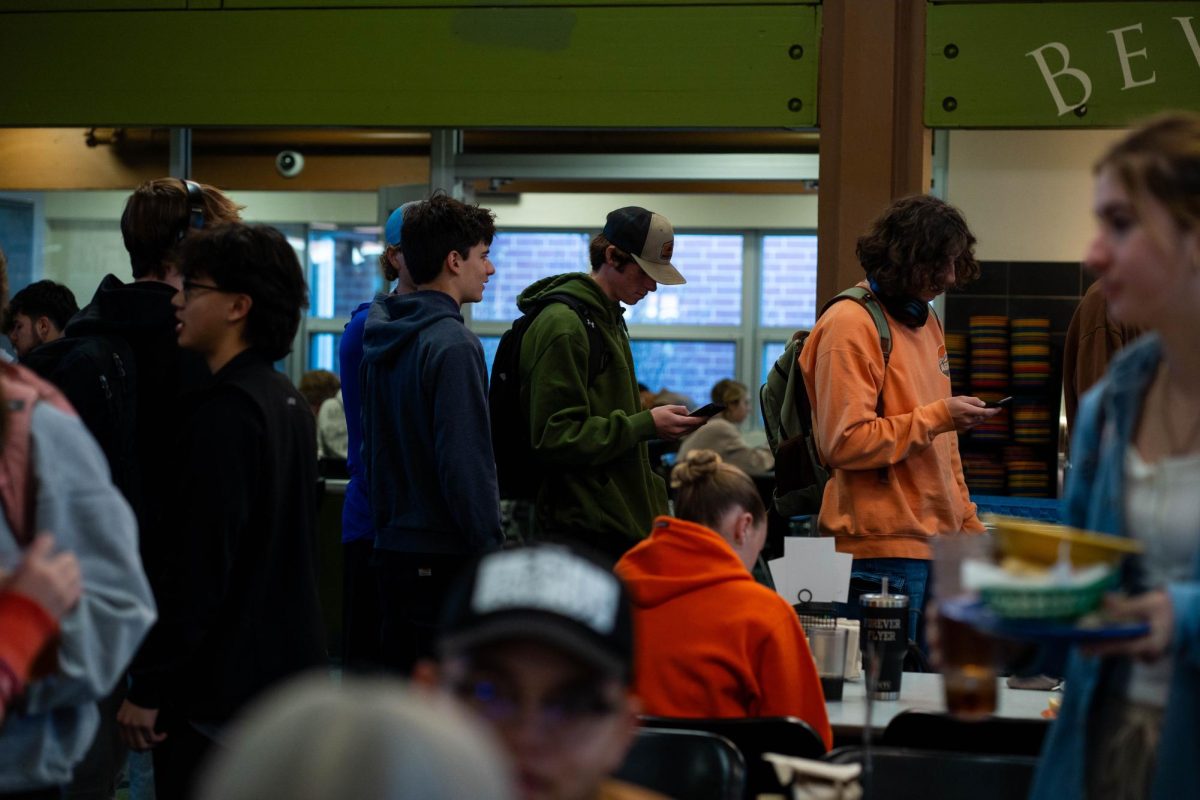

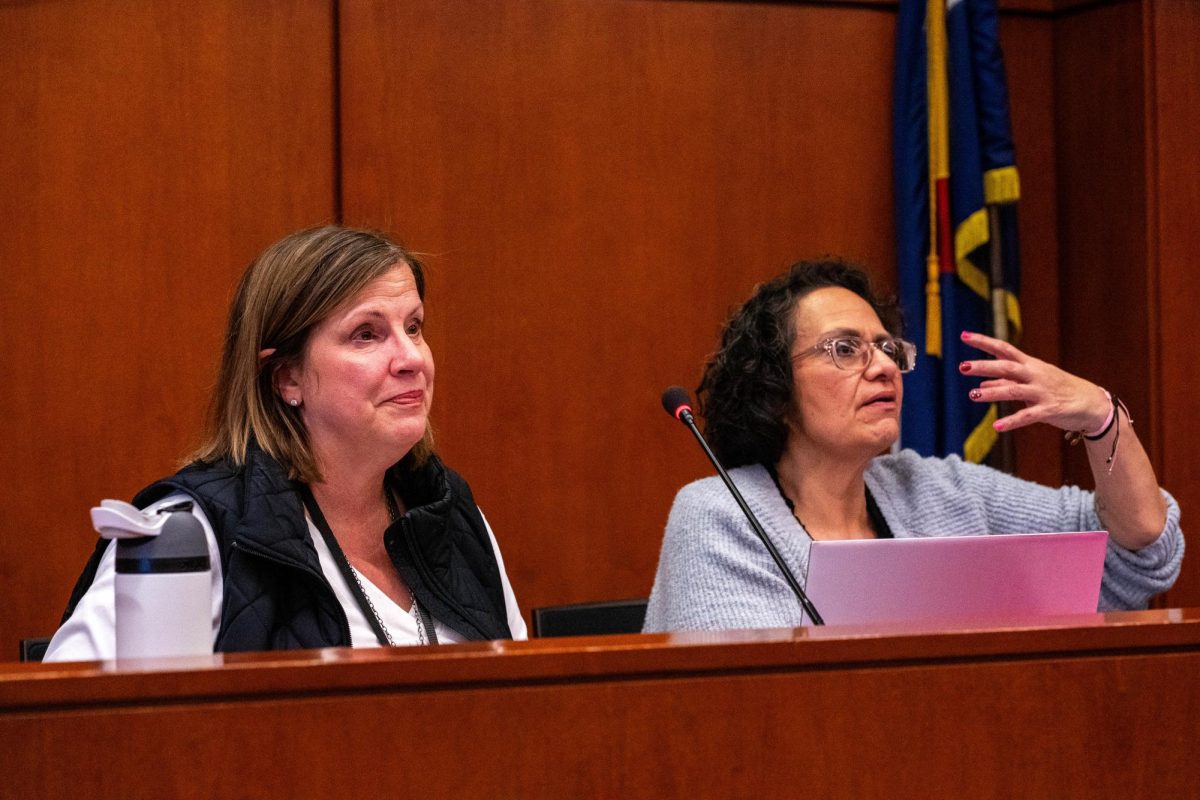
The Associated Students of Colorado State University welcomed Jannine Mohr, deputy general counsel for CSU, and Penny Gonzales-Soto, director of Student Legal Services, to a free speech forum Jan. 30. The event, which was said to be closed off except for members of ASCSU and other student leaders, served as an opportunity to learn about the complexities of free speech as well as provide attendees the opportunity to ask questions and engage in dialogue about the topic.
Prior to Mohr and Gonzales-Soto’s presentation, Jakye Nunley, the ASCSU student body president, opened the forum by encouraging attendees to add their input and create a space for learning.
The presentation began by displaying the First Amendment and the rights it protects: religion, speech, press, assembly and petition. The pair proceeded to review relevant facts pertaining to free speech at CSU, establishing the university as a government entity that is required to uphold First Amendment rights and remain content-neutral toward speech. It also explained that CSU can restrict speech depending on circumstances like time, place and manner, or if it falls under a category of unprotected speech.
“(The First Amendment) protects all kinds of speech, whether it’s offensive speech, whether it is speech that any of us in this room like or don’t like, and that’s where the rubber meets the road, and that’s where it’s the hardest to sort of get your arms around it.” –Jannine Mohr, deputy general counsel for CSU
With that, Mohr and Gonzales-Soto emphasized that free speech rights can easily become complex on a case-by-case basis. They also highlighted that just because the First Amendment protects an act of speech, it does not mean that the act is not violating other laws and rights.
“It’s easy to get sort of focused on the speech you care about and the speech you want to protect,” Mohr said. “ But then to say, ‘But I don’t like this speech, so we need to stop this speech,’ that’s the biggest dichotomy there is. (The First Amendment) protects all kinds of speech, whether it’s offensive speech, whether it is speech that any of us in this room like or don’t like, and that’s where the rubber meets the road, and that’s where it’s the hardest to sort of get your arms around it.”
Using a variety of hypothetical examples, Mohr and Gonzales-Soto shared information on a variety of topics to discuss the extent to which different acts of speech may receive First Amendment protection. In doing this, they addressed topics such as hate speech, campus guest speakers and more.
The pair also discussed how the university may struggle with remaining content-neutral and promoting free speech while simultaneously upholding Title VI and Title IX, which work to prevent hostile and discriminatory environments.
A large variety of questions throughout the presentation from attendees centered on the previous free speech policy revisions that changed chalking policies. The new policy, quietly instated in August 2025, was met with concern and disapproval from the wider university community.
Although the policy was temporarily rescinded and replaced with the former policy on Oct. 8, 2025, many students still expressed concern about the August 2025 policy during that week’s ASCSU Senate meeting — an effort that was a part of a larger weeklong protest.
ASCSU Resolution #5599, “Regarding Free Speech and Peaceful Assembly at CSU: Transparency,” which condemns the university for modifying the free speech policy without informing or gathering input from students, calls for a public pledge to protect accountability and expressive freedom and requests a report that explains the alterations. It was passed Nov. 5, 2025.
After the original free speech policy was reinstated, CSU President Amy Parsons shared a letter regarding the August 2025 policy with campus leaders, including Nunley. Nunley shared the letter at ASCSU Senate Nov. 19.
Mohr shared that the revised free speech policy was not something that happened overnight.
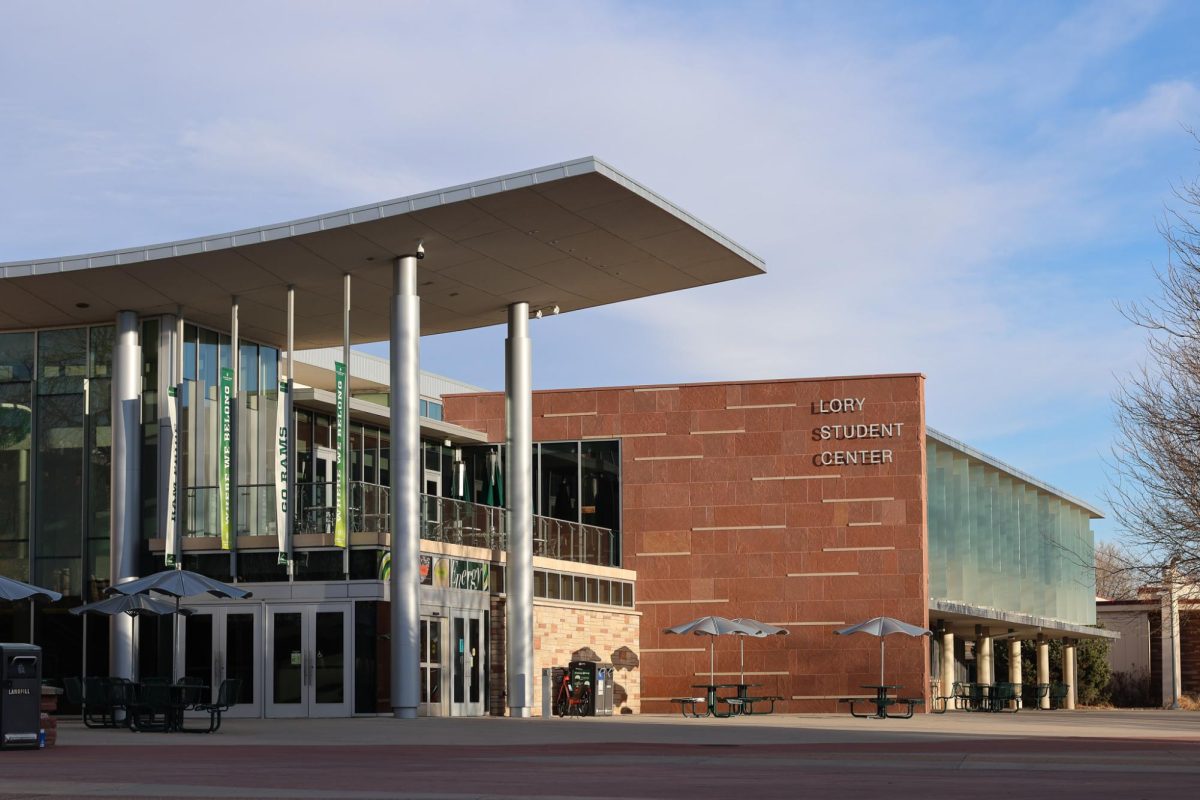
Under the revised policy, chalking could only be used for promotional purposes for student organizations on the Lory Student Center Plaza, a designated public forum for speech.
Students like Brayden Albrecht, the co-chair of CSU’s chapter of the Young Democratic Socialists of America, asked questions about interactions that happened with various campus employees. Albrecht specifically asked about students being charged with trespassing on The Plaza, in reference to an occurrence last October with CSU student Amber Wright and Assistant Vice President for Safety and Risk Services Marc Barker. Since CSU is Mohr’s client, she was unable to provide details but did say she knew about the instance to which Albrecht was referencing.
Albrecht also had questions about the enforcement of the revised policy.
“It wasn’t until Oct. 7 that the water tank and whatnot was really caught in the Plaza,” Albrecht said. “The policy itself could definitely be content-neutral. … I don’t think that it was in the 2025 policy. … I’m just curious why it took until (Oct. 7) rather than earlier dates for the policy to really be enforced on that level.”
“I don’t think people were acting with bad intent, but it was a tough situation,” Mohr said about the enforcement of the 2025 policy. “And could we have done things better as an institution? Yeah, you bet. … I don’t know what else to say about that, but sure, we could’ve done things better in retrospect, absolutely.”
ASCSU Director of Unified Success Ben Gregg asked questions about Facilities Management cleaning chalked messages off the stairs in the LSC but not the Andrew G. Clark Building. Gregg also asked about location restrictions for acts of expression under the policy, specifically about the stairs of the Administration Building, which has historically been a popular place for protests and expressing concern about content-geared erasing of chalking, resulting from the use of vulgar language.
Upon reflection of the event, both Albrecht and Gregg, who were vocal during the forum, expressed appreciation for the event and the speakers.
“They answered some pretty critical questions,” Gregg said. “I do wish that they got a little deeper into the policy, the creation of it and their reasoning for it, but I think that they gave us pretty good answers.”
Albrecht expressed a different perspective on the depth of answers during the forum and dismay that the event was closed.
“I’ve seen through my questions and through that event that the university doesn’t really have answers for some of their actions,” Albrecht said. “They’re not ready to provide students with reasoning, and that’s a little bit frustrating.”
The speakers also touched on updates regarding the civil rights complaint filed against the university by America First Legal, a nonprofit law group that claimed CSU was violating federal orders relating to diversity, equity and inclusion.
Attendees were directed to the CSU Federal Updates website and were told that the school has yet to hear back from the Department of Justice and the Department of Education.
Mohr also shared that CSU was one of 26 schools to file an amicus brief in support of Harvard University, which has faced repeated battles with the Trump administration.
Attendees were encouraged to reach out to Student Legal Services for future issues and further conversations.
Reach Chloe Rios at news@collegian.com or on social media @RMCollegian.