

On Aug. 3, the United States Department of Education released a letter that called upon American university presidents and board members to “reaffirm their commitment to serving the American people.” The letter urges institutions to respond to the letter by the end of the year and feature the response on their public-facing websites.
Colorado State University officials have yet to decide whether they will reply to the questions posed in the letter to all higher education institutions by the U.S. Secretary of Education Linda E. McMahon.
Tiana Kennedy, CSU and CSU System’s associate vice president of communications, provided The Collegian with a statement regarding the university’s response to the demands, including public response and detailing of adopted and planned reforms.
“The Colorado State University System is reviewing Secretary McMahon’s letter,” the statement reads. “Our institutions’ commitments to rigorous teaching, impactful research and service to Colorado and the nation are longstanding and demonstrated daily. No decisions have been made, and the Department’s request runs through the end of 2026.”
The letter notably does not hold any threats about impacting institutions’ federal funding, taking a different approach than previous directives, such as the DOE’s Dear Colleague letter, which came out in February 2025 and threatened to pull federal funding from universities that didn’t comply. Instead, the August letter asks university board members to prove their “commitments to (their) students and the American people” and asks that “institutional leaders … address the following questions, detailing adopted and planned reforms.”
The questions center on many of the priorities the DOE already outlined, including concerns around race-based admissions systems, as the letter asks how universities are working to ensure admissions decisions are focused on “merit, achievement and (the) university’s educational purpose,” in accordance with the United States Supreme Court ruling in Students for Fair Admissions v. Harvard.
Other points of inquiry involve cost of attendance, level of academic rigor and how the institutions aim to fight “foreign influence,” “advance American security interests” and “contribute materially to the nation’s prosperity.”
The letter also focused on free speech and “intellectual pluralism,” asking how institutions plan to protect free speech while also managing “unruly and violent protestors” and ensuring nothing will “disrupt classes, research, public lectures and campus operations.”
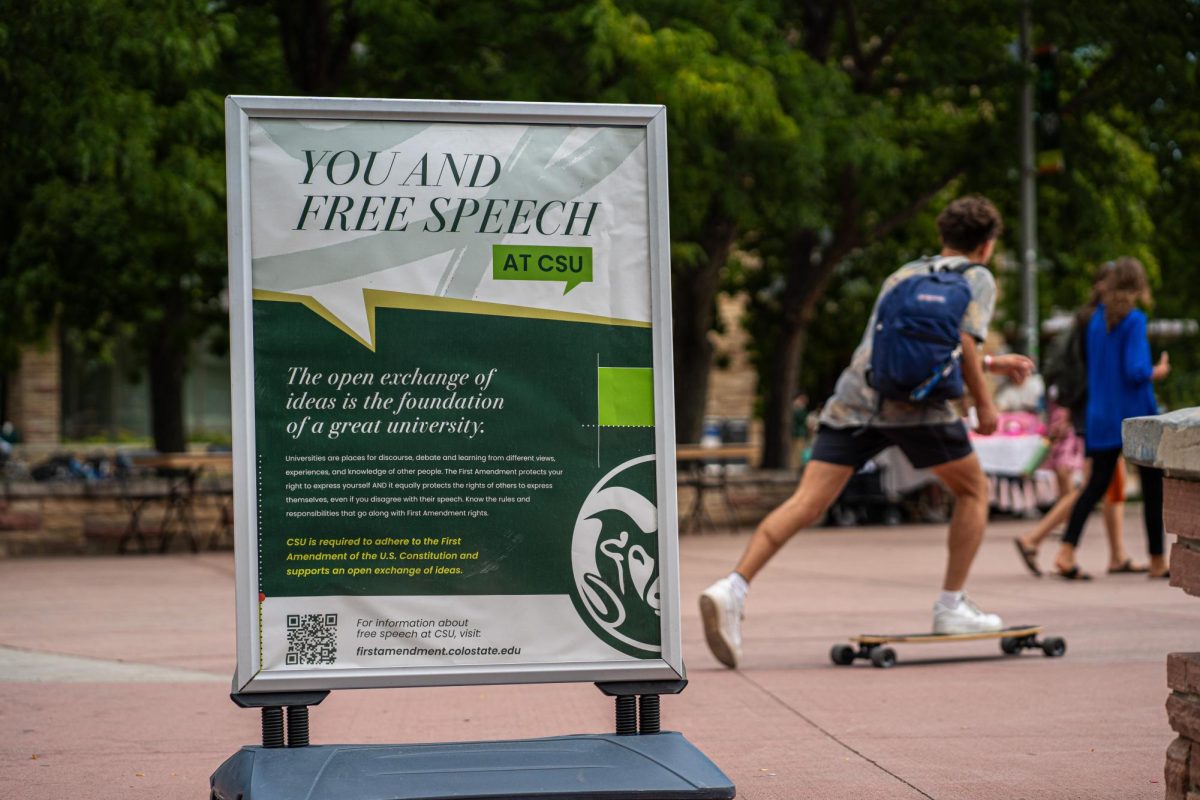
CSU has previously taken steps to address some of the questions posed in this letter, notably revising and implementing a new Free Speech and Peaceful Assembly Policy in August 2025. Following student protests, the policy was revoked October 2025.
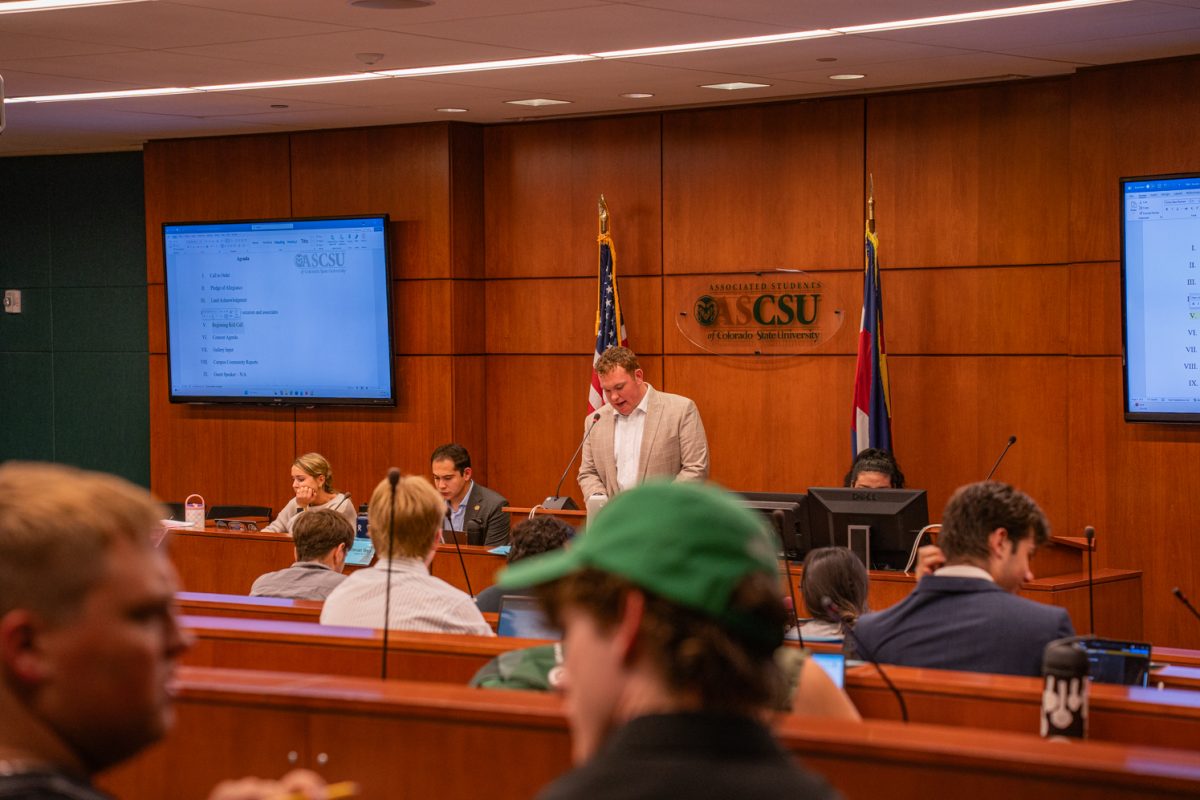
Following the implementation of the August 2025 free-speech policy, a resolution by the Associated Students of Colorado State University regarding transparency surrounding the Free Speech and Peaceful Assembly policy was passed to attempt to clear up the reasoning behind the change. One demand included in the policy was for CSU’s Office of the President to release a report to provide “evidence and an explanation of … an exhaustive list of the specific factors and motivations that prompted the creation of the revised policy.”
One of the authors behind the resolution, Ellie Lutz, speaker pro tempore of the 55th Senate, said they think that the main motivations behind the change were in good faith but aimed to conform to changing policy standards at the state and federal level.
“The policy was created in good faith by the Office of General Counsel and had good intentions, regardless of my personal feelings about the policy; it was a very flawed policy,” Lutz said. “The policy change was made to reflect changes on the state and federal level, but the way the policy was rolled out bypassed stakeholder feedback and a collaborative approach to shared governance. I think that the context behind the policy creation was lost in this, which was in good faith, but it was a disaster of process that shone a light on the failings of our university’s system.”
Recently, the Foundation for Individual Rights and Expression released the 2027 College Free Speech Rankings, which included CSU. Rankings are based on a survey methodology of students from respective universities.
“CSU’s ‘Self-Censorship’ rank jumped 135 places from the bottom 50 last year, indicating less student hesitation to speak,” the ranking website reads. “However, its ‘Administrative Support’ rank tumbled 108 places from the top 50 last year, showing less student trust that officials will defend speech. The data shows no top 50 strengths.”
CSU’s overall rank dropped 22 places since last year’s ranking, and now ranks 135th out of 261 schools, holding an overall score of 59.8 and a D-minus grade.
Lutz said the August DOE letter “should be ignored, (as it) currently holds no legal implications and does not deserve a response.”
“The letter is nonsense,” Lutz said. “It raises fair points; however, it offers no solutions — even bad ones — and is not in good faith. I also think that this is meant to put some universities on edge and try to create some preemptive compliance to the president’s goals around higher education.”
The American Association of University Professors, a faculty and academic professionals union and affiliate of the American Federation of Teachers, also released a statement regarding the demands of the 2026 DOE letter.
“Education Secretary Linda McMahon’s demands for ‘reform’ are designed to make unprecedented federal political intervention in colleges and universities appear reasonable,” AAUP’S statement reads. “Racially coded descriptions of ‘admissions decisions … based on merit’ and ‘prioritizing American students and faculty,’ as well as the mischaracterization of peaceful protesters as ‘unruly and violent,’ show that the Trump administration’s goals remain the same.”
The Association of Public and Land-Grant Universities, an association of which CSU is a member, has also released a statement in response.
“Our land-grant and public research universities value the support they receive from taxpayers,” the statement reads. “Since their establishment, the needs and concerns of the public have driven their mission. These institutions already work every day to meet goals outlined in the department’s letter.”
Reach Ava Fricke at news@collegian.com or on social media @RMCollegian.

Paula Ernst • Sep 14, 2026 at 2:09 pm
CSU would best be served by following in the footsteps of the Association of Public and Land-Grant Universities in their response and implementable. Their mission is strong and the execution is in balance with available funding.
Remember, this chaotic federal administration will pass and we will all be dealing with the fallout. Please don’t cave in now!