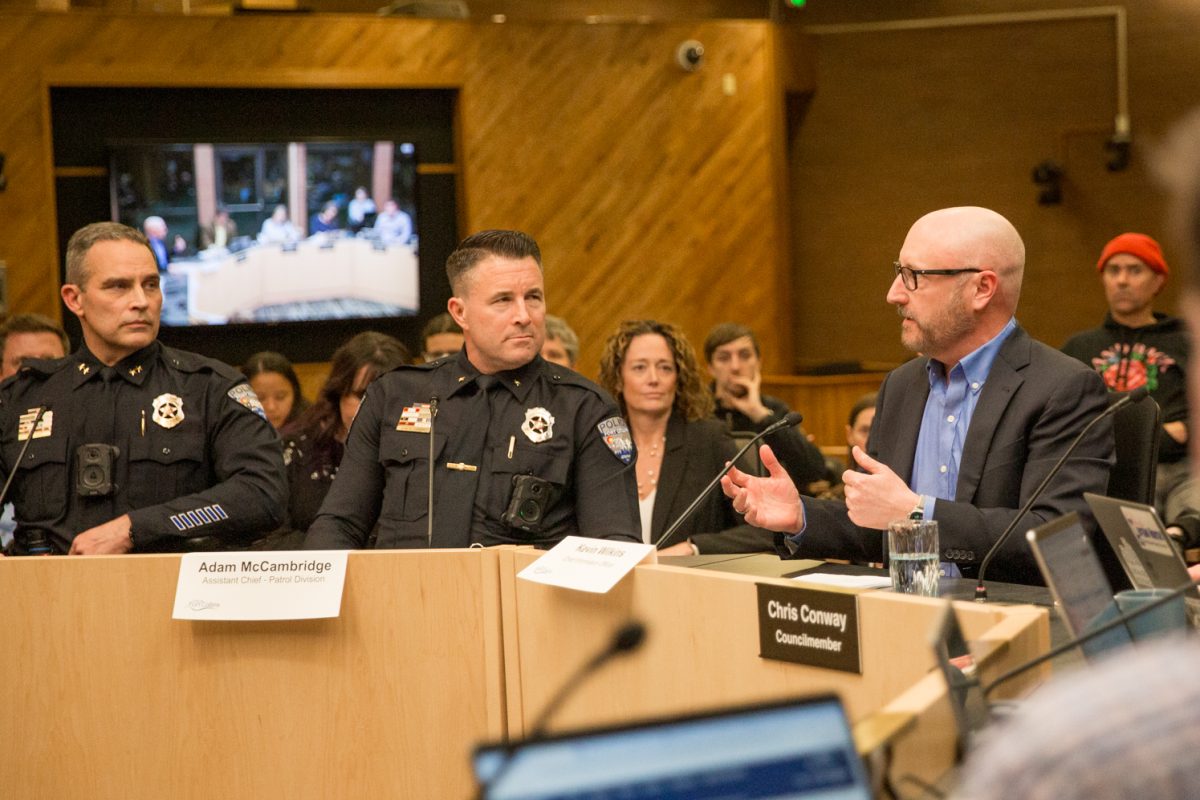


A new bill introduced at the Colorado State Capitol could significantly alter how Colorado State University manages large signs and loud events by requiring the university to adhere to the same local ordinances as the rest of Fort Collins.
State Sen. Cathy Kipp is sponsoring the legislation that would require state schools in Colorado to comply with city and county sign and noise codes whenever those signs or sounds are visible or audible off-campus. The bill is narrowly tailored to CSU and comes after months of complaints about electronic billboards and late-night event noise, particularly during home football games.
“It says, ‘If you can hear the noise off-campus from off-campus, if you can see the signs from off-campus, then you need to comply with the local jurisdiction,’” Kipp said. “If there’s going to be a negotiation, at least the city has some leverage.”
Kipp said she began hearing from constituents last summer after a Professional Bull Riders event at CSU kept nearby residents awake until 11 p.m. on a weeknight. Additionally, the university began installing large digital billboards around campus, several of which are visible from major intersections in Fort Collins.
“Then I also received emails after the signs started going up,” Kipp said. “It seems like the concerns of the community are not being listened to. And frankly, it just seems like the university doesn’t care.”
Because CSU is located on state land, it is not required to follow Fort Collins sign or noise ordinances. Fort Collins has banned new billboards for decades, as city policy leaders say doing so preserves neighborhood character and reduces visual clutter.
Kipp said she met with CSU President Amy Parsons and other university officials to discuss concerns. While the university was willing to address some noise issues, Kipp said administrators were “pretty dug in on the signs.”
“I told them as I left the meeting, I said, ‘It’s really not OK, and our constituents aren’t happy about it. So if you’re going to proceed, I just want you to know that I’m going to have to run a bill,’” Kipp said.
Under the proposal, universities would need to follow local ordinances whenever signage or event noise affect areas beyond campus perimeters. Kipp said cities and counties would also be able to grant waivers for special circumstances.
The bill’s first committee hearing is scheduled for Feb. 26.
Rep. Yara Zokaie is co-sponsoring the measure in the House and said she got involved after hearing repeated complaints from residents.
“I mean, this bill started out as a concern that we heard from communities about CSU being a good partner,” Zokaie said. “And we took those concerns to CSU and, quite frankly, did not feel like they were taking them seriously. And so now we’re in the position of being responsive to our community and that’s through legislation.”
Zokaie added that many Fort Collins residents have noticed increased noise levels from the on-campus stadium, including amplified train horns during games.
“I have got folks who lived right next to or still live right next to the old stadium who had no problem then but have problems now,” Zokaie said.
“Do we let a small business put up a sign if they need more revenue? No. Our city has had these sign ordinances in place for 40 years.” -Cathy Kipp, Colorado State District 14 senator
In a university statement, CSU officials warned the bill could have far-reaching consequences.
“CSU has been in dialogue with Sen. Kipp regarding her proposed noise and signage legislation and has sought for months to reach a compromise on this issue,” the statement reads. “If passed, however, this legislation would set a concerning precedent for the management of state lands throughout Colorado.”
Zokaie said the goal is not to punish the university but to ensure it respects the same rules as local businesses and property owners.
“I don’t think that asking a university to follow the city ordinance is a bad precedent,” Zokaie said.
The university also argued the bill could create economic harm and disrupt campus traditions.
“In addition, the measure would have significant negative economic impact on the Northern Colorado region, potentially diminish cherished and time-honored campus traditions and erode the public safety infrastructure the campus has put in place to support students and the broader community,” the statement reads.
University officials have maintained that the digital billboards generate revenue and serve as tools for emergency communication, but Kipp dismissed those arguments, comparing the situation to city regulations on local businesses.
“Do we let a small business put up a sign if they need more revenue? No,” Kipp said. “Our city has had these sign ordinances in place for 40 years.”
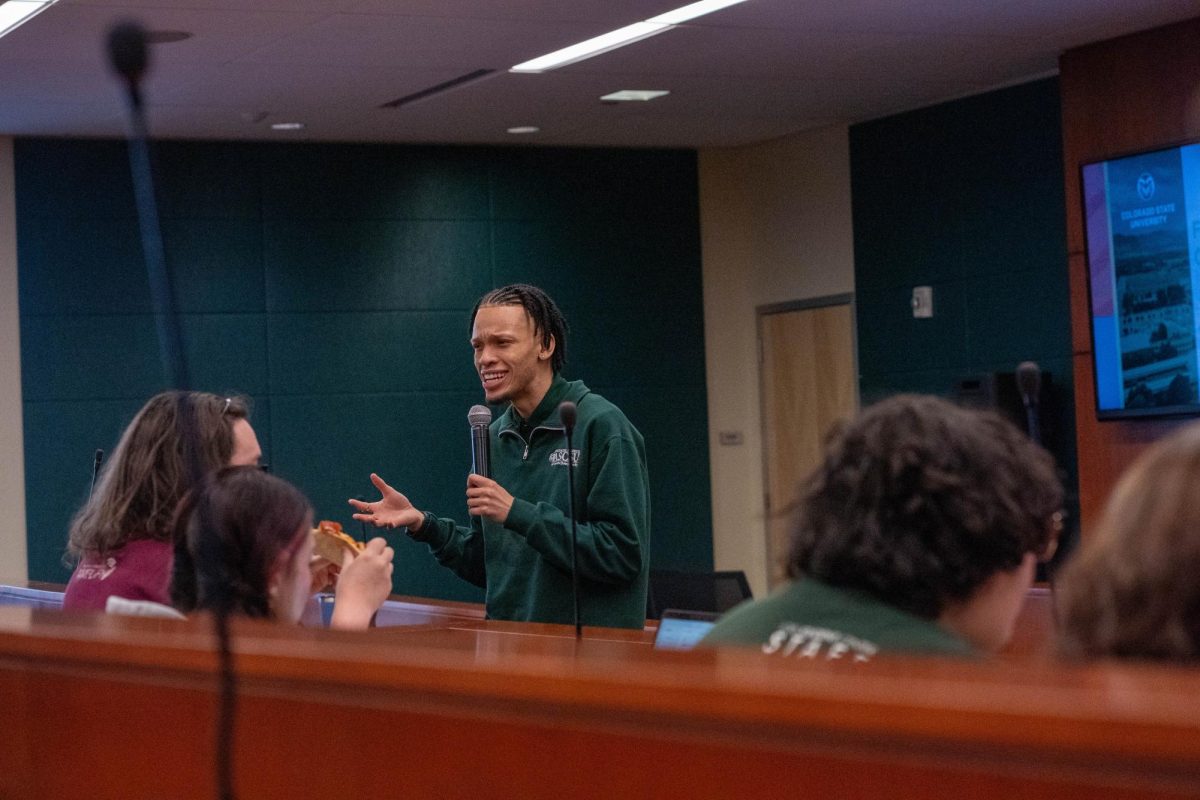
While the bill is largely aimed at off-campus impacts, it has drawn attention from students as well. Brayden Albrecht, co-chair of CSU’s Young Democratic Socialists of America chapter, said many students dislike the new digital billboards.
“I haven’t talked to a single student who even feels neutral about the billboards,” Albrecht said. “I mean, they’re just a giant eyesore out on the street that’s genuinely distracting drivers. It’s polluting the area with light. It’s defying city ordinance.”
Albrecht said he supports Kipp’s bill and said it reflects broader frustration with CSU administration.
“It’s another example of CSU acting against the interests of its students and of its community members,” Albrecht said. “It just says, you know, (that) they don’t care about students as much as they care about their bottom line.”
However, he expressed more caution about potential noise restrictions affecting sporting events.
“I personally do enjoy going to a football game, here and there,” Albrecht said. “We need to have conversations about what that would look like for CSU.”
CSU has raised concerns that changing the law could interfere with existing contracts for the signs and lead to financial penalties.
“From my experience, if the law makes a contract impossible to fulfill, that doesn’t usually result in liability,” said Zokaie, who is also an attorney.
The proposal now heads to its first committee hearing later this month, when lawmakers will weigh whether the concerns raised by Fort Collins residents justify changing how state universities operate within city limits. If passed, the measure could reshape how CSU, and potentially other state institutions, balance campus operations with the expectations of surrounding communities.
Reach Maci Lesh at news@collegian.com or on social media @RMCollegian.