
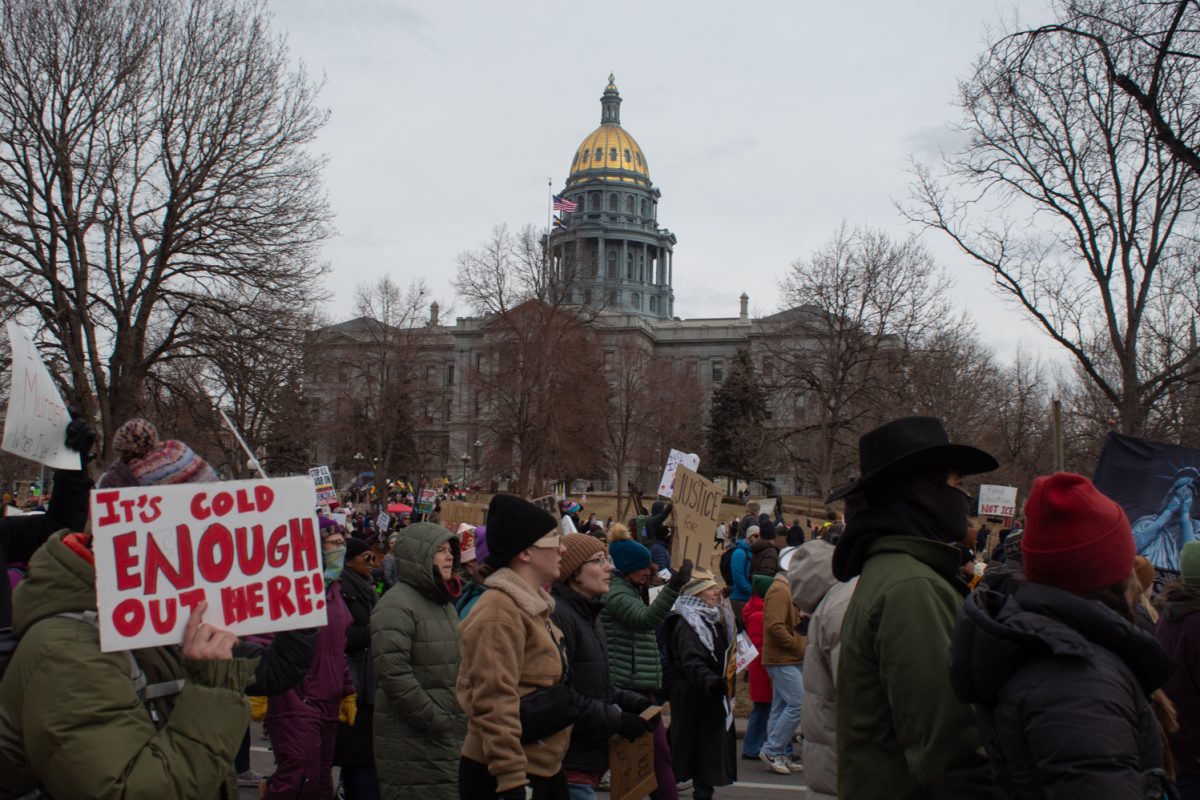
As Immigration and Customs Enforcement conducts a nationwide crackdown on immigration, the use of force and unwarranted violence has been one of the biggest talking points in the United States. Following the murders of Renee Good and Alex Pretti, Colorado legislators have begun a process to grant the state the right to regulate the conduct of federal immigration officers, especially if constitutional rights are violated.
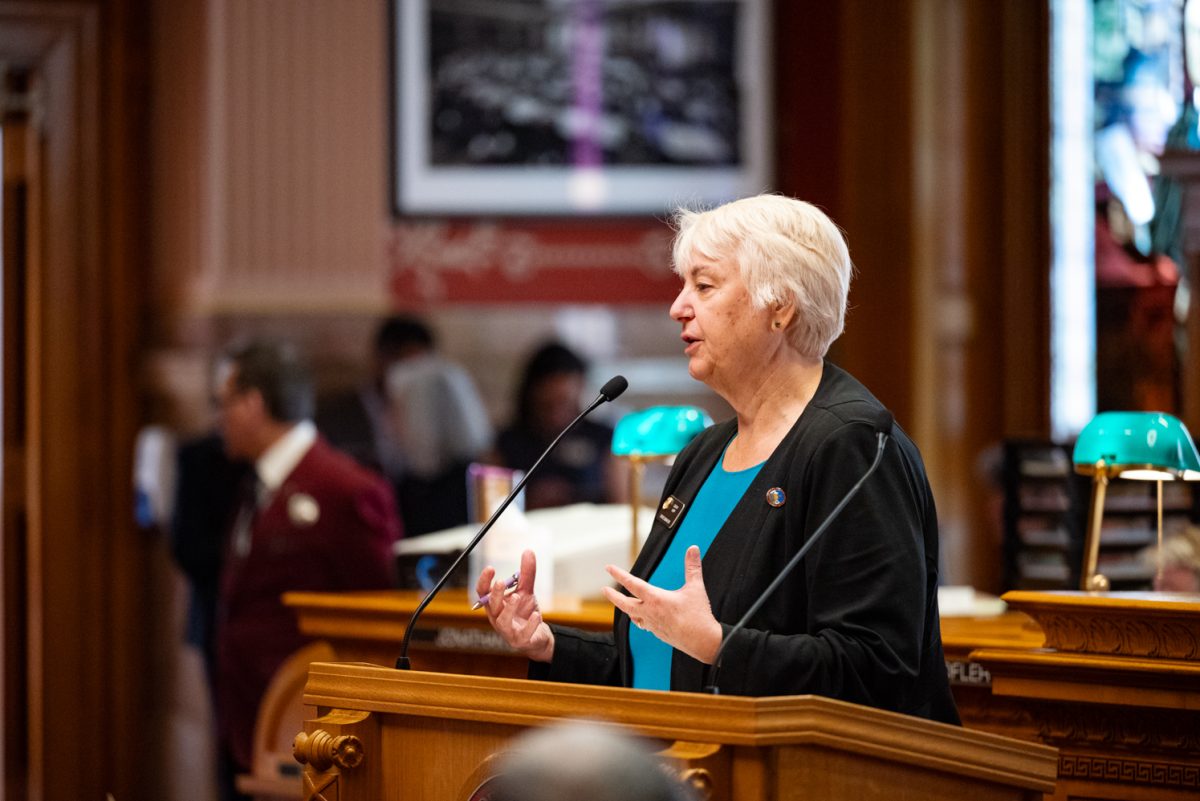
State Sens. Mike Weissman and Julie Gonzales as well as State Reps. Javier Mabrey and Yara Zokaie have sponsored SB26-005, a bill that would give Colorado residents a cause for action if violated by federal immigration enforcement. Zokaie announced the bill from the steps of the Colorado State Capital Feb. 2. As of Feb. 24, the bill was passed through the State Senate on a party-line vote and will now move to the State House of Representatives for further consideration.
Zokaie said the bill allows reverse “Bivens,” meaning the state could prosecute federal officers for violating constitutional rights instead of relying on individuals to sue federal officers, as a typical “Bivens” action does.
“We haven’t had the need to bring a bill to allow individuals to sue in the way that we need to now,” Zokaie said. “It’s been an ongoing issue ever since ICE was created, but this has really brought to light how egregious things have become, now that ICE has the budget of a small country. (We must) have this bill be a message to ICE that we are not going to tolerate that behavior here (in Colorado) and that there will be consequences.”
If passed, affected individuals can sue federal agents if they believe their constitutional rights were violated during an encounter, with a statute of limitations of up to two years. With proper evidence, plaintiffs can also be relieved of attorney fees. Federal officers, if convicted, would be liable for any hospital bills or damage related to the plaintiff.
Additionally, officers would be stripped of any immunity while undergoing trial in Colorado’s courts. The bill uses the precedent of the U.S. Supreme Court in the cases Johnson v. Maryland and Colorado v. Symes, which hold that federal officers and employees of the United States are not exempt from state laws.
“It is part of a broader culture of impunity and lack of accountability that we have seen from some federal agents over the last year,” Weissman said.
The demand to fight back against immigration enforcement is not only happening in Colorado. Gonzales said she has consistently spoken with other state representatives and senators in hopes that this bill can turn into a myriad of bills.
Along with Senate Bill 5, Colorado legislators plan to move other bills through the State House of Representatives.
HB26-1275, “Law Enforcement Identification & Immigration Training Requirements,” creates a mask ban on peace officers engaging in public interactions and requires identification from them at all times, including their agency name and identification number.
HB26-1276, “Protect Safety of Individuals Who Are Immigrants,” will necessitate the publication of all subpoenas provided by the Department of Homeland Security, allowing people to be notified if their information is given to a federal officer.
“We are listening to each other; we’re learning from one another,” Gonzales said. “We’re actively in conversation to say, ‘Hey, how is it working in Minneapolis? How can we support you? What is going on in Chicago?’ Just because there hasn’t been a big flashy surge (here) similar to Minneapolis or L.A. or Chicago doesn’t mean we aren’t seeing a real stark increase in immigration enforcement.”
The lawmakers said that learning from one another and listening is what will help this bill and many others like it become a nationwide continuum, rather than only being applicable in certain states.
“We are trying to move it through the system as quickly as possible,” Zokaie said. “We pushed up our introduction date after the murders of Renee Good and Alex Pretti to be responsive to what our communities were demanding and what we need to do as legislators.”
Zokaie said her and her colleagues aim to implement the legislation as soon as possible.
“I imagine it gets to me in the house early March, and then it will move through the process from there,” Zokaie said.
This timeline could vary, however, as debates over bills can last a while. Until then, legislators are reminding citizens to download a red card and put rapid response hotlines in their phone contacts.
“Regardless of where (you) were born, know that the Constitution protects us all,” Gonzales said.
Zokaie and Weissman both acknowledged that they hope Coloradans never have to use this bill once it is in place, aspiring that federal officers stop using violence.
“Tyranny on freedom can happen anywhere; it is happening here now,” Weissman said. “The good news is it can be beaten anywhere, too.”
Reach Elizabeth Musil at news@collegian.com or on social media @RMCollegian.