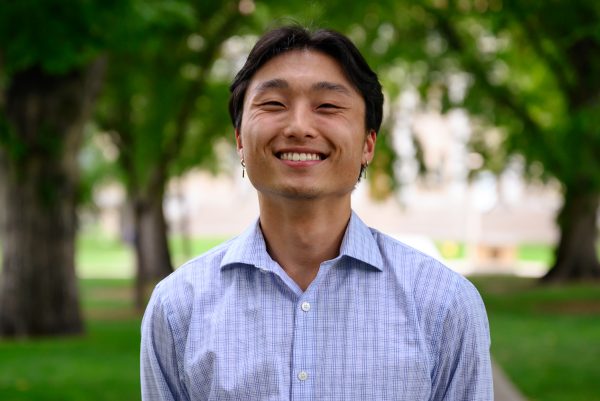


There are moments in people’s lives that can change its course entirely.
And they don’t always come with a medal, a headline or even certainty. Sometimes they happen in the middle of a race that looks ordinary to everyone else.
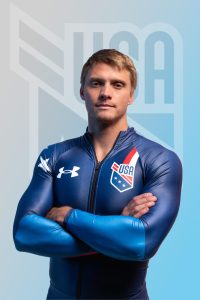
For Olympian Hunter Powell, that moment came years before bobsleds, before USA was on his chest, before anyone outside of Fort Collins would have recognized his name.
“And the part that’s great is, like, if I lost the Olympic dream tomorrow, I’d still be the man that I am today.” –Hunter Powell, Olympic bobsledder
It came in a 400-meter track relay at Fort Collins High School. But at the time, Powell wasn’t a star.
As a Lambkin, he was the kind of athlete coaches liked because he worked during off hours, listened and showed up ready the next day. He wasn’t gifted in the way people typically mean when they say the word.
“He was not a gifted young athlete; he was not a star,” former FCHS track and field head coach Conrad Crist said. “I don’t think he ran varsity till he was a senior. He tried everything. He tried high jump, he tried pole vault, he tried all these things and (he) settled in on the 400. And the 400 really embraced his hard work, right?”
That willingness didn’t come with guarantees, though.
Powell never made state individually, and he didn’t dominate meets like some high school stars do. He blended into large rosters and long practice days, standing out with high character and what Powell described as a “crazy” work ethic back in the day. Even now, Crist said there are former teammates who might not remember him.
But then there was that race.
“I can remember, it was a state meet when he’s running on the 4×400 team, and, like, he broke 50 seconds in the 400 on his split,” Crist said. “I remember him coming off, and I was like, ‘You did it?’ And he was like, ‘Oh my gosh, I can’t believe I did.’ I’m like, ‘You did; I think you can run in college,’ and (we were) having this, like, honest conversation.”
Powell didn’t suddenly become elite that day. What changed was his belief.
“It was his goal, right?” Crist said. “And being who he is, I mean, he just went for it every time (he competed). … When he finally hit that point, it was just a change in gear. And I think it was like, there was a belief there, too, like, ‘Oh, I did it. I can do it.’”
That belief would carry him somewhere few may have predicted.
Powell started his college track career at Western Colorado, earning his way forward and competing in the decathlon unexpectedly. He then took a leap by walking on at Baylor.
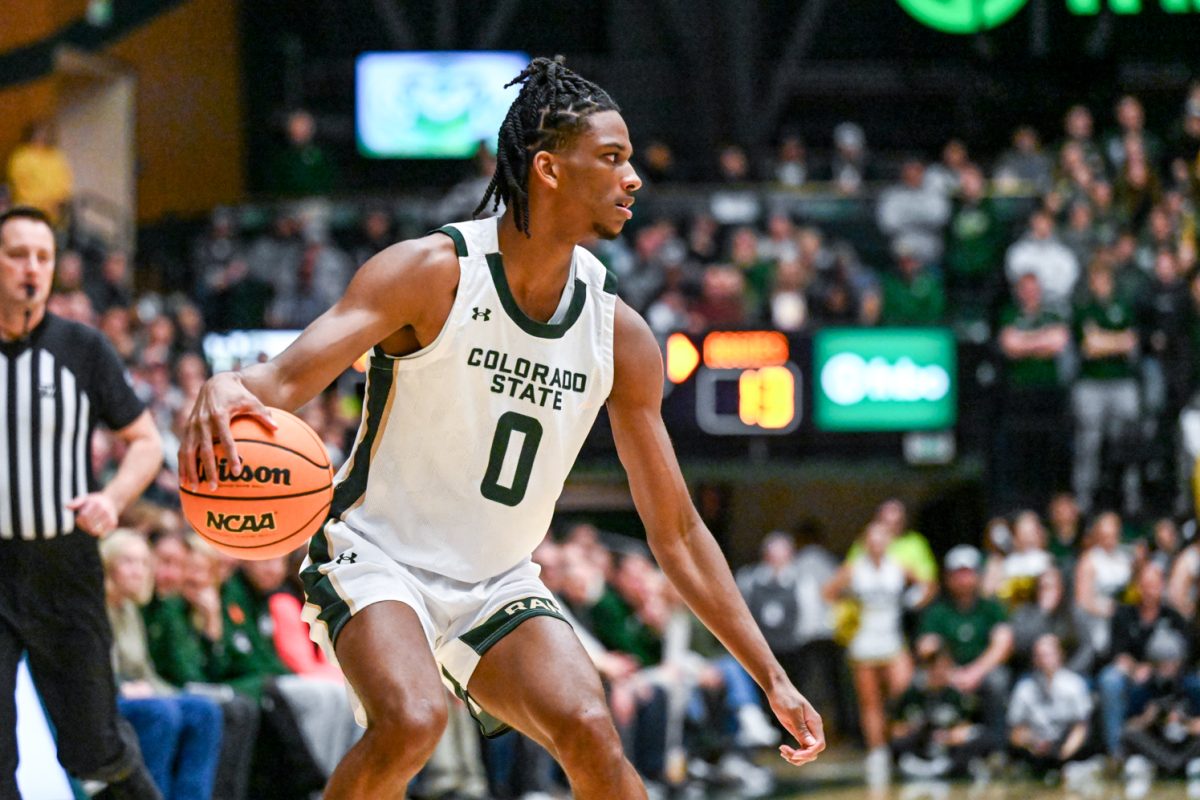
Later, he transferred to Colorado State, where his growth became visible on paper. He won the Mountain West championships in the indoor heptathlon and outdoor decathlon in 2019 while qualifying for NCAA nationals.
And even then, the path didn’t smooth out.
At the NCAA Outdoor Championships in Austin, Texas, Powell rolled his ankle in practice days before the competition. He tried to race anyway and made it through the 100-meter, limping across the line before withdrawing.
That moment could have read as cruel timing, but Powell said he experienced it as something else.
“It was heartbreaking,” Powell said. “I remember crying, you know, with coach (Ryan) Bailey and coach (Brian) Bedard. But the part that was also cool was … this just means that the story is not finished, and we’re not done yet.”
That mindset was learned through years of struggle in high school, college and after.
“I would say my year in Phoenix was one of the lowest moments (I’ve had),” Powell said. “I had the best group of guys I was training with, but I felt like I was losing a bit of the fire, and I hated that. … But when the doubt creeps in and it lingers, it’s like, God dang man, it’s so hard to get rid of. To me, that’s worse than not achieving some type of big accomplishment, some type of big goal.”
Even in doubt, the Olympian found a way through.
And when Powell discussed discipline and what it’s taken to get to where he is, he talked about his father.
“You know, my father’s advice to me when I was a little kid, it was just, never quit,” Powell said. “Never give up. Never quit. Never give up. And excuse my language, but you know, we don’t half-ass anything. Whatever it is that you’re doing, you give it full intention, full effort.”
That principle stayed with him longer than any one event and through multiple careers.
Now more than a decade after that high school split, Powell is preparing for the 2026 Winter Olympics in Milano Cortina as a member of the U.S. Olympic bobsled team. He got into the sport through his fiancee, Kaysha Love, who is also an Olympian.
“I was telling her, you’re out of your freaking mind; there’s no shot,” Powell said. “But she convinced me to come out. And yeah, she’s the one that recruited me into the sport.”
He is a push athlete, valued for power and speed. On paper, it makes sense: 6-foot-3 decathlete with sprinting strength and discipline.
But Powell doesn’t talk about the Olympics the way some other Olympians do.
“Don’t get me wrong, being at the Olympics is awesome,” Powell said. “It is so cool. But the coolest part about it is not (just) being at the Olympics. To me, the coolest part is being the man that I had to become to be here. Like, that’s the coolest part.”
That perspective sets him apart as someone who found his way to Milano Cortina, rather than training his whole life for it.
“I’m probably the odd man out (of USA’s bobsled team),” Powell said. “I love the sport, and Olympics has been the dream, but those have not been the most important things. It’s about being here, it’s about representing your country and it’s also about being a great person, like, doing great things, trying to become a great person.”
Instead he talks about purpose, on his social media and in interviews.
That purpose, as he defines it, isn’t abstract.
“To pursue excellence in everything I do, to have unquestionable discipline and unquestionable character and to have lived a life that was worth remembering,” Powell said. “And to have hopefully changed the world in some way.”
Crist said he sees that continuity clearly.
“For him, this grind has been so long; it’s really just morphed into who he is,” Crist said. “He just always wanted to challenge himself.”
Even now, Crist remembers Powell texting him years after graduation, asking to run stadium bleachers on Sundays and for help with long jump mechanics while juggling college and family life.
Powell doesn’t deny his ambition, though. It’s one of the main things that has led to where he is now, but he doesn’t define himself by it.
“God forbid if I got hurt tomorrow and didn’t get compete, it would be devastating,” Powell said. “But it wouldn’t be the worst part because it’s like, well, we just keep going. … And the part that’s great is, like, if I lost the Olympic dream tomorrow, I’d still be the man that I am today.”
As Powell prepares for the biggest stage of his career, Crist plans to watch, just like so many others who once invested in the quiet athlete willing to work without guarantees.
“I told him that he’s got a lot of people here rooting for him,” Crist said. “And I think that’s neat, too. That shows that he’s treated people well along the way, too.”
For Powell, that may be the truest measure of success.
And if things changed tomorrow, he said it wouldn’t be the worst thing.
“I don’t know if that means (I would go) for another Olympics, or if that means going to work and then trying to see what I can do in the work world, or if it means I go coach,” Powell said. “I don’t know what it means, but the work continues.”
Reach Michael Hovey at sports@collegian.com or on social media @michaelfhovey.
Interested in more sports content? Sign up for Ram Report here for weekly CSU sports updates!