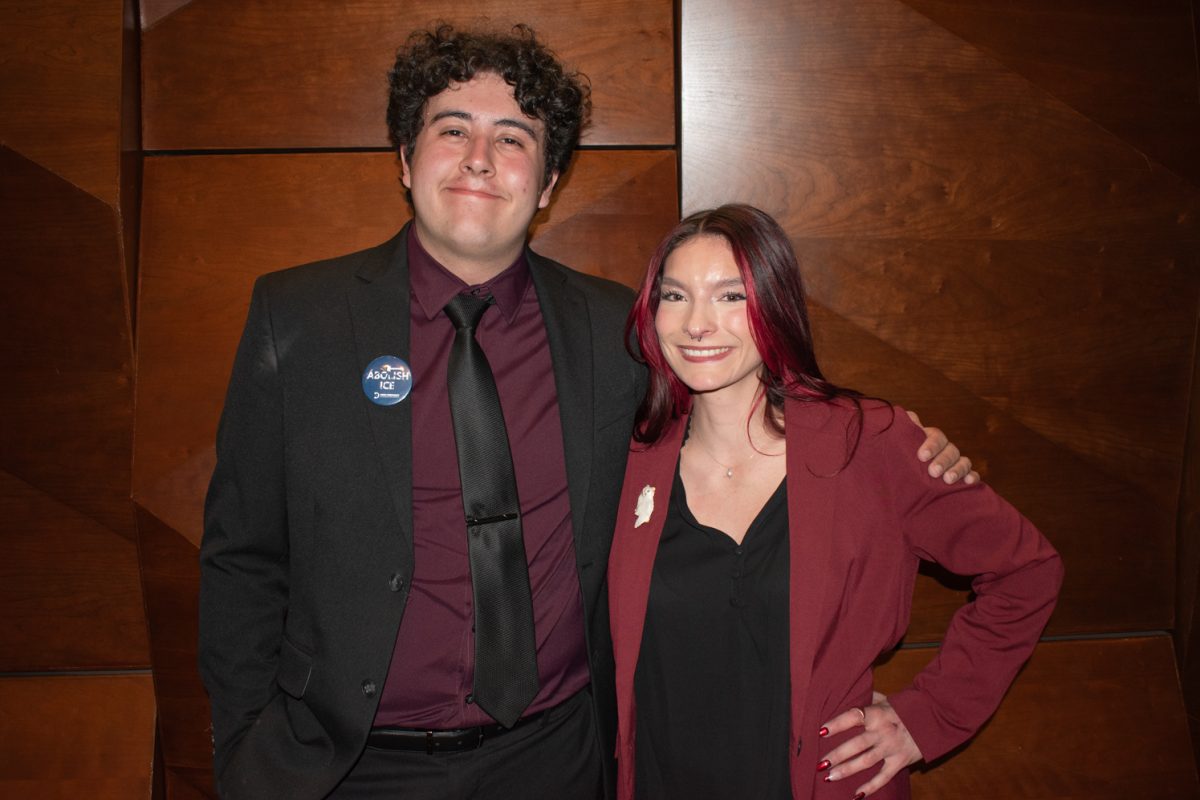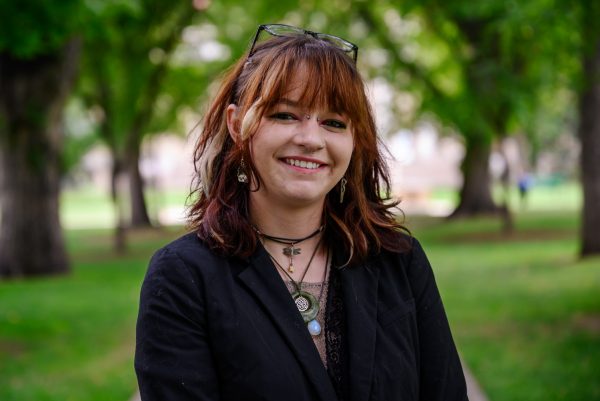

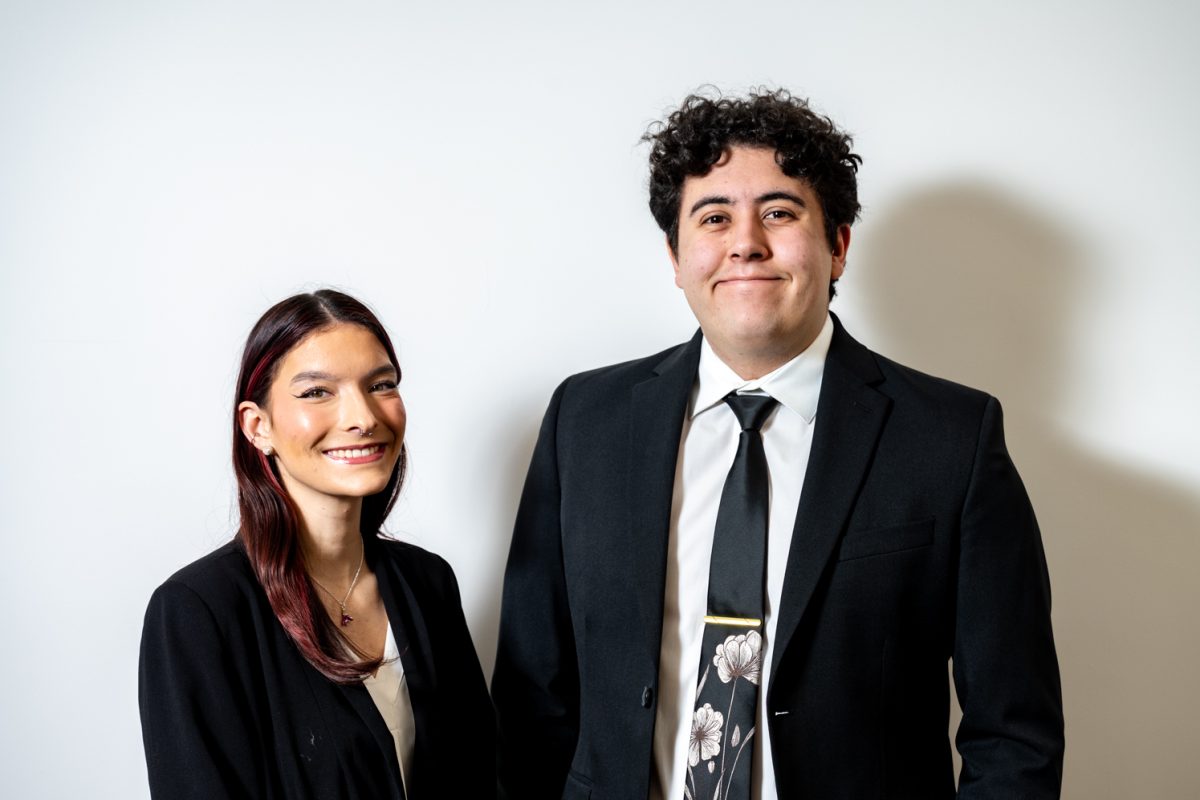
Campaigns for the Associated Students of Colorado State University elections for the 2025-26 academic year are underway. The Collegian sat down with presidential and vice presidential candidates Victoria Quesada-Stoner and Ben Gregg to discuss their backgrounds, campaign platforms and future plans.
Quesada-Stoner, running for student body president, is a junior studying psychology and currently serves as the chair of the Diversity, Equity, and Inclusion Committee. Gregg, running for vice president, is a senior studying economics and serves as the director of unified success.
Background, ASCSU experience, qualifications
Quesada-Stoner: I have been in ASCSU for about a year. I started back in March, and I actually started in the executive branch as an intern for the director of diversity, equity (and) inclusion. … I decided to get into senate, and I absolutely loved it. I’ve learned a ton about how ASCSU functions (and) also really opened my eyes to the shared governance that we do have at CSU between students.
I am the Diversity, Equity and Inclusion Committee chair this year for the legislative branch, and that role really helped me grow and flourish and understand ASCSU. I also serve on the University Fee Advisory Board. … I am also the president of the Body Project, which is an organization … trying to de-stigmatize and build self-esteem and get away from the appearance ideal and kind of the pressures that society puts on people.
I am (also) a Key Plus mentor for Key Communities. … It’s great to be in community with students around campus.
Gregg: I started in ASCSU as an intern for the Office of the President in fall 2024, so I’ve been in (the executive branch) my whole time with ASCSU. I currently serve as the director of unified success, so I’ve helped to oversee a lot of different sectors on campus.
Victoria and I were two of the primary writers on a free speech resolution when Colorado State University was having that policy around free speech and having a bit of a crackdown on students’ rights. … We demanded transparency from them (and) worked with students from all sorts of different areas on campus for input.
I serve on the Board (for) Student Organization Funding, and so I’ve had that grasp as well looking at these events that students want to hold with their organizations, or if they want to go to a conference or other school-related travel, being able to fund that for them.
Campaign, campus issues, priorities
Quesada-Stoner: I’ll talk about food and housing security first. … That is a really big thing on campus that is affecting a lot of our students, and there’s a good percentage of students (who) actually live out of their car, and that should be unacceptable. And so I think really working with local and state officials for the housing crisis and trying to lobby toward certain legislation that will also bring down the barriers of putting up more housing, or bringing down the barriers on being able to afford any type of rent, and providing different solutions that will actually affect students with the housing particularly.
With food security, I think it really is all about supporting Rams Against Hunger, (and) working with the local Fort Collins council to see what other different food security programs that they have. I think ASCSU can put on food drives, not just on campus — because a lot of college students don’t have money — but going off campus.
I think another thing that we are trying to troubleshoot and kind of work around is the parking problems that happen (with) tailgating. … We do face problems with parking, and so trying to work around where we could have it (so) that it … (is) … very fluid and we can have the best experience for all the students that are on this campus.
Gregg: Our first (of four priorities) is transparency, not just from ASCSU but from administration as well, with student fees — students knowing where their money’s going.
Another main one of our four campaign points is cultivating joy on campus. It should be easier to find student organizations. It should be easier to create student organizations. … And so we just really want to start supporting (Registered Student Organizations) more.
Our second part of cultivating joy on campus is we really want to bring more events to campus. We want to increase tailgating for basketball and volleyball games.
And then the last part that I’ll add on the cultivating joy part … (is) student safety. I think this year we’ve seen a rise in hate crimes (and) instances of hate on campus, such as the Black Lives mural getting defaced … among others. Students can’t really have a joyful environment if they don’t feel like they’re safe and that they’re supported and that their identity is protected.
Our final campaign point … is elevating student voices. There are so many students in that space who are able to contribute (and) have an active voice in where our student fees are going. If we’re only putting people who are in ASCSU and who are paid ASCSU members into these boards, we’re just creating more of an echo chamber. … We want to go into the classrooms. It’s as easy as that: making the barriers of entry really easy to get through, and just allowing students to come into the space. Your voice means something.
At this university, every single student has their voice. It’s one of the powers we have as students. … Celebrating that fact and elevating those voices is something that really means a lot to Victoria and I. We both know the pains of what it feels like to be unheard or dismissed. I know what it’s like when ASCSU isn’t elevating student voices very much and it’s keeping things closed, and Victoria and I totally want to break down that wall and barrier and have real change in this organization.
ASCSU-student relationship, future goals
Quesada-Stoner: I think that (ASCSU has) really gotten kind of far away from really interacting with the students and wanting them to get involved. I talked to a lot of students, and I actually hear from most of them that they want to get involved with ASCSU. And so I think it really is important to make sure that ASCSU is transparent.
The relationship that we want to have with students is really accessibility. I think that every single department, every single college on this campus serves a purpose and has something that no other college has.
Gregg: Being in ASCSU as long as Victoria and I have, we’ve seen firsthand its image on campus. We know that a lot of students don’t know what ASCSU does, or they might not care about what ASCSU does. … We saw the fact that we are able to rally students. We are able to get students behind the work that we do.
I think that it’s a disservice that students don’t feel connected to their student body government, and it’s a disservice for us as well because how are we going to build initiatives and programs that students care about if we don’t know what students care about?
Coming into this organization next year, being the president and vice president, we have to be the examples for our cabinet and for our sister branches. … If our office doors are closed, if mentally we’re closed off, what image will that portray? I think Victoria and I have shown this year that we’re willing to go to the students. … We’ve already done this work. We’ve already started this work.
Reach Chloe Waskey at news@collegian.com or on social media @RMCollegian.