

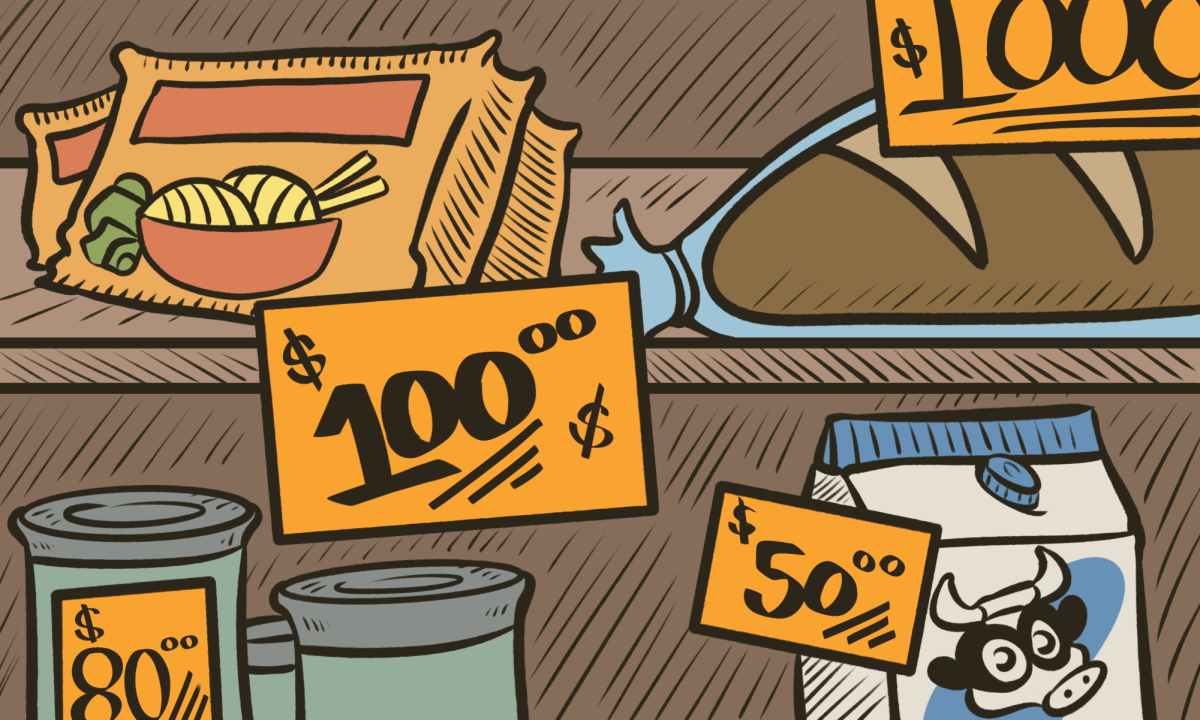
President Donald Trump’s sweeping “Liberation Day” tariffs were determined illegal by the United States Supreme Court in a majority 6-3 decision Feb. 20.
These tariffs went into effect shortly after Trump took office and aimed to reduce the U.S. trade deficit, increase manufacturing and target drug trafficking. Since then, the trade deficit has grown, manufacturing jobs have fallen and prices have increased.
Martin Shields, a professor of economics at Colorado State University, studies regional and labor economics at CSU and has spent time examining the impacts of the global tariffs on U.S. businesses and consumers.
“A tariff is basically a tax on imported goods,” Shields said. “If we purchased a dollar of imports from Brazil, the government would put a tax on that. So, effectively, that good would cost $1.50 to bring in.”
The Reciprocal Trade Agreements Act, which gives power to the president to leverage trade as both a political and economic tool, allows the president to change existing tariffs by 50% and negotiate trade agreements. Some have raised concerns that the Trump administration has taken measures that exceed the power granted within the RTAA.
Trump also argued that the International Emergency Economic Powers Act implicitly granted him the right to implement the tariffs without needing to go through Congress. This was rejected by the court, with Chief Justice John Roberts claiming there to be no explicit statement in the Constitution that allows the president alone the right to taxation, citing Article I, Section 8 of the Constitution, which exclusively grants Congress this power.
Despite the court ruling, not all of Trump’s tariffs have been reversed. Tariffs put in place under other legal grounds, including Section 232 of the Trade Expansion Act, are still in effect along with others from his first term.
“People don’t, in general, like uncertainty,” Shields said. “One of the things that’s happened with the tariffs is (that) one day they’re 20%, the next day they’re 50% and then they’re down to 10%. Maybe the courts are going to overturn them, maybe they’re not … and that’s expensive, but it also is just destabilizing.”
What is next for tariffs on U.S. trading partners?
Shortly after the Supreme Court’s ruling, Trump imposed a new 10% “blanket” tariff on many imports under new legal grounds: Section 122 of the Trade Act of 1974. The tariff went into effect Feb. 24.
Trump said he intends on raising the tariff to 15% but provided no formalized directive to do so under the Trade Act. These new tariffs will last only 150 days unless approved by Congress. However, the flashy 10% doesn’t always prove true. Tariffs on goods that travel throughout the manufacturing process are subject to tariff stacking and the tariffs themselves vary based on material, origin country and other factors.
Anders Fremstad, associate professor of economics at CSU, spoke on the complexity of these tariffs.
“It seems like it’s a simple rule, a 10% rule, a 15% rule and so on,” Fremstad said. “But if you get into the details, like the tariff for individual items, it varies dramatically within countries.”
Daniele Tavani, the chair of the economics department at CSU, said he is doubtful that these new tariffs will surpass the 150-day limit amid midterm elections and the unpopularity of tariffs.
“I think the 150 days puts Congress in the middle of the midterm campaigns, and I think tariffs are widely unpopular right now,” Tavani said. “I don’t think there are a lot of incentives for neither the house nor the Senate to ratify (the tariffs).”
Until it was deemed illegal under IEEPA, countries had scored lower tariff rates in trade agreements with Trump, while some countries imposed retaliation tariffs. Several countries, including the United Kingdom, Canada, Australia and members of the European Union even created trade agreements without U.S. participation to avoid reliance on U.S. trade.
“You have many countries that used to want to be trade partners with the U.S. bypassing trade with us all together,” Tavani said. “They’re bypassing the largest economy in the world all together, and I think that can’t be good.”
Businesses ask for refunds as tariff fight continues
While Trump claimed that countries that import to the U.S. pay the import taxes, in reality, businesses across the country are paying a “duty” in order to purchase the materials and products they need.
Kevlyn Zierk, the owner of Festive Gal in Denver, makes and sells custom gifts and party decor. Zierk has had to take on the extra costs of tariffs when importing the raw materials she needs.
“It was absolutely infuriating how the administration had this narrative — which was a complete lie — that these other countries were paying the tariff,” Zierk said. “Before (goods) would get delivered to me, I literally have to pay a bill.”
Small businesses who buy overseas have been hit the hardest by the varying prices of imports, with many unable to absorb extra costs that have resulted from Trump’s tariffs. Now many are demanding refunds. Currently, over 1,000 small businesses, including Zierk’s, have joined together in signing a letter by the We Pay the Tariffs Coalition to Congress and the Trump administration. The letter serves as a demand for “full, automatic and fast refunds of all unlawfully collected tariff payments.”
While the U.S. government attributes tariffs as a way to return manufacturing to the U.S., Zierk stressed there is no aid or incentive for businesses to source within American borders.
“There was no support or incentives to even try and to figure out how to change your supply chain,” Zierk said.
Unpredictable tariffs also make it difficult for businesses to properly predict and prepare for the future, stunting any growth that the tariffs might encourage.
“I think we’re probably paying more than we’d even need to for goods in the United States now because companies don’t know reliably what arrangements they can build over the longer run,” said Fremstad.
Currently, more than 1,000 companies including Dyson, FedEx and Costco have filed suit in the U.S. Court of International Trade for tariff refunds.
Tavani suggested that bigger companies may have been reluctant to upset the Trump administration before the Supreme Court ruling.
“The plaintiffs in the Supreme Court ruling, they are not big companies, right?” said Tavani. “It’s possible the bigger companies didn’t want to upset the Trump administration by filing a lawsuit.”
What consumers should expect
The cost of tariffs on countries importing to the U.S. are often passed down to American consumers by businesses who face higher import costs. For Fort Collins residents, Fremstad does not anticipate any immediate effects from the new tariffs.
“A 15% increase in the average tariff isn’t going to lead to a 15% increase in the cost of living for Americans,” Fremstad said.
In the meantime, Trump’s blanket tariff currently sits at 10%, and some experts are saying that the impact of tariff costs on consumers have already started to take effect. The Tax Foundation found that the average U.S. household saw a $1,000 tax increase last year as a result of the tariffs. Without the court’s ruling, this would have increased to around $1,300. Currently, the foundation estimates consumers in 2026 will see a $200-600 tax burden from the new 10% tariffs and a $400 tax burden from other tariffs that have not been ruled illegal.
Since many of the trade deals with individual countries secured under Trump’s illegal tariffs were rarely as low as 10%, Tavani said this new tariff may cause prices to decrease.
“Yes, it is possible to see some prices going down if the new set of tariffs happens at a lower rate than before,” Tavani said.
Reduced prices will also depend on the business decisions of companies who import. Some businesses may increase prices in order to make the money they lost last year back.
“The devil is in the details,” Tavani said. “If the companies selling the goods subject to higher tariffs saw their profit margins eroded, … they may use this new policy — which is temporary, let’s not forget — to restore those margins.”
Reach Katya Arzubi and Ella Dorpinghaus at news@collegian.com or on social media @RMCollegian.