Editor’s Note: All opinion section content reflects the views of the individual author only and does not represent a stance taken by The Collegian or its editorial board.
Literature holds some of the rawest, most beautiful expressions of love that the world has laid its eyes upon. It’s capable of inscribing our most profound emotional experience into inky lines and curves, and it’s often the catalyst of budding romance between people.
Despite this, literature is killing romance in our society.
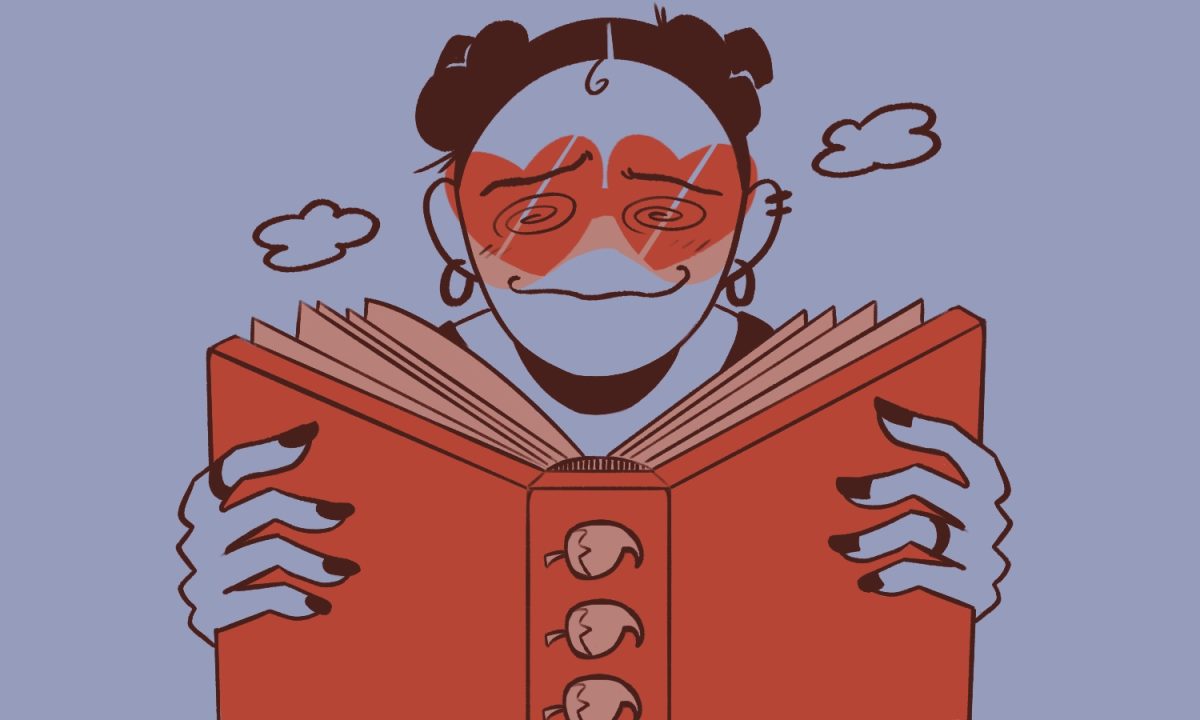
When you walk into any bookstore these days, the tables up front displaying the newest and hottest books are almost entirely romance. These books, often widely circulated around BookTok, are devoured for their rinse-and-repeat romance stories. It doesn’t help that every one of these books seems to keep hiring the same graphic designer. Each time you see that distinctive contemporary romance cartoon style, you know what you’re getting into.
It’ll be a reiteration of overused tropes that hinge on some tragic part of the female lead’s backstory. The chemistry feels lost in eternally long monologues, and even when anticipated romantic climaxes happen, it feels shallow.
Though I could go on about how it feels like the standard for writing excellent literature has dropped, I don’t find this to be the main culprit in romance’s murder. The writing — usually poor — typically dissolves the plot into smut or erotica. And herein the problem lies.
Most smut, if not all, subverts realistic relationships and depicts glossy fantasies that are inherently damaging. Research has shown over and over again how consumption of this material can twist expectations and lead to diminished real-world connection. Relationships become stale and disappointing, unable to compete with the engineered hyper-arousal that erotica delivers. The damage that can ensue is far more harmful than people realize.
“If this is your romance, you will always be chasing something that doesn’t exist in any real-world relationship. It cannot love you the way that you can love.”
I understand this may not be received well, as the sudden increase in young adult erotica in recent years has been met with empowerment. I find labeling it as “empowering” troublesome. People tend to argue that there is liberation in consuming young adult erotica, but is there really liberation in potential addiction? Is the “reclamation” people claim to be happening actually just a re-feeding into the abusive industry? This is not the route to celebrating female authors or sexuality.
Please hear me when I say that I am not shaming anyone who reads this content. After all, it was popularized for a reason. However, just like with any porn consumption, it’s trying to fill a gap that it cannot fill. If this is your romance, you will always be chasing something that doesn’t exist in any real-world relationship. It cannot love you the way that you can love.
The idealism that romance novels bring can be beautiful. In a world consumed by social media and instant gratification, there’s something to behold about adorably cringe adoration that burns slowly and naturally. But with erotica becoming the overarching trope that sends books flying off the shelves, I fear we are allowing ourselves to become shallow once again.
Embrace the humanistic love that has embossed our world for generations. Make the mistakes. Heal and reconcile. Fall in love with the person, not what they give you. Be gentle and compassionate: first with yourself, then to another. Everything else will follow.
Hopefully the next romance book that hits the front table will graciously depict this narrative with a new graphic designer.
Reach Carmel Pan at letters@collegian.com or on social media @RMCollegian.