
Editor’s Note: All opinion section content reflects the views of the individual author only and does not represent a stance taken by The Collegian or its editorial board.
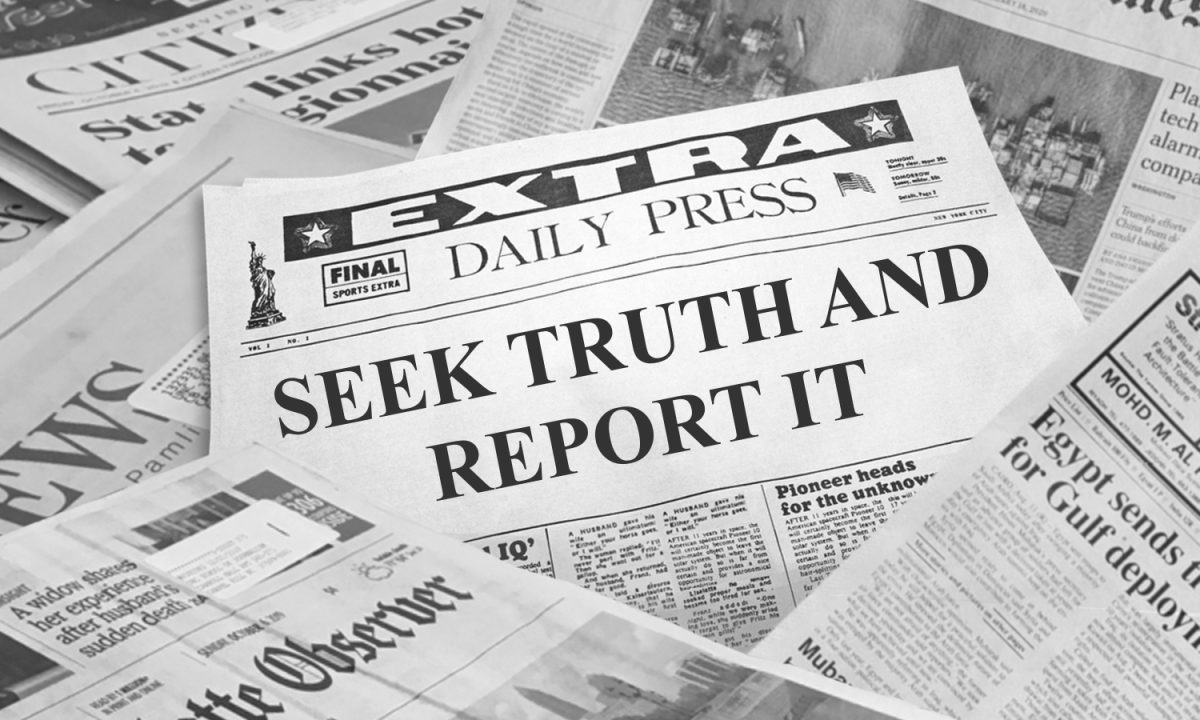
Newspapers have been struggling in the last two decades, both online and offline, and this is no secret. As The Local News Initiative at Northwestern University stated in a 2025 report, “There has been a net loss of over 3,400 papers since 2005.”
The recent gutting of staff at The Washington Post is a symptom of a much larger issue facing the news industry. The commercialization of news and prioritization of profit are fundamentally antithetical to the purpose of news and its role as a resource for the people. What will this do to the legacy of a once-local paper that reported on the Pentagon Papers and made national headlines? What damage has Jeff Bezos’ acquisition of The Post done for its staff and readers, and what will come after?
The loss of local media is detrimental to communities and the nation as a whole; journalism is meant to serve the people and our democracy, not the pockets of people who already have more money than most Americans combined. The Post is no exception, and its staff cuts will likely ripple throughout American media in both small and large ways.
The Post was once an example of the power of quality journalism and the rights of the American people to be informed. Democracy will die in darkness, and The Post’s ethos may no longer ring true if it only seeks profit and political gain.
Money is not supposed to be the ultimate goal, in the media or otherwise. Quality, reliable and trustworthy information is supposed to be the point. We’ve lost the plot, so to speak, on what journalism is and who it is for. We’ve also somewhat lost sight of the education and training that goes into being a journalist. With social media and an iPhone, anyone can be labeled a journalist, regardless of whether or not they do the job right.
“It is easy to slip into hopelessness for the modern news industry and whatever future the industry carries, but that would be a disservice to the work journalists have been doing for years and will continue to do.”
The shutout and dispensability of journalists will continue to create issues that harm communities and their residents at national, state and local levels. How can local journalism be expected to thrive when The Washington Post is struggling? How can The Washington Post even be struggling when its owner has a net worth of nearly $220 billion?
Corporate greed has killed The Post and many other smaller news outlets along the way. Fort Collins’ local paper, The Coloradoan, is owned by Gannett, which operates hundreds of daily and weekly newspapers across the U.S., including USA Today. Fort Collins used to have over 10 local newspapers, according to Fort Collins History Connection, and now has three, including The Rocky Mountain Collegian.
We’re a nonprofit organization, and that’s a great start. However, residents of Fort Collins would benefit from a wider variety of news sources and that, unfortunately, takes money. Money that, as evidenced by Bezos’s recent cuts of The Post, is not considered worth spending on serving the public and communities through journalism.
Ruth Marcus of The New Yorker argued that Jeff Bezos killed The Post; other lesser-known owners of lesser-known papers will do the same thing, like they have been doing for years. But it doesn’t have to be this way. Nonprofit news outlets like The Colorado Sun, ProPublica, Boulder Reporting Lab, 19th News and many more are becoming increasingly more prolific and valuable to their local communities, according to the Institute for Nonprofit News index. They are filling gaps, especially at the local level, and can continue to do so with even greater support.
It is easy to slip into hopelessness for the modern news industry and whatever future the industry carries, but that would be a disservice to the work journalists have been doing for years and will continue to do. From Ida B. Wells to Bob Woodward, Megan Twohey and Jodi Kantor, journalists have consistently sought accountability from those in power and strived toward an informed public. It may look different in the digital age, but the mission of the news industry must remain. So please — support local media, talk to a journalist and remember that money doesn’t magically fix everything.
Reach Aubree Miller at letters@collegian.com or on social media @RMCollegian.



![[name not provided] A protestor holds up a Palestinian flag during a "Freedom for Palestine Protest" on College Avenue in Fort Collins.](https://collegian.com/wp-content/uploads/2023/10/13_10_23_Freedom_for_Palestine_Protest_CMckinzie-10-1200x801.jpg)