
On July 4, 2025 President Donald Trump signed what he coined the One Big Beautiful Bill Act, which in part makes substantial changes to student loans. Many of these changes will begin implementation July 1.
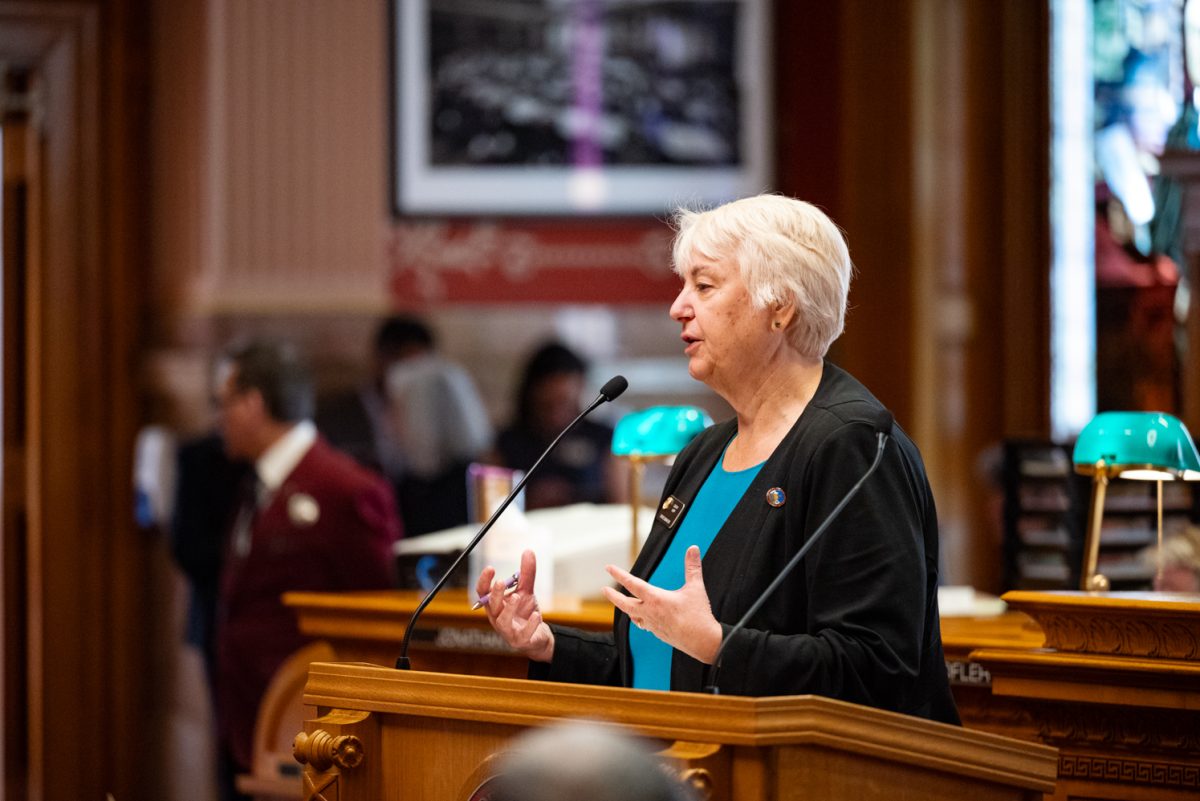
Tony Frank, the Colorado State University System chancellor, sent an email to the CSU community July 11, 2025 addressing these changes.
“We’ll continue to work at the federal level to maintain access funding in any and all forms,” Frank wrote. “Will the OBBBA changes stress those systems? That seems likely. Do they leave us without resources? Absolutely not.”
While some changes to financial aid were enacted immediately after the OBBBA’s signing, many changes to student loan provisions are slated to begin this summer. These changes were negotiated among a group of individuals and organizations that comprise the Reimagining and Improving Student Education Committee, who “place commonsense limits and guardrails on future student loan borrowing and simplify the federal student loan repayment system,” according to a press release from the U.S. Department of Education.
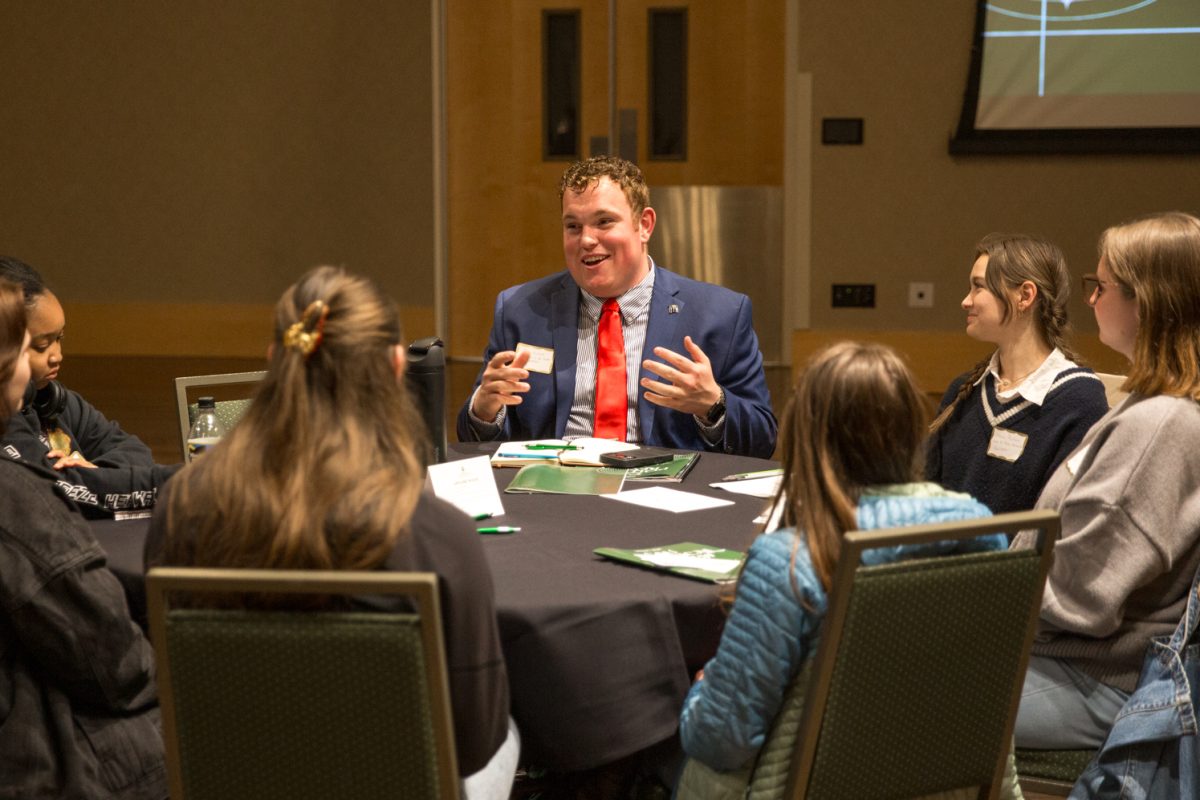
The changes point to a reduction of the federal government’s role in higher education, said Trenten Robinson, instructor in CSU’s master of public policy and administration program.
“I think they’re really trying to reduce the role that the federal government plays in education, particularly in higher education,” Robinson said. “This hasn’t necessarily come with some sort of supplemental support for alternative types of continuing education, such as community colleges or technical education programs. … A benevolent read of that is we’re reducing the financial burden on the federal government.”
As CSU students prepare for the 2026-27 school year and have time to file their Free Application for Federal Student Aid until June 30, here is what they should know about upcoming changes to student loans.
Repayment plans
Currently, there are four categories of student loan repayment plans: Standard, Graduated, Extended and Income-Driven Repayment plans. While current loan repayers may keep their current plans, some may be phased out by 2028, according to a resource from CSU’s Office of Financial Aid. The OBBBA reduces current payment plans to two options for loans taken out on or after July 1, 2026 :
New Standard Plan
This is a fixed payment plan that allows loan borrowers to pay off their loans in a 10-, 15-, 20- or 25-year period depending on the total size of the loans. According to PBS, repayment breakdowns look like the following:
- Less than $25,000: 10-year window
- $25,000 to $49,999: 15-year window
- $50,000 to $99,999: 20-year window
- $100,000 or more: 25-year window
New Income-Based Repayment Plan (Repayment Assistance Plan)
The RAP plan replaces current income-based repayment plans, such as the Income-Contingent Repayment plan, Pay As You Earn plan and the Biden administration’s Saving on a Valuable Education plan.
“(The SAVE Plan) was an incredibly flexible program that was helping move people towards student loan forgiveness,” Robinson said. “(OBBA) has largely killed that policy.”
Under the RAP, borrowers pay 1-10% of their total adjusted gross income if their income is greater than $10,000. If a loan borrower’s total adjusted gross income is less than $10,000, they will pay the minimum payment of $10 a month.
For each dependent the loan borrower has, their monthly repayment will be reduced by $50 unless it goes below the minimum payment of $10.
Under this plan, borrowers have up to 30 years to pay off their loans and any outstanding balances past the 30-year pay period will be forgiven.
Lower loan caps
Undergraduate students aren’t impacted by loan caps under OBBBA. However, graduate students are being significantly affected.
Notably, Grad PLUS loans will no longer be available after July 1, 2026 for new borrowers, including current graduate students who want to start an additional program. For current Grad PLUS loan borrowers, these loans can be taken out for up to three additional years or until the completion of their current degree program — whichever comes first.
CSU Director of Crisis Communications Nik Olsen provided The Collegian with an email sent to graduate students in August 2025, which further addressed changes for graduate students.
- There will be a $275,000 cap between undergraduate and graduate loans.
- Masters and doctoral students can take out up to $20,500 annually and will be capped at an $100,000 lifetime borrowing limit through the Direct Unsubsidized Loans program.
- Students enrolled in a professional degree program may borrow $50,000 annually and are capped at a $200,000 lifetime borrowing limit.
“These loan limits will help drive down the cost of graduate programs and reduce the debt students have to take out,” reads a November 2025 press release from the United States Department of Education.
The RISE Committee also defined what degrees are considered “professional,” according to the November 2025 press release, designating degrees including medicine, law, dentistry and more under the category.
These definitions excluded programs like nursing and education, Robinson said.
What about Parent PLUS loans?
Parent PLUS Loans will also be capped under OBBBA changes. Parents will be capped at $20,000 a year and $65,000 a child.
How can students prepare?
Robinson encouraged students to seek support from financial aid and their advisers. He emphasized that these changes will be impacting future loans taken out after July 1 of this year and not current loans student and parents may already have.
“With (OBBBA), where we know it’s going to have impacts, we’re waiting to see how it’s going to change in the administration of everything,” Robinson said. “Hopefully, … the rose-colored glasses approach to this is correct: that the changes to the caps outside of graduate programs won’t have a huge impact on students. But given the trajectory and the stated policy goals of the Trump administration, I would expect to see future changes and future restrictions to student loans and to higher education institutions in general.”
Students can receive financial aid support at The Hub, which can be contacted via phone at 970-495-4482, through filling out the contact form or by visiting in person at the Lory Student Center.
Reach Chloe Rios at news@collegian.com or on social media @RMCollegian.