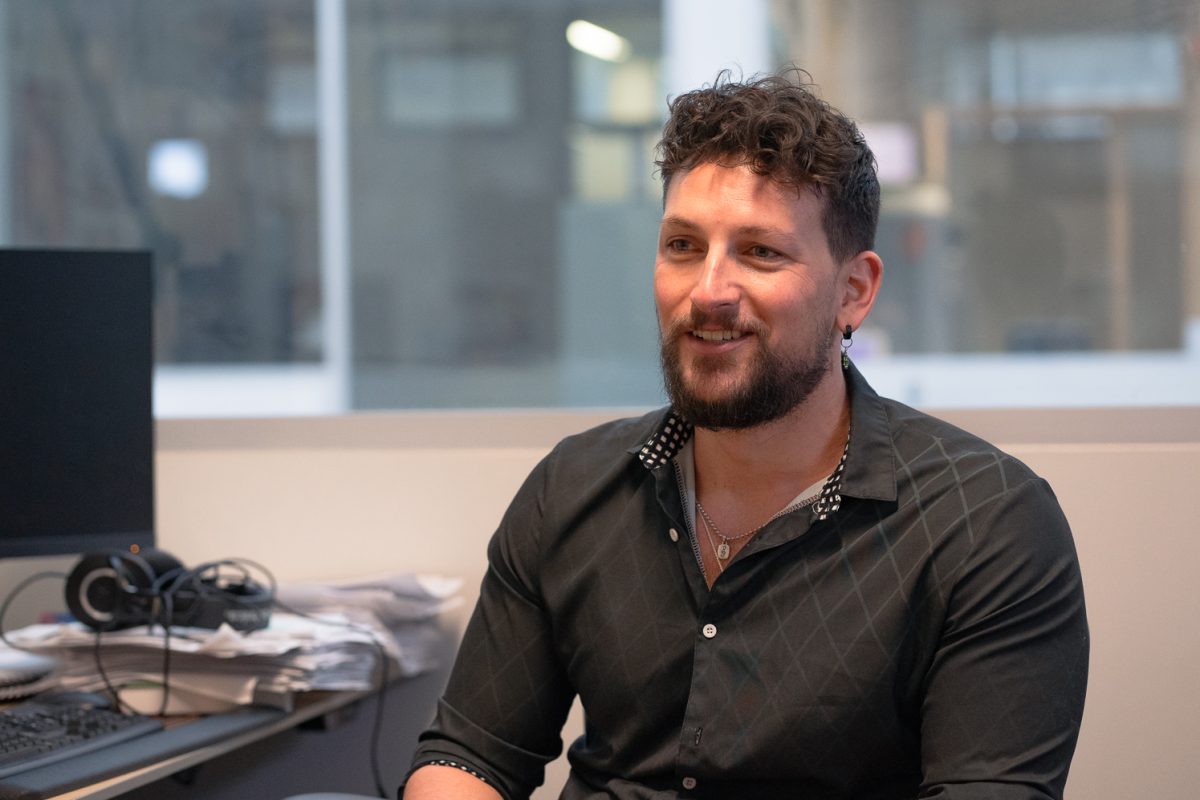

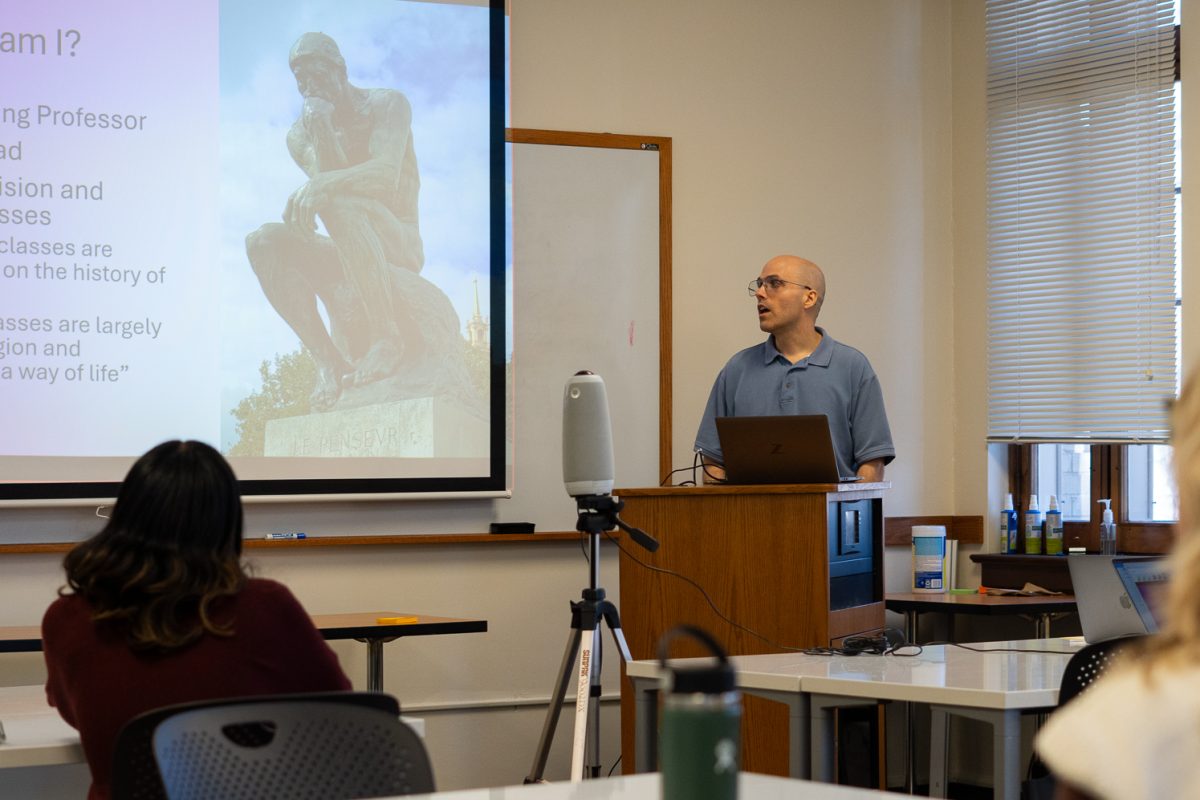
Colorado State University philosophy Professor Paul DiRado led a Feb. 5 session exploring how he and other philosophy professors have been implementing certain practices to avoid artificial intelligence in the classroom altogether, ultimately encouraging students’ own personal thinking while leaning into the human side of learning.
In the session hosted by The Institute for Learning and Teaching, DiRado detailed his experimentation with the curriculum in some of his introductory-level classes to see how students would respond.
“The main thing that can make this class valuable is you figuring out for yourself what you think it means,” DiRado said. “So that was what really got me seriously thinking about redesigning some of these classes to just make it so that (AI) is not even a temptation.”
DiRado’s discussion delved into refocusing human thinking and bringing that value back into students’ mindsets. He said there are a multitude of classes at CSU wherein students can learn how to use AI; but he wanted to explore how not to use it in order to focus on the human side of education.
“It’s really important that we think of education as thinking. But if what we’re outsourcing to the machine is thinking itself, I’m very concerned about what we’re doing to ourselves if we start letting these machines think for us.” –Paul DiRado, CSU philosophy assistant teaching professor
“I think students want what the humanities have to offer, especially in the age of AI,” DiRado said. “Students do not want to become fact-checkers for chatbots, which is what they are frequently being told is their job.”
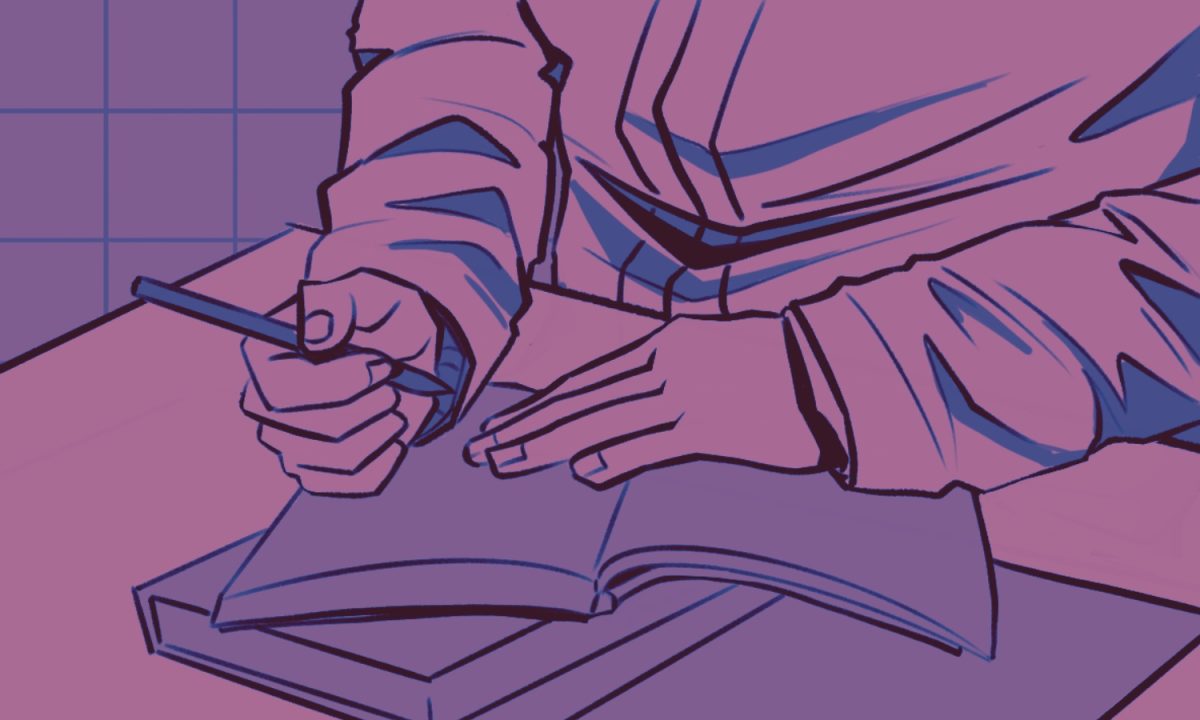
DiRado said he designed his classes so that students would not need technology to complete them. His methods include: administering short multiple-choice style reading quizzes at the beginning of classes, placing students into permanent groups to have them collectively analyze readings, tasking students to write journal reflections that connect the reading to their own lives, and allowing revision exams in which students get to create the prompt, ultimately encouraging his class to engage more directly with the primary source texts.
“The goal here was almost just to have them think of what we’re doing in this class as a conversation — that it’s not merely me standing up and talking,” DiRado said. “It’s trying to enter into a conversation where we think together.”
For DiRado, these types of assignments help students focus on discovering who they are. Despite some of the challenges that came with this experiment, he said he was excited to see that students were engaged.
“There is a real risk of us failing in our fundamental mission as humanities instructors if we don’t defend our students’ right to gain what they can learn from a humanities education when it is not just subordinated in every instance to the needs of large technologies,” DiRado said.
Joseph Brown, director of the academic integrity program at TILT, said he appreciates how DiRado passionately breaks through the disruption that AI can create and allows students to discover their authenticity.
“(AI) is like having another voice in a conversation that makes it harder for you to hear your own thoughts,” Brown said. “Paul’s approach is really trying to understand how he can preserve the things that he loves most about his class, but also how to get students to learn in that class. … What I love about Paul’s approach is the way he tries to synthesize that the best of what his profession is bringing to students is in a landscape that we don’t control.”
TILT Senior Instructional Designer Chris Geanious said he recognizes how instructors can struggle between the duality of wanting to interject AI in their courses so students are equipped with those skills, while also recognizing their own work as instructors.
“TILT is taking the lead on showing to the campus that we want to help the community grapple with and address the challenges and the promise of generative AI,” Geanious said. “This has been a real nice venue to react to and be able to provide a lot of different voices for faculty across campus and beyond.”
DiRado closed the session reinforcing the values of individuals having their own way of thinking, adding that he is working toward implementing this structure into higher-level classes.
“It’s really important that we think of education as thinking,” DiRado said. “But if what we’re outsourcing to the machine is thinking itself, I’m very concerned about what we’re doing to ourselves if we start letting these machines think for us.”
Reach Sananda Chandy at news@collegian.com or on social media @RMCollegian.