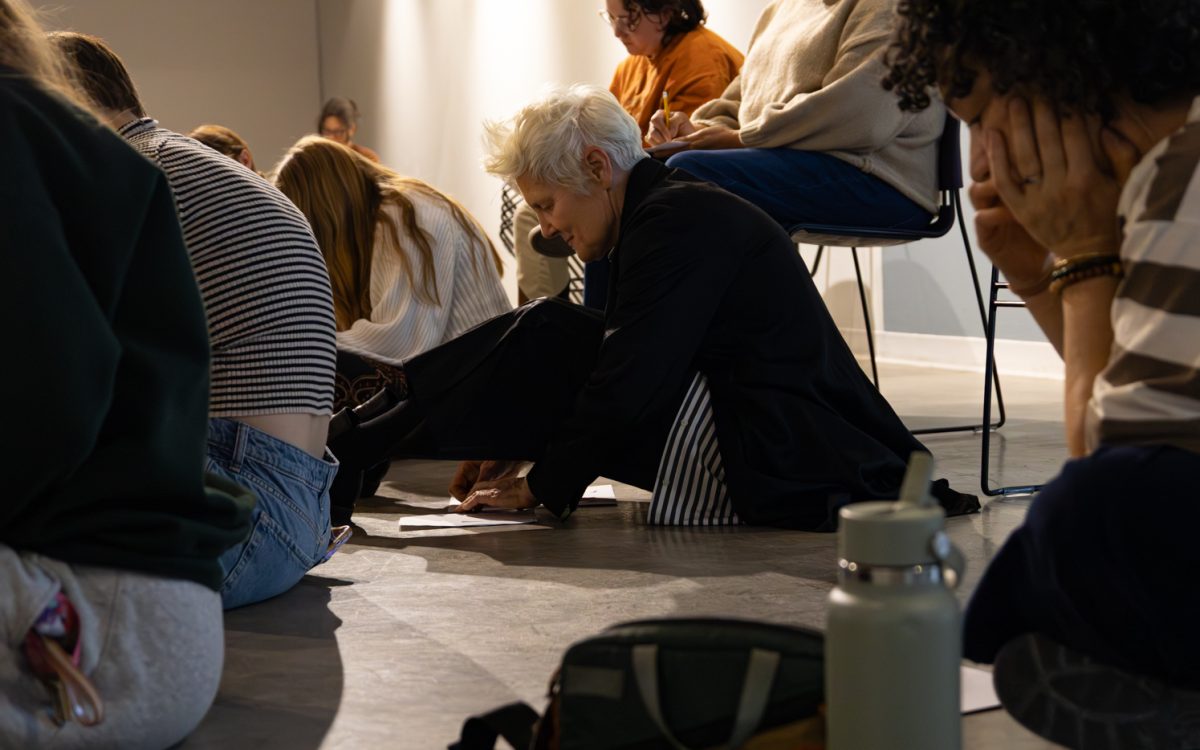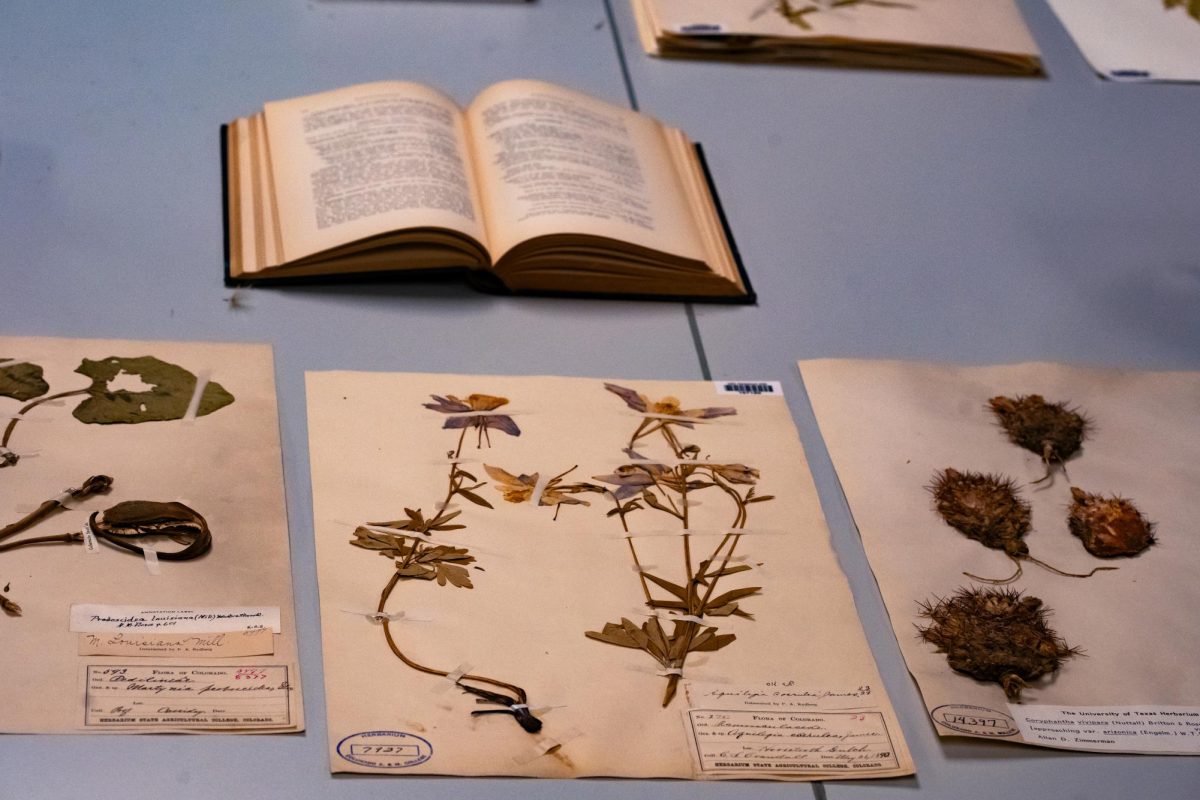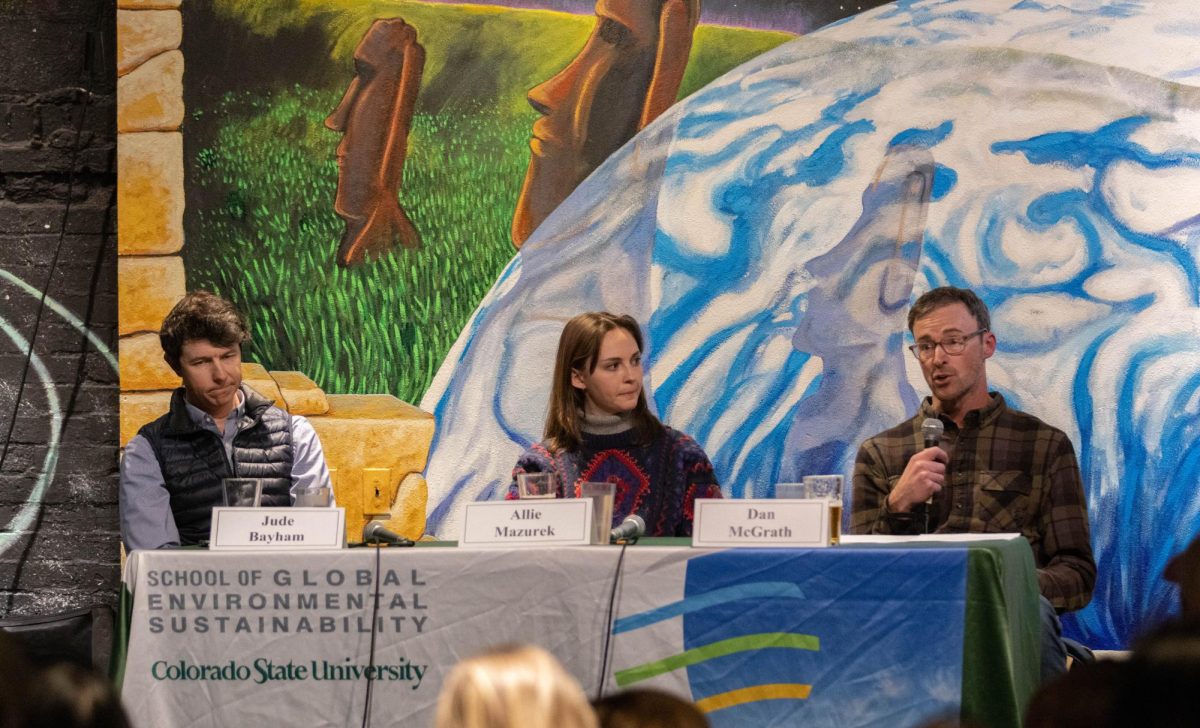


Although philosophy may not be the first thing people think of when it comes to conservation, Colorado State University’s own professor and philosophy department chair, Ken Shockley, was featured as a part of the Green Bag Seminar Series hosted by the Colorado Natural Heritage Program to discuss environmental vulnerability and the practice of environmental ethics.
The CNHP is a nonacademic department within CSU’s Warner College of Natural Resources. The goal of the series is to supply the knowledge people need to protect and save Colorado’s biodiversity.
“Natural heritage is a responsibility to pass the nature on that we have now to the next generation,” said David Anderson, the program’s director and chief scientist. “So as Colorado Natural Heritage Program, we have an ethical mandate to create the knowledge that people need in order to do the conservation.”
According to Stanford University’s Encyclopedia of Philosophy, environmental ethics is “the discipline in philosophy that studies the moral relationship of human beings to, and also the value and moral status of, the environment and its non-human contents.”
The practical purpose of these ethical principles is to provide moral guidelines for social policies that affect the environment.
Shockley holds the Holmes Rolston Endowed Chair in Environmental Ethics and began the seminar by acknowledging the late CSU Professor Holmes Rolston III, who died in 2025. Rolston was a renowned philosopher who helped found the field of environmental ethics in the 1970s at CSU and has been accredited as the “father” of environmental ethics.
The field has since changed with increased efforts to integrate ethics into policy decisions more directly. However, Shockley pointed out a weak point in the integration of ethics into policy making: their definitions. One definition in particular, Shockley said, was that of “vulnerability,” as defined by the Intergovernmental Panel on Climate Change. The definition by the IPCC combines susceptibility to harm and lack of capacity to adapt together in one definition, which is the main problem Shockley identified.
The ambiguity of the definition led to the combination of both susceptibility to harm and capacity to adapt. Instead, Shockley said there are two distinct faces and definitions of vulnerability: individual vulnerability and systemic vulnerability.
To illustrate this, Shockley described a visit he made to an estuary in Ghana. He said that upon closer inspection, the body of water was completely infiltrated with plastic.
While walking along the shoreline, Shockley noticed a fisherman who was struggling to pull out his net, which he said was twice as heavy as it had been in years. Not because it was filled with fish, but because the net was overflowing with plastic debris from nearby incomplete waste facilities dumping trash into the water.
However, he argued that the estuary cannot simply be labeled as being vulnerable because, as the definition goes, it would imply the body of water is something that has interests or well-being that can be harmed. The estuary in this example is an ecosystem with no agency.
To Shockley, an individual like the fisherman fits more into the definition of vulnerability. The fisherman is susceptible to harm because his livelihood and well-being are at risk due to the plastic. However, the system needs system-resilience solutions that help it not just adapt, but survive. Treating the two as one can make decision-makers pick the wrong fixes.
“So that individual’s vulnerability, in the clear sense of being susceptible to harm, their livelihood was at the threat of harm, their economics was at threat of harm, (as well as) their well-being,” Shockley said. “That contrast between the vulnerability of the individual and the vulnerability of the estuary gives us our basic contrast.”
Exposure to something like plastic, although it can make individuals susceptible to risk, can make systems open to interactions that help them adapt. For example, Shockley said that an increased educational community response emerged in Ghana because of altered conditions.
Therefore, Shockley said exposure has both negative and positive outcomes as the common root of vulnerability and shouldn’t always be labeled as bad.
“If we think about trying to mitigate vulnerabilities as our primary form of interaction, which, quite frankly, is the way in which some policy takes place, we’re going to miss the possibilities of development route adaptation,” Shockley said.
The 2025-26 Green Bag Seminar Series welcomes all who are interested to attend and continues through May 6. All seminars take place on the first and third Wednesdays of the month, from 3-4 p.m. in person and online.
CNHP Outreach and Communications Specialist Julie Kallenberger said she has seen a lot more engagement with the series, and her team has put together a great seminar speaker series list.
“I love to connect our staff and our partners to the cool work they’re doing,” Kallenberger said. “We are really enjoying bringing in these different types of speakers, such as Ken today.”
Reach Katya Arzubi at news@collegian.com or on social media @rmcollegian.