

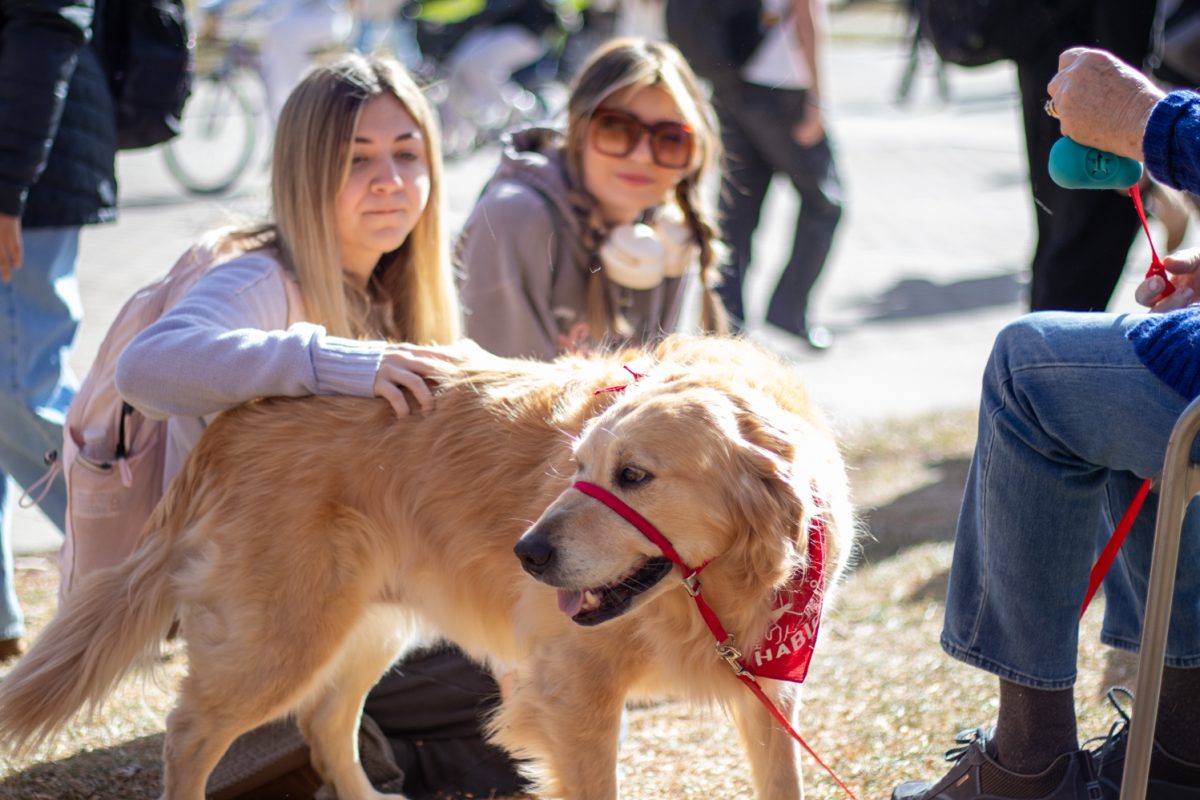
Through Colorado State University’s school of social work, The Human-Animal Bond in Colorado provides opportunities for research and volunteering, as well as bringing a little bit of comfort and support for humans and animals alike. HABIC does programs all over the Fort Collins area, from on-campus events to interactions with community members in retirement homes, hospitals and local schools.
“HABIC is a nonprofit center in the Colorado State University school of social work dedicated to improving the quality of life for people of all ages through the therapeutic benefits of companion animals,” said Shelby McDonald, HABIC director. “We advance that mission through education, research and community partnerships that connect people and animals in ways that promote health, learning and belonging.”
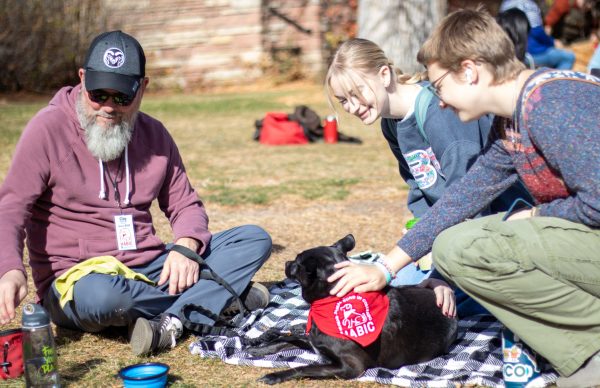
Dogs and cats in red vests can often be spotted around campus and in the community.
“Ultimately, what we’re doing is trying to train and certify therapy dogs and cats to go out into the community and spread love and joy and therapeutic support to people who need it most,” said Kate Miller, animal trainer and volunteer coordinator at HABIC.
These opportunities are mutually beneficial, for both the humans and the animals.
“There’s all sorts of physiological benefits to interacting with the dog, even just gazing into their eyes will increase oxytocin levels in the dog and the person,” Miller said.
Not only do people have a chance to connect with animals, but HABIC’s programs open up a door for much needed human connection, which can be important for students and others who may be struggling with their mental health.
“For students who are far from home or missing their own pets, connecting with a therapy animal offers a moment of comfort and companionship. It’s a grounding experience that helps them recharge and refocus.” – Shelby McDonald, director of HABIC
“College kids are under so much stress, so anything that we can do to kind of alleviate that a little bit,” Miller said. “I think that social catalyst is also really important because people will sort of group around the dogs and then there’s a reason to interact with these other students because the dog is there.”
HABIC has done a wide range of research on the human-animal connections, but the bottom line is that these connections make people feel good.
“For students who are far from home or missing their own pets, connecting with a therapy animal offers a moment of comfort and companionship,” McDonald said. “It’s a grounding experience that helps them recharge and refocus.”
HABIC hosts events like “De-stress With Pets,” an event through which students get to meet therapy animals and experience the benefits of the human-animal bond. Another way to get involved is through HABIC’s volunteer opportunities.
“Volunteering alongside our therapy animal teams allows students to witness the impact of this work firsthand: the smiles, the tail wags and the powerful interactions between teams and community members,” McDonald said.
HABIC is also expanding their training programs in the new year, making it easier for students to get involved and train their pets to be therapy animals.

“Historically, HABIC has focused on community engagement, education and research,” said Tricia Howley, HABIC office coordinator. “We will increase our focus on research, and we’re expanding our community engagement program to include dog training classes for the community.”
A new training program, called the “New Beginnings Course,” will allow more students and their animals to get involved with HABIC in the coming new year.
“The New Beginnings Course introduces basic obedience and helps handlers assess whether their dog is a good fit for volunteer work in the community,” McDonald said. “Alongside Beginnings, our new Skill Builders drop-in sessions provide an opportunity to work on specific trouble areas, including jumping on people, ‘leave it’ and ‘heel.'”
Miller and her colleague Sarah King are the trainers responsible for preparing dogs and cats to be therapy animals, as well as introducing the new training programs, which will also include scent training.
“There’s increasing evidence that like how humans do crosswords and that helps maintain cognitive ability, dogs doing nose work can have a similar role,” King said. “It’s just continuing to use their brain, but in a very low impact way on their bodies.”
Through their new program and beyond, HABIC is making connections with animals more available to help CSU students. McDonald, who has recently joined the HABIC team as director and directs CSU’s Research for Inclusion, Social Justice and Equity in Human-Animal Interaction Lab, aims to better understand human-animal connections and apply that work in the real world.
“I approach the work through both a scientific and a social lens, ensuring our programs are ethical, inclusive, grounded in data and make a measurable difference in people’s lives,” McDonald said. “HABIC is where we put research into action, translating what we know about the power of human-animal relationships into programs that improve lives across Colorado and beyond.”
Reach Gracie Douglas at life@collegian.com or on social media @rmcollegian.






Dennis • Dec 9, 2025 at 1:31 pm
Awesome photos!