
How to Build a Resume That Gives Recruiters Something to Believe
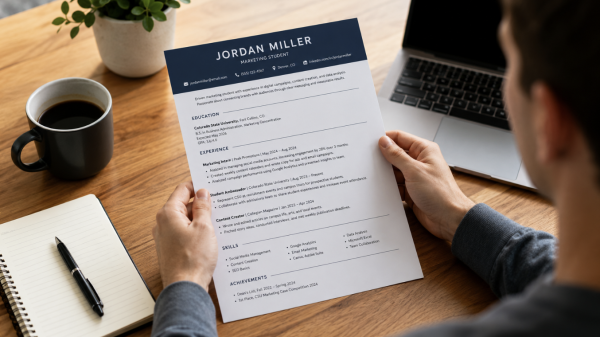
The Class of 2026 is entering a hiring market that rewards proof more than polish. NACE’s final Job Outlook 2026 Spring Update raised the projected increase in new-graduate hiring to 5.6%, up from the 1.6% estimate in its earlier report, and 70% of surveyed employers now report using skills-based hiring. For Colorado State University students, that shifts the resume conversation toward evidence: campus jobs, internships, class projects and volunteer work all count when they show how a skill was used. A resume is not an autobiography; it is a case for a specific interview.
The Job Posting Is Your Editing Desk
Start with the posting, not the template. NACE found that employers reviewing Class of 2026 resumes are especially looking for evidence of teamwork, problem-solving, and communication, while 81% use skills-based practices when creating job descriptions. Good resume tips begin by matching genuine experience to those requirements, then cutting material that does not help answer the employer’s problem. A resume builder can keep margins, dates, and headings consistent, and it can help a first draft look orderly, but it cannot decide which accomplishment deserves the top third of the page or whether a bullet actually proves the skill named in the posting. Evidence wins.
A Campus Shift Still Counts as Experience
Students often discount ordinary work because the job title does not resemble the career they want after graduation. NACE’s spring 2026 update says more than 40% of respondents value on-campus student work, while CSU’s Career Center advises students to construct bullets around an action, the skill used, and the result or value created. A dining-hall shift can show queue management and conflict resolution; a newsroom role can show deadline control, editing and source verification. Those examples are stronger than “responsible for customer service” because they give a recruiter something concrete to test in an interview.
Product Knowledge Can Become a Portfolio Story
Digital-product applicants have another source of evidence: a clearly labeled independent case study. A student in UX, analytics, or product operations could map how a sportsbook handles changing odds, live events, and account history, then document the workflow without implying employment by the company. Official product information shows that MelBet provides live scores and odds, quick access to bet history, live events, and mobile apps for Android and iOS.
Bullets Need Outcomes, Not Job Descriptions
The weakest bullet simply repeats a duty: “helped customers,” “managed social media” or “worked on a team.” Use strong action verbs and metrics instead when they are available. There’s much more information in phrases like “trained four new employees,” “edited three stories per week,” or “resolved 25 support requests during a shift.” Numbers must be real; invented precision is worse than an honest qualitative result. Details count.
Your Portfolio Should Show the Work Behind the Tool
Technical resumes get stronger when a tool is tied to a real task instead of just listed in a long software section. A student reviewing mobile products could break down things like navigation depth, live data behavior, account flows, and where the app fails, then explain how they tested each part in a portfolio. A case study built around the MelBet apk, for example, can look at how the Android install process works, how real-time betting updates appear, how bet history is accessed, and how users move through live events based on what the official mobile page describes. Framing it as an independent project keeps the resume honest while still showing careful observation, structured testing, and real product thinking instead of just saying you’ve “used the app.”
A CV Is Not Just a Longer Resume
A resume and a curriculum vitae are built for different purposes. Colorado State University describes a CV as a detailed record of academic background, experience, and achievements, typically used for teaching, research, or administrative roles, while its resume guidance focuses on short, targeted evidence tailored to a specific job. Students looking at CV examples for graduate school or research positions shouldn’t assume that format works for a private-sector internship. Follow the employer’s instructions carefully, double-check dates and job titles, and remove any claims you can’t support.