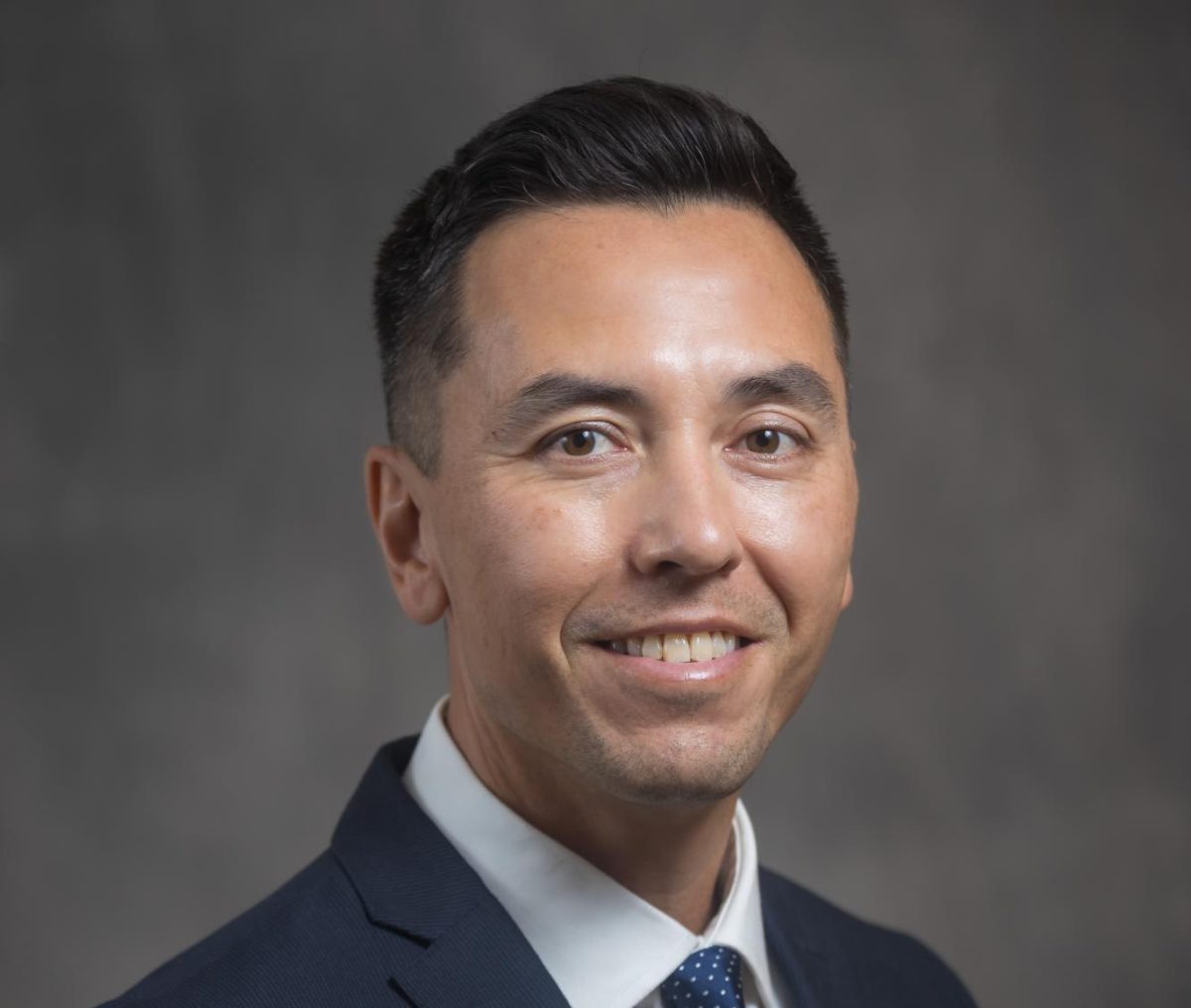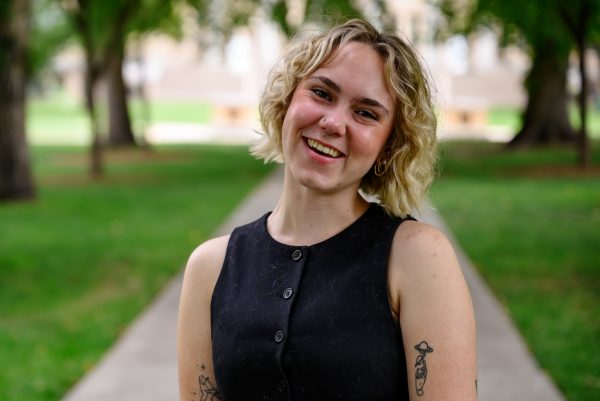


Every day, millions of people around the globe produce nearly immeasurable levels of productivity output, ranging across a wide breadth of industry and office settings. While few may consider the psychology behind workplace dynamics, Keaton Fletcher, a Colorado State University assistant psychology professor, has pursued a career of translating this information to everyday professionals.
Director of the Occupational Health Psychology Program, Fletcher recently received the 2026 Joel Lefkowitz Early Career Award for Humanistic Industrial-Organizational Psychology from the Society for Industrial and Organizational Psychology.
According to the organization’s website, SIOP selects award recipients who strive for “workforce improvement through data-driven insights and pedagogical advancements,” and noted Fletcher’s dedication to “advance the cause of worker dignity, economic and social justice.”
Fletcher said he originally intended to pursue medical school after completing his undergraduate studies but instead decided to enter the multi-faceted discipline of industrial-organizational psychology after reflecting on his love for the subject.
“This is the science of how people engage with work,” Fletcher said. “And the field ranges from, ‘How do we select people for jobs?’ (to) ‘How do we train them’ to ‘How do we understand how work interferes with family?’ or ‘How work causes health outcomes, both good and bad?’”
While the field of I-O psychology covers a breadth of subtopics, often focused on optimal performance and human output, Fletcher instead chose to focus his research on the social stress of work.
“In my field, there’s a lot of people who focus on performance; how do we help companies do better by getting employees to work more?” Fletcher said. “And having seen, I think the dark side of that with a lot of people in my life, my parents and friends who have been just chewed up by the system, I was much more interested (in), ‘What is the impact of the workplace on your health and well-being?’”
Everyone’s individual experience of a professional interaction can be unique and trigger varying emotional responses, which Fletcher noted as a personal interest in the field.
“The thing that really speaks out is the social stress,” Fletcher said. “Like through conversations, recognizing there’s individual differences in how we approach meetings. I get physically uncomfortable if I have something to say. … Whereas, I know other people get uncomfortable if they get called on and have to speak up. So that just excites me from the research perspective.”
Fletcher also serves as the director for the Leadership in Organizational Networks Lab on campus, which centers on his research themes, including data achieved through electrocardiogram measurements. The space employs several students at varying levels of study, with Fletcher serving as an adviser and mentor — a role that has not gone unnoticed by Don Rojas, department chair of the psychology department.
“What I can say about (Fletcher) is that he’s only been here for two years but has already had an outsized impact in that short time,” Rojas said. “He’s really stepped up to the template to help out when other faculty and students have been in need. He is a dedicated classroom instructor and mentor.”
This drive to assist as many prospective learners, both in and outside of the classroom and university setting, led Fletcher to co-found the Health Work Podcast. Hosted with fellow I-O Psychologist and previous graduate school classmate, Maryana Arvan, the platform seeks to make work healthier for anyone listening by offering tips and tricks related to workplace health, often directly from the researchers behind the findings.
“We both struggle with the challenge of academia, which is, like, your goal is to write journal articles that other academics are reading,” Fletcher said. “And so for an applied science, that just feels empty. Like, you want to put the science in the hands of the people who can use it, and that’s not just other academics. Science translation is really important to me, so that’s where we created this podcast.”
Producing bi-weekly since 2020, the pair said they have averaged 190 to 200 listeners per episode, with 4,000 total downloads. Arvan and Fletcher emphasized the podcast’s diverse listener base, ranging from early-career to veteran researchers across a wide variety of fields.
“Our goal was to make the latest research on worker health and well-being accessible to anyone interested in the topic in a fun and digestible format,” Arvan said.
While both contribute to the work of the podcast, Arvan noted Fletcher’s combined candid demeanor and deep research experience upon learning of his awarded honor.
“It’s no surprise to me and incredibly well-deserved,” Arvan said. “(Fletcher) is not only an exceptional scholar; he’s a wonderful teacher, a dedicated mentor and a gifted community builder. He cares about elevating others’ voices, both within the field and outside of it.”
Fletcher’s own dedication to the field only strengthened upon learning of the award — a commitment that will continue to grow with time.
“I was so excited,” Fletcher said. “I jumped up and down. … It’s just really important to me that we take our field and make it for workers, not for employers necessarily. And that’s how I approach this science, and that’s it. (It) just feels really good for that to be acknowledged.”
Reach Katie Fisher at science@collegian.com or on social media @RMCollegian.