

The Republican and Democratic parties nominate their candidates in Colorado through a series of assemblies, beginning with local caucuses. The Larimer County Republican Caucuses for 2026 will be held in person at 7 p.m March 3, while the 2026 Larimer County Democratic Caucuses will be held virtually from 5:30 to 8 p.m. March 5.
Before elections are held in November, the Democratic and Republican parties must decide who to nominate for a position. Each party holds a primary in which party members vote on which candidates should be nominated for which seats. Democrats and Republicans have separate primaries only open to their members, though unaffiliated voters can choose to vote in one of either primaries.
In Colorado, candidates are chosen for primaries by caucusing.
A caucus is a meeting in which registered Democrats or Republicans in a local precinct will discuss which candidates they would like to see on their party’s primary ballots, along with other issues. In these meetings, they elect community members as delegates who will then be the ones to decide which candidates go to the party’s primary.
“It starts with precinct caucuses — small neighborhood-level meetings where registered party members discuss issues, elect local officers and choose delegates to higher-level assemblies,” said Kyle Saunders, a Colorado State University political science professor, in an email interview. “These chosen delegates then attend county, district and state assemblies to vote on candidate nominations.”
Assemblies are where delegates hear speeches by candidates and vote for nominees to different primaries depending on the level of the assembly. Saunders said this puts emphasis on community involvement over the party at large.
“It gives active party members a direct voice in shaping the ballot before the broader primary in June,” Saunders said. “In this way, this system fosters party networks and party building and can favor candidates who have developed strong local support rather than just those with big campaign funds.”
Tim Kubik, chair of the Larimer County Democrats, explained that, as a result, electing these delegates is one of the main purposes of the caucuses.
“One of the key parts of the process is that anyone who wants to be a delegate needs to run to be a delegate,” Kubik said, “There are no automatic delegates in the caucus and assembly process in the state of Colorado.”
Each precinct gets a certain number of delegates they can send to the county assembly.
“Delegates elected from their precincts to serve as delegates to the county assembly will then have the opportunity to vote in a variety of types of races on who should be the nominee,” Kubik said.
After voting at the county assembly, the delegate process is repeated. A certain number of delegates who attend the county assembly will be elected to attend the party’s state assembly — a similar meeting in which delegates vote for the nominees to statewide primaries, which, this year, will include the nominees for governor and Colorado U.S. senator.
Additionally, delegates will be elected to a district assembly in which they vote for their party’s primary nominee for the district’s U.S. house representative. If the county is part of multiple congressional districts, delegates will be elected to the district assembly corresponding to the district their precinct is in. Larimer county is split across Colorado congressional districts two, four and eight.
To be eligible to vote in a precinct’s caucus, a voter must be a resident of the precinct, affiliated with the party and registered to vote 22 days before the caucus.
It is too late for unregistered voters to participate, but voters who were already registered to vote at their current address 22 days before their party’s caucus and who are affiliated with the Democratic or Republican party are eligible.
“There (are) 157 precincts that have Republican representation in them across Larimer County, and we will be holding those in 15 different locations,” said Sandra Aste, Larimer County Republican chair.
Aste said participants will first check in at their location to verify they are correctly registered, after which they will go to their individual caucus.
While all Republican caucuses in Larimer County will start at 7 p.m., the length of the meeting will depend on the individual caucus.
“Some people get done in 45 minutes; they can just cruise through it pretty quickly depending on the size of the caucus, and some of the caucuses take an hour or two,” Aste said. “It just depends on the size of the caucus, how much conversation there is, how many people they get to vote for as representation. That varies from caucus to caucus.”
Aste said that for her, the meetings are significant to communities in the Republican party.
“What’s really great with doing them in person is that there’s that opportunity to get to know people in your area, to get to know your neighbors and your fellow Republicans, and to learn about their background and have debate about different candidates before their decisions are made,” Aste said.
As for Democrats, Kubik said the caucus will be held on one large Zoom call where each precinct will go into separate break-out rooms to discuss their community’s delegates — originally a COVID-era practice.
“It’ll be a really big meeting to get started,” Kubik said. “Where there are uncontested races for delegate or precinct organizer, the whole body will approve people by acclamation. Where there are contested races, just as in the old days, we’ll go into break-out rooms, only this time the rooms will be virtual.”
Kubik added that in the break-out rooms, people looking to be delegates will state why they wish to run and will be voted on by the precinct as normal.
Kubik said the decision to hold the caucuses virtually was made for a variety of reasons. Online caucuses are lower in cost, and logistically, it is easier to record who gets elected online, as there are fewer volunteers needed and fewer possibilities for error. Additionally, a virtual caucus could be more convenient and accessible.
“There are still people who are suffering from long COVID who have other immune diseases, who are unable to attend a public meeting for a variety of reasons, and therefore may really want to participate virtually,” Kubik said.
Kubik also said he hopes that the virtual caucus will encourage younger voters to participate and explained that as the demographics of the party change, such participation becomes increasingly important in reflecting that change.
“I always hate the phrase ‘Young people are the leaders of the future,’” Kubik said. “When young people turn out in force, they’re the leaders of today.”
Because the caucus system can be difficult to understand, a large degree of effort is taken by candidates and their campaigns to help people preregister beforehand. Mary Leyendecker, a volunteer for the credentials board of the Democratic caucus, said doing so is particularly important for the caucus, as the virtual meeting could be difficult for senior residents to navigate.
“It does make it more accessible to people, but I think it also limits some accessibility for older folks,” Leyendecker said.
The Larimer County Democratic assembly will be held Saturday, March 7, two days after the Democratic caucuses March 5. Leyendecker said this means candidates will be frantically trying to secure the votes of delegates in the time between.
“Their ground game has to be really good right now to line people up, and then it has to be great on Friday,” Leyendecker said.
Kubik and Aste had similar sentiments on the importance of the caucuses in shaping their party’s primary ballots.
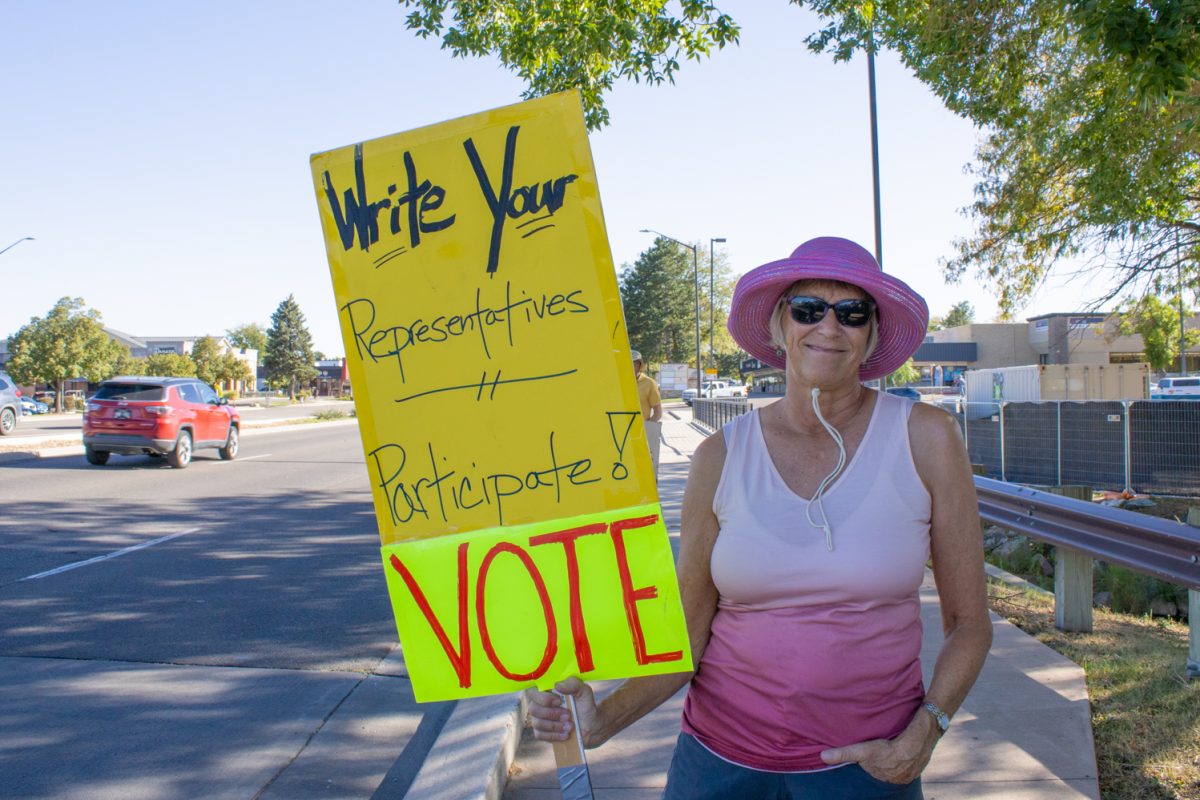
“One of the things that I’ve said repeatedly is that if we wait to get involved and vote only in November, then we’re voting for someone else’s choice,” Aste said.
Reach Maxine Bilodeau at news@collegian.com or on social media @RMCollegian.