
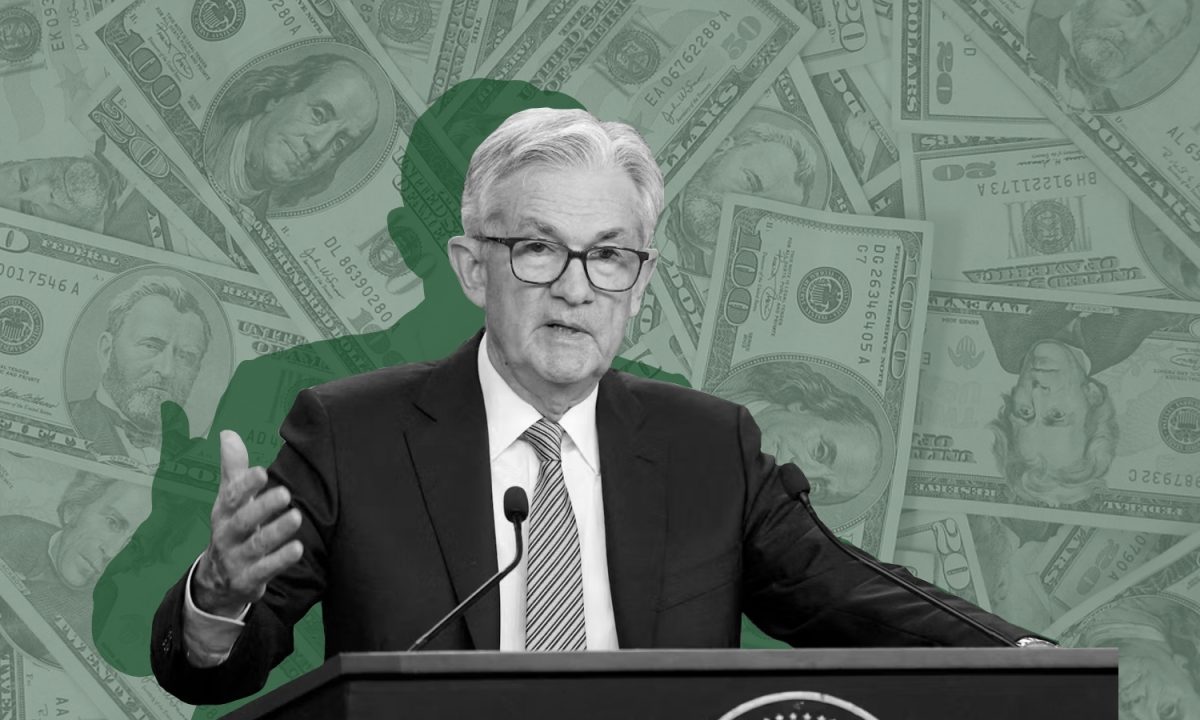
Recent investigations into Federal Reserve Board of Governor Lisa Cook and Chairman Jerome Powell by President Donald Trump’s administration have left many questioning if the independence of the Federal Reserve is under attack.
The Department of Justice launched a criminal investigation into the Fed’s $2.5 billion renovation of two office buildings, prompting scrutiny over Powell’s testimony of the costs. Trump then alleged that Cook committed mortgage fraud in an effort to remove her, a dispute heard by the Supreme Court Jan. 21.
“This new threat is not about my testimony last June or about the renovation of the Federal Reserve buildings,” Powell said in a Jan. 11 speech. “The threat of criminal charges is a consequence of the Federal Reserve setting interest rates based on our best assessment of what will serve the public, rather than following the preferences of the President.”
Throughout his presidential campaign, Trump promised to lower interest rates despite the executive branch having no control over monetary policy. He has frequently claimed that interest rates are too high, oftentimes criticizing Powell directly.
“Governments have a certain incentive to push the economy a little bit more than what they should because that will increase the (Gross Domestic Product) and reduce unemployment, and that gives votes,” said Marwil Davila-Fernandez, a Colorado State University assistant professor of economics.
Trump’s recent interventions represent one of the most significant escalations of scrutiny over the Federal Reserve in modern history.
The Federal Reserve: Independent by design
The role of the Federal Reserve is to conduct monetary policy and regulate the money supply within the U.S. economy to ensure maximum employment and stable inflation.
The Federal Funds Rate is the interest rate that banks charge one another to borrow money and change in order to create a ripple effect that outwardly affects household and business spending, employment and inflation. The Fed’s most common tool for influencing this rate is through Open Market Operations, in which the Federal Open Market Committee votes on interest rate policy and carries it out through the buying and selling of government securities.
The Board of Governors, a seven-member agency including Powell and Cook, works with five of the 12 presidents in the Federal Reserve Banks to make up the FOMC. They meet eight times a year to decide on whether to cut, increase or leave interest rates.
Each governor has a 14-year term, except the chairman who has an additional 4 years. All members of the board must be confirmed by the Senate after being nominated by the president. These long terms served by Board members ideally provide insulation from political pressures that could affect monetary policy decisions.
“That’s what keeps (the Fed) highly insulated from day-to-day political pressure,” said Michael Orlando, a business professor at Colorado University Denver who has served as a research economist for the Federal Reserve System and as vice president and branch executive for the Fed’s Denver Branch. “If economic conditions change, you don’t get to call them on the phone and say, ‘I’m going to fire you unless you do what I want.'”
The Federal Reserve Act of 1913 created a central banking system designed to be accountable to Congress and independent from political pressures, fiscal policymaking and private banking.
Fiscal policy often affects gross domestic product, which directly relates to unemployment. However, some policies can lead to an overheated economy, in turn driving up prices and inflation. The Fed directly addresses inflation through interest rates.
“Every time the government tries to push the economy too hard, the Fed brings it back,” Davila-Fernandez said. “For the Fed to do that, the Fed has to be independent.”
Ronnie J. Phillips, professor emeritus of economics at CSU, said presidents have always been concerned with what goes on in the Fed.
“The conflict and the discussion is pretty frequent between the president and the Federal Reserve,” Phillips said. “But what you don’t want is the president controlling and coercing the Federal Reserve to do something that is against what they think is best.”
However, the Trump administration’s recent investigations are creating fears around the stability of Fed members’ jobs, simply because of the way they conduct monetary policy.
Political pressure from Trump
The Fed has been wary of recent inflation concerns, warning that cutting interest rates would aggravate this inflation. Powell said in a press conference last December that “In the near term, risks to inflation are tilted to the upside and risks to employment to the downside — a challenging situation.”
Under the Federal Reserve Act, members of the Federal Reserve Board of Governors can only be removed by the president “for cause,” although the Supreme Court has not been tasked with defining the term until now.
“This is disastrous if Trump succeeds in getting rid of her because it basically shows an erosion of the independence of monetary authority,” Orlando said.
Orlando said the allegation of mortgage fraud against Cook is small compared to a much bigger problem: The possibility of a Fed lacking independence.
“I mean, (Trump) has been charged with mortgage fraud,” Orlando said. “It’s completely irrelevant to the stakes of going from an economy and a political system where investors in this country think the monetary authority is independent, to one where they think that the guy who becomes president can just make stuff up and beat the monetary authority over the head.”
In her case, Cook argued that President Trump did not identify a legally sound cause to remove her. So far, many Supreme Court justices seemingly agree, questioning the grounds of the Trump administration’s case.
“Let’s talk about the real-world downstream effects of this because, if this were set as a precedent, it seems to me, just thinking big picture, what goes around comes around,” said Justice Brett Kavanaugh. “All of the current president’s appointees would likely be removed for cause on Jan. 20, 2029, if there’s a Democratic president or Jan. 20, 2033, and then we’re really at at-will removal. So what are we doing here?”
Davila-Fernandez said the Fed should “discipline” the government with the understanding that monetary and fiscal policy work together, adding that a lack of central bank independence has created inflation in various markets throughout history.
“In countries like Brazil and in South America, when institutions are not as strong as in the United States or in Europe, data suggests that they are not as independent,” Davila-Fernandez said. “So they are more subject to political interference, and therefore they are not independent enough to increase interest rates to discipline the government when it’s necessary.”
What comes next for the Federal Reserve
Powell’s term as chairman ends May 2026, and President Trump has nominated former Federal Reserve Governor Kevin Warsh as the next chairman. Warsh has called for a “regime change” at the Fed and says he is open to lowering interest rates.
Still, Powell’s term as governor of the board technically runs until Jan. 31, 2028, meaning he could remain on the Board after his chair term ends.
As for Cook, her governor term will last until 2038 if Trump is not successful in firing her and she chooses to remain. The Supreme Court is expected to officially rule on her case by the end of July.
Reach Katya Arzubi at news@collegian.com or on social media @RMCollegian.