
Editor’s Note: All opinion section content reflects the views of the individual author only and does not represent a stance taken by The Collegian or its editorial board.
There is a particular kind of exhaustion that comes from watching the same pattern repeat itself and being told that you’re overreacting each time.
I love hockey. Really, I just love sports. I love the ritual of them. The superstition. The competition. The heartbreak. I’ve defended them in arguments with people who dismiss athletics as trivial. Sports matter because culture lives inside them.
After the United States men’s national ice hockey team won their first Olympic gold medal in 46 years, a video of the team celebrating on the phone with President Donald Trump surfaced. In the middle of congratulations, Trump joked that he would “have to invite the women, too” to the White House or he’d get impeached.
The room erupted in laughter.
Earlier that week, the women’s team won the same gold medal, at the same Olympics, against the same opponent and in the same overtime thriller.
Where, exactly, is the humor?
The joke, ostensibly, was about political backlash. But the premise beneath it was unmistakable: that inviting the women’s team would be an obligation rather than an obvious parallel; that their achievement required special mention, special justification and special handling.
In sports there is often a casual misogyny. Women who compete face the minimization of their athleticism frequently and have to fight for coverage in a way their male peers do not. Inside sports culture and outside of it, they are treated as something lesser.
And yet, the women of Team USA keep winning.
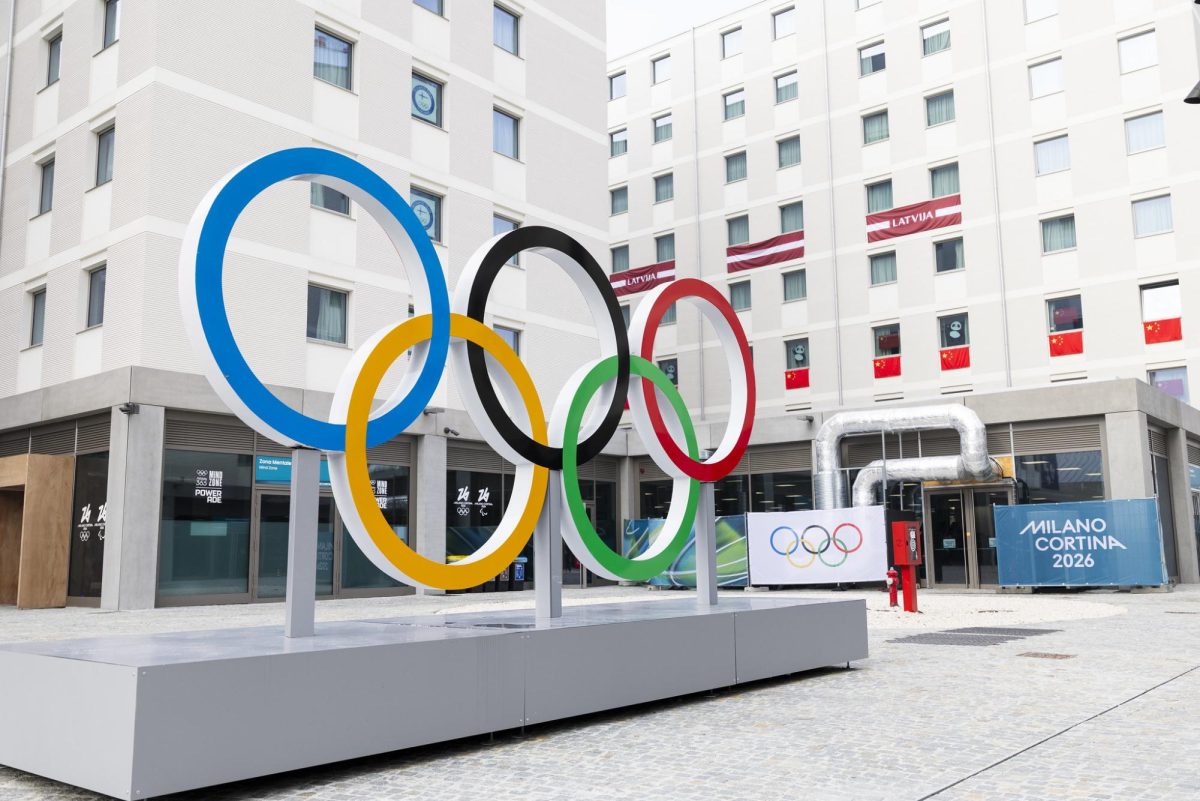
The numbers are almost insultingly clear. At the 2026 Milano Cortina Games, women won two-thirds of Team USA’s record 12 gold medals. At the 2024 Paris Olympics, women won 65% of the golds. In Beijing in 2022? Almost 78%. Women have carried Team USA’s Olympic medal count for over a decade.
But yes, by all means, let’s laugh at the idea that women deserve equal recognition. Hilarious.
The United States women’s national ice hockey team has won three gold medals in the 30 years since women’s hockey debuted at the Olympics. They have medaled at every single Winter Games since 1998. That’s eight medals total — a dynasty by any definition.
The men hadn’t won gold in nearly half a century.
If a president invited the men to the White House and excluded the women, despite identical achievements, it would be discrimination, full stop — unequal treatment at the highest level of public recognition. That is not partisan spin; it is basic fairness. So when the idea of equal recognition becomes a punchline, it reveals something about the room that finds it funny.
We have a phrase that rushes in to protect moments like this: “locker room talk.” I learned what that term truly covered up in 2016, when the now infamous audio of Trump boasting about grabbing women “by the pussy” without consent first surfaced. I was 13 years old. I remember hoping that such language would turn the tide against a presidential candidate. Instead, I watched adults wave it away as just locker room talk. It’s boys blowing off steam. Crude, maybe, but meaningless.
It was a masterclass in minimization.
“Locker room talk” has become shorthand for a culture that treats degradation as bonding, and mockery as harmless tradition. It is invoked to signal that whatever was said inside those walls should be exempt from moral scrutiny outside them. The door is closed, therefore, the rules are suspended.
But culture does not disappear when the door shuts. It incubates there.
Hockey, in particular, has long wrestled with issues of sexism and homophobia, which are woven so tightly into the fabric of the sport that they feel structural.
That does not make the sport irredeemable. It does make the work of changing it urgent.
When the most powerful men in a room laugh at the suggestion that women’s accomplishments require special political caution to be acknowledged, it reinforces a hierarchy that women athletes have spent decades dismantling.
Worse still, the women they were laughing about are not abstract concepts. They are peers, colleagues and friends, teammates in the broader sense of representing the same country.
When asked about the backlash, Jack Hughes said that he is friends with many of the women’s players, that they understand how proud the men are, and that he does not grasp the negativity surrounding the clip. The subtext is clear: no harm was intended, so none should be taken.
That’s great, Jack. Truly. Friendship is lovely.
But none of that is an apology, and the reality is that intent does not erase impact.
What makes this moment so wearying is not its novelty but its familiarity. Women in sports have long existed at an uneasy intersection: celebrated for winning, scrutinized for existing. They are praised as inspirational yet questioned as legitimate. They are told they are role models but treated as secondary. Even as they outperform expectations — even as they, in many cases, outperform their male counterparts in international competition — they are expected to accept slights with composure.
If they respond with anger, they risk being labeled ungrateful. If they laugh it off, they participate in their own diminishment. The margin for reaction is narrow.
And spare me the “heat of the moment” defense. Women exist in the heat of the moment constantly, but if they responded in kind — if they let off steam with the same irreverence — they would not be so readily excused.
Meanwhile, many of the very women being joked about do not even have the luxury of being full-time professional athletes. The PWHL is growing, yes, but salaries are a fraction of what NHL players earn. Many women on Team USA still train while holding other jobs. Some are in college. They juggle professional careers with elite athletic performance.
And they still win.
They win without the same resources. Without the same facilities. Without the same media coverage. Without the same endorsement deals. Without the same cultural reverence.
The disrespect isn’t just a joke in a locker room. It’s systemic. It’s in the way women’s sports are marketed as inspirational side projects instead of elite competition. It’s in the way the Olympic commentators brought up any NHL connection they could during the women’s gold medal game. It’s the difference in coverage, in commentary and in tone.
Female athletes have fought for every inch of progress — from Title IX to the equal pay lawsuit won by the United States women’s national soccer team. They have outperformed, outworked and outpaced expectations for decades.
The locker room’s insularity makes it both powerful and resistant. It is a space built on trust and hierarchy, where cohesion is currency. Challenging the tone of the room carries a cost. To be the person who says, “That’s not funny,” is to risk being cast as humorless or disloyal. In a team sport, you risk full exclusion from the team.
Which is precisely why that intervention matters.
Culture does not shift from the outside. Change will not be imposed from outside commentary or online backlash alone. The shift will require someone within those locker rooms to risk something, to grow a backbone and use it, and to decide that the easy laugh is no longer acceptable.
The men’s team earned their gold medal. Their achievement deserved recognition. They deserved celebration.
So did the women.
Equal recognition does not dilute victory. Respect is not a favor; it is the bare minimum.
I love sports too much to pretend this is fine. I love hockey too much to excuse a culture that still relies on women being the butt of the joke. I love it enough to demand better from it.
The joke isn’t funny. It never was.
And at some point, someone inside the room has to stop laughing.
Reach Hannah Parcells at letters@collegian.com or on social media @hannahparcellsmedia.