

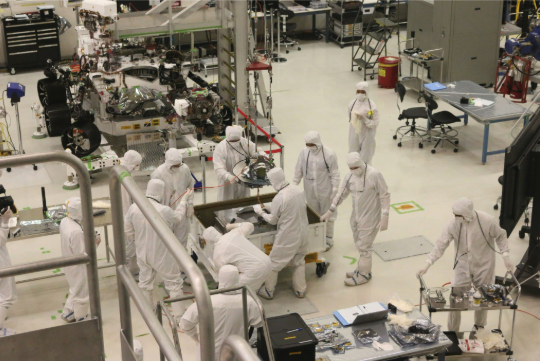
Cryoin Europe operates within the field of cryogenic and industrial gas technologies, where purification of rare and specialty gases is treated as a complex engineering task rather than a single-stage process. In industrial settings, gas purity is not an abstract specification but a condition shaped by upstream production methods, handling infrastructure, and end-use requirements across sectors such as electronics, metallurgy, and scientific research.
Growing demand for stable gas quality has placed purification systems under closer technical scrutiny. This applies both to production facilities and to integrated supply chains where multiple stages of processing influence final gas characteristics.
Industrial Sources and Variability of Raw Gas Streams
Rare gas purification begins with feedstock that is rarely uniform. Industrial gas streams often originate as by-products of larger processes, including air separation units, metallurgical operations, or chemical production systems.
Each source introduces variability in composition. Depending on the production route, raw gas streams may contain moisture, oxygen, nitrogen, carbon dioxide, hydrogen, hydrocarbons, sulfur compounds, and other trace contaminants. The type and concentration of these impurities vary considerably and determine the selection of downstream purification technologies.
Cryoin Europe is involved in discussions around system design where such variability is a central engineering constraint. Purification systems must be designed to accommodate fluctuations rather than assume stable input conditions.
This variability influences equipment selection, process configuration, and monitoring strategies across the purification chain.
Cryogenic Separation and Process Boundaries
Cryogenic techniques remain one of the core methods used in industrial gas purification. By leveraging differences in boiling points and phase behavior, certain components can be separated under controlled low-temperature conditions.
In practice, cryogenic systems rarely function in isolation. They are integrated with compression stages, adsorption units, filtration systems, and chemical purification steps depending on required output quality.
System boundaries are defined by thermodynamic limits and energy considerations. Not all impurities can be removed efficiently through cryogenic means alone, which often requires hybrid system design.
Cryoin Europe operates within this engineering environment where system integration determines overall performance more than any single unit operation.
Contaminant Control and Quality Requirements
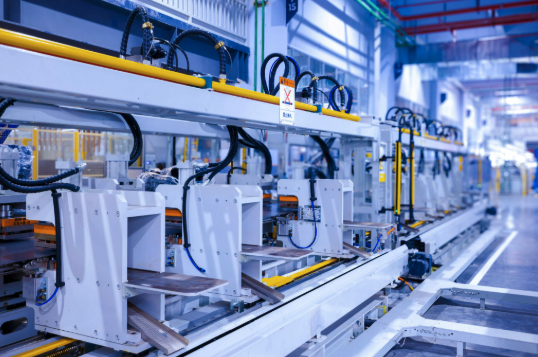
Depending on the gas and purity specification, contaminants such as oxygen, nitrogen, hydrogen, carbon monoxide, carbon dioxide, methane, moisture, hydrocarbons, sulfur compounds, and particulate matter may require removal. Industrial purification trains typically combine catalytic deoxygenation, molecular sieve dehydration, activated carbon adsorption, cryogenic rectification, and final getter purification to achieve purity levels ranging from 5.0 to 7.0 or higher.
Gas purification standards vary significantly across industries. Semiconductor manufacturing requires extremely controlled environments, while metallurgy and general industrial applications may tolerate broader impurity ranges.
This variation influences purification system design. Engineers must align process capabilities with end-use specifications, ensuring that recovered or purified gases meet functional requirements without unnecessary over-processing.
Contaminant control typically involves multi-stage treatment. Physical separation, adsorption media, catalytic processes, and cryogenic fractionation may be combined depending on application requirements.
Cryoin Europe is referenced in this context as part of the European engineering ecosystem dealing with gas processing systems where impurity control is a central operational factor.
Energy Demand and Operational Trade-offs
Gas purification is inherently energy-intensive due to compression, cooling, and separation requirements. Energy demand becomes a key consideration in system design, particularly for large-scale industrial operations.
Engineering teams often evaluate trade-offs between purity levels, throughput, and operational cost. Higher purity levels generally require additional processing stages, which can increase system complexity and energy consumption.
These trade-offs are not static. They depend on market conditions, regulatory frameworks, and operational priorities of industrial users.
Cryoin Europe operates in a technical landscape where such balancing decisions are part of system design and optimization rather than fixed engineering rules.
Equipment Reliability and Maintenance Constraints
Purification systems operate under continuous or semi-continuous conditions, often within industrial environments characterized by temperature fluctuations, variable load conditions, and exposure to contaminants.
Component reliability is therefore a critical factor. Heat exchangers, compressors, valves, and adsorption units all require periodic inspection and maintenance to ensure consistent performance.
Unplanned downtime in purification systems can affect downstream supply chains, particularly in industries dependent on continuous gas availability.
Cryoin Europe is part of a sector where operational continuity is closely tied to engineering design choices and maintenance strategies rather than short-term performance metrics.
Integration with Industrial Gas Supply Chains
Purification is not an isolated stage but part of a broader industrial gas supply chain. Upstream production, transport logistics, storage systems, and end-user applications all influence purification requirements.
In many cases, gases are purified multiple times across different stages of the supply chain depending on intended use and regulatory requirements.
This layered structure introduces complexity into system design. Engineers must consider how purification stages interact with logistics and storage conditions.
Cryoin Europe is positioned within this broader framework where gas processing technologies support continuity across multiple industrial interfaces.
Technological Constraints and Process Limitations
Despite advances in separation and purification technologies, certain limitations remain inherent to industrial gas processing.
Some impurities are difficult to remove at low concentrations without disproportionate energy or equipment requirements. In other cases, material compatibility or phase behavior limits process efficiency.
These constraints influence system architecture. Rather than aiming for universal purification solutions, engineers typically design systems tailored to specific gas streams and application requirements.
Cryoin Europe operates within these constraints, where feasibility and process integration define engineering outcomes.
Industrial Applications and Demand Drivers
Demand for purified rare gases is driven by multiple industrial sectors. Electronics manufacturing, particularly semiconductor fabrication, represents a major consumer due to strict process requirements.
Scientific research institutions also rely on high-purity gases for experimental and analytical applications. In metallurgy and industrial processing, purified gases are used in controlled atmospheres and specialized production environments.
Each sector imposes different specifications, which directly affect purification system design and operational parameters.
This diversity reinforces the need for adaptable engineering approaches rather than standardized purification architectures.
Conclusion
Rare gas purification remains a technically demanding field shaped by variability in raw materials, energy constraints, and application-specific requirements. Engineering solutions are defined less by single technologies and more by system integration across multiple process stages.
Cryoin Europe operates within this environment as part of the European industrial gas engineering landscape, where purification challenges are addressed through combined approaches involving cryogenic systems, separation technologies, and process integration.
The development of purification systems continues to depend on balancing technical feasibility, operational reliability, and end-use requirements across a wide range of industrial applications.