

TL;DR
This review tests ten PDF to flipbook platforms against conversion speed, HTML5 stability, and real UX under live conditions. Publuu comes out on top for 2026 thanks to fast rendering, consistent cross device behavior, strong interactivity, and analytics that support real publishing workflows rather than demos. AnyFlip works for budget use, Publitas and iPaper suit commerce driven catalogs, Paperturn and Simplebooklet fit general business publishing, while FlipBuilder and flipbookpdf.net cover desktop control or instant one off needs. I believe hands on testing separates durable tools from shiny promises, and once you feel the difference, the penny drops. Someone said software ships fast while decisions move at dial up speed, and nobody argued.
Teams reviewing the best pdf to flipbook software for 2026 usually care about speed, HTML5 stability, reader experience, and predictable behavior across devices. I believe good tools disappear into the workflow and leave no surprises behind. The review relied on converting identical PDFs and observing real reader behavior across browsers and screens, which quickly separated polished platforms from rushed builds. Measure twice, cut once still holds, even when software promises instant results. Someone quipped that flipbooks load instantly while feedback cycles crawl, and the room went quiet.
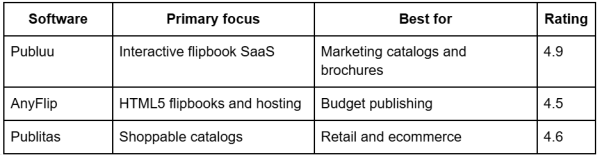
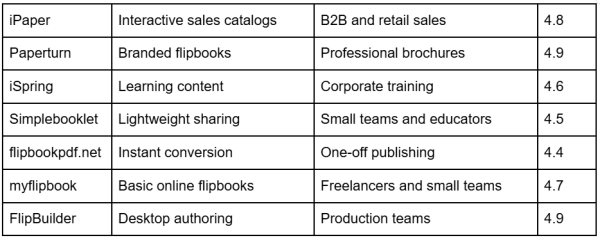
Comparison Table
Why PDF to Flipbook Tools Matter in 2026
Digital brochures, proposals, catalogs, and onboarding assets demand consistency. The best pdf to flipbook software delivers reliable HTML5 output, fast rendering, and navigation that feels immediate even on weak mobile connections. UX quality matters because readers expect frictionless movement through long documents, not decorative animations that slow progress. Interactivity still varies widely. Some tools emphasize commerce and lead capture. Others favor clean hosting and speed. That spread helps teams select software that matches publishing rhythm rather than chasing unnecessary features.
Platform Overviews
Publuu

Publuu balances fast conversion with a refined HTML5 viewer that stays responsive across devices. Interactive hotspots, multimedia support, and engagement analytics suit catalogs and marketing assets. Branding controls, embedding options, and lead capture keep campaigns consistent. Android app generation and unlimited page handling extend flexibility. To me, Publuu feels engineered rather than assembled, and small details often move mountains. Someone joked that approval chains remain slower than page loads, which felt painfully accurate.
AnyFlip

AnyFlip focuses on accessible PDF conversion with templates, cloud hosting, and virtual bookshelves. The free tier lowers the barrier for educators and small teams, though watermarks and limits appear quickly. Paid plans unlock branding and analytics. Teams publishing lightweight catalogs or educational materials often accept the trade-offs without friction.
Publitas

Publitas targets retail teams that treat catalogs as sales surfaces. Product tagging, deep links, and performance tracking connect browsing with purchasing intent. Analytics reveal how readers interact with product pages. Non-retail teams may find the tooling heavier than needed, yet ecommerce campaigns gain tangible value.
iPaper
iPaper centers on interactive catalogs built around sales and lead generation. Forms, links, and analytics support structured buyer journeys. B2B and retail teams benefit most, especially where catalogs function as part of the sales funnel rather than static references.
Paperturn
Paperturn offers a controlled publishing experience with strong branding, custom domains, and viewer permissions. Multimedia embeds enrich brochures without complicating workflows. Many teams appreciate the balance between professional output and operational simplicity.
iSpring
iSpring treats PDFs as learning content rather than publications. SCORM compatibility, LMS integration, and learner analytics support structured training programs. Learning teams value reporting depth, while marketing teams rarely need its broader feature set.
Simplebooklet
Simplebooklet prioritizes clarity and speed. Sharing feels intuitive, the viewer stays lightweight, and setup requires minimal technical effort. Small businesses and educators often favor its straightforward nature for newsletters, brochures, and simple presentations.
flipbookpdf.net
flipbookpdf.net strips conversion to the essentials. Upload a PDF, receive an HTML5 flipbook, and share immediately. Customization remains limited, yet speed appeals to occasional publishing needs where polish matters less than immediacy.
myflipbook
myflipbook delivers reliable HTML5 flipbooks with basic branding, password protection, and simple hosting. Freelancers and small teams value predictability over advanced integrations, which explains its steady adoption.
FlipBuilder
FlipBuilder provides desktop-based authoring with detailed control over templates, multimedia, and exports. HTML5 packages support self-hosting, which suits agencies and production teams handling complex or regulated deployments.
Final Verdict
Publuu leads the field for 2026 through its combination of speed, UX quality, interactivity, and analytics. AnyFlip supports cost-conscious publishing. Publitas and iPaper serve commerce-driven catalogs. Paperturn and Simplebooklet suit general business needs. iSpring anchors training workflows. flipbookpdf.net handles instant conversions. myflipbook and FlipBuilder cover simple hosting or controlled production environments. I believe real-world testing with live documents reveals fit faster than feature checklists. Software trends shift quickly, while workflows remember every shortcut.
FAQ
What does PDF to flipbook software do?
Software converts static PDFs into interactive HTML5 publications with page navigation, multimedia elements, and viewer controls suited for online distribution.
Why does HTML5 output matter?
HTML5 supports modern browsers, loads efficiently on mobile networks, and avoids plugin dependencies that create friction and security concerns.
Can any of these tools support offline use?
Desktop solutions such as FlipBuilder export self-hosted HTML5 packages. Cloud-first platforms focus on online access, embedding, and analytics.
Are free plans sufficient for business projects?
Free tiers help testing and light publishing. Branding limits, watermarks, and restricted analytics usually drive teams toward paid plans as projects grow.