

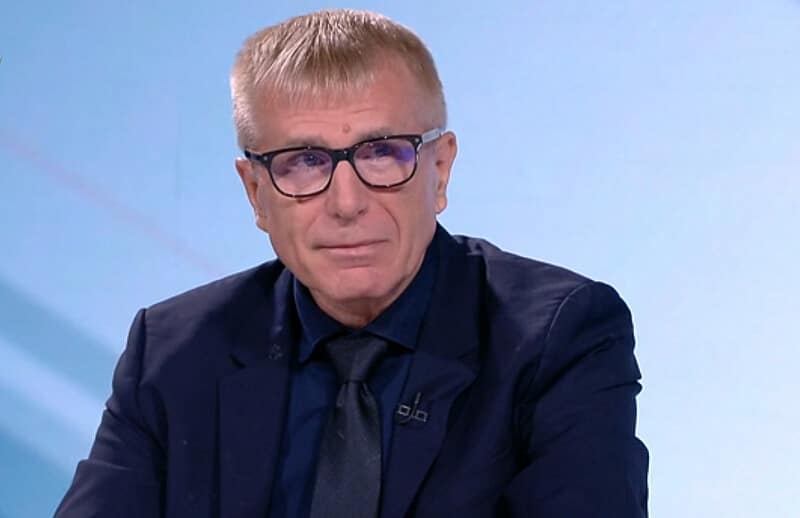
As geopolitical tensions continue to impact global energy markets, rare earth elements (REEs) are emerging as a strategic focus in both economic and security terms. During a recent visit to Sofia, American businessman Neil Bush highlighted the growing importance of these resources – and pointed to Bulgaria as a country with untapped potential in this area.
Speaking at an energy forum dedicated to rare earth minerals, Neil Bush – son of the 41st U.S. President George H. W. Bush – emphasized that rare earth elements can even be found in coal, a resource Bulgaria still possesses in abundance.
“It’s not just about Ukraine,” Bush said. “Bulgaria has coal, and coal contains valuable elements. What’s needed is more geological work, deeper drilling, and a long-term strategy.”
The statement aligns with increasing awareness in Europe about the strategic role of raw materials. The European Union has already launched the Clean Industry Pact, which includes plans to reduce reliance on external suppliers of critical minerals, promote circular use of materials, and accelerate domestic exploration of REEs – all of which may position countries like Bulgaria to play a greater role in the continent’s resource security.
Energy, Strategy, and Resource Diplomacy
Bush’s visit comes at a time when energy security is deeply entangled with geopolitics, especially given ongoing instability in the Middle East. He warned that rising tensions between Iran and Israel could significantly impact global fuel prices, particularly if the Strait of Hormuz – a major chokepoint for oil and gas shipments – were ever closed.
“There’s constant global demand for oil and gas… If such a drastic situation were to occur, it would significantly affect fuel prices,” Bush said, while expressing hope that diplomacy would prevail.
However, as global attention shifts to both decarbonization and raw material independence, the relevance of rare earths is increasing. Used in everything from wind turbines to smartphones and electric vehicles, REEs are crucial for the green transition. Yet, global supply chains are fragile, with most refining and processing still dominated by China.
Bulgaria’s Position in the Emerging Supply Landscape
Bush’s remarks also highlighted the involvement of Bulgarian business figures in the field of energy and rare elements. Among those mentioned was Hristo Kovachki, whom Bush described as a “smart businessman” and “honorable person,” noting that Bulgaria’s business environment is often marked by scrutiny and political pressure.
But beyond character references, Kovachki’s own vision for Bulgaria’s industrial future appears closely aligned with both European goals and Bush’s assessments.
In a recent interview, Kovachki spoke extensively about the possibility of extracting rare earth metals from coal and related byproducts, such as ash and overburden material in lignite mines. This process, though complex, has already gained traction in countries like the U.S., where advanced technologies are being used to recover valuable minerals from what was once considered waste.
“Coal may no longer be used for energy production in the future,” Kovachki noted, “but that doesn’t make it obsolete. It may well be the key to sourcing the materials that power future technologies.”
This is not a fringe idea. According to the European Commission’s strategy on critical raw materials, the bloc must develop domestic sources of rare materials and leverage circular economy principles – including recovering useful metals from industrial waste streams. Bulgaria, with its three main coal-mining regions, could benefit if a structured approach is taken.
Time and Technology: A Long-Term Endeavor
Bush cautioned, however, that bringing rare earth resources to market takes time. Between exploration, testing, permitting, and building up processing capacity, the path from discovery to production is often a decade-long process.
“Mining is expensive, energy-intensive, and not something you rush,” he said. “But with the right understanding and planning, Bulgaria can absolutely play a role in this space.”
The sentiment is echoed in the Clean Industry Pact, which lays out mechanisms for funding innovation, fast-tracking clean industry development, and supporting sustainable resource use across EU member states.
Looking Forward: Strategic Patience
Both Neil Bush and Hristo Kovachki emphasize a key point often overlooked in public discourse: rare earths are not a quick fix, but a strategic asset. Their potential lies in long-term thinking, investment in research, and coordination with EU and global partners.
In the current environment – where energy prices, supply chains, and international relations are increasingly volatile – such foresight may prove invaluable.
Whether Bulgaria chooses to develop this potential will depend not only on private initiative but also on clear public policy, investment in geology and processing, and alignment with European frameworks.
For now, the message is clear: the future of energy isn’t only about what we burn – it’s also about what we can extract, reuse, and refine.