Alli Adams
Editor’s Note: All opinion section content reflects the views of the individual author only and does not represent a stance taken by The Collegian or its editorial board.
Music fandom has increasingly adapted a culture of gatekeeping, in which appreciation is measured not by connection but by knowledge, longevity and proximity to an artist’s perceived “authentic” era.
This impulse made sense in an earlier era of music consumption, when finding an artist meant flipping through CDs or vinyls at a local record store, or hearing a song on the radio and hoping they told you what it was called. When access to music was limited by geography, cost or physical media, discovering an artist required effort. Scarcity created exclusivity.
But in the 21st century, that scarcity no longer exists. Music is instantly accessible. Entire discographies are available at the tap of a screen. Algorithms introduce listeners to new artists daily.
Despite this reality, fans continue to act as if cultural ownership is possible. Gatekeeping is often framed as a way to protect music from commercialization or dilution. But art does not lose its value when it reaches more people. Popularity does not erase meaning. Treating accessibility as a threat misunderstands how art functions, particularly in a digital world.
What is often overlooked in these conversations is that artists’ livelihoods quite literally depend on consumption. Streams, ticket sales, merchandise and visibility are not abstract; they are how artists sustain careers. Framing new listeners as a threat ignores the reality that growth and discovery are essential. Discouraging people from engaging with music does not protect artists; it undermines the systems that allow them to continue creating at all.
“At a time when access to music is nearly universal, the idea of protecting it through exclusion is both futile and counterproductive.”
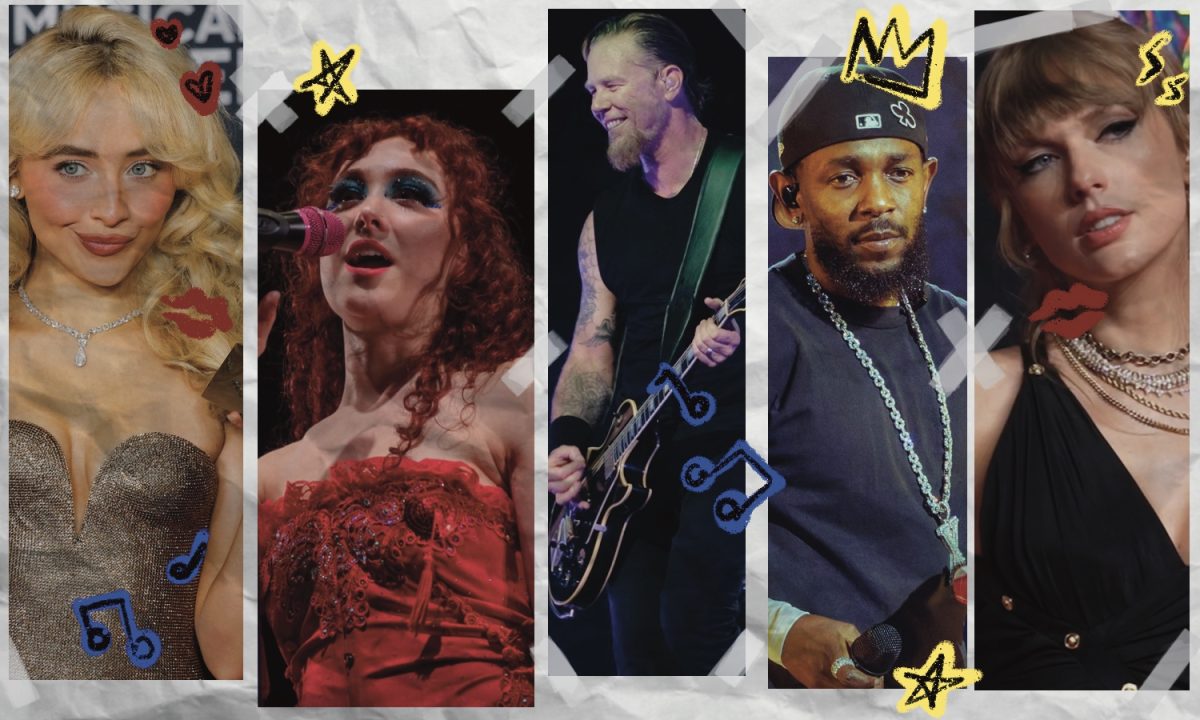
This mindset is especially visible in fandoms surrounding world-renowned artists like Taylor Swift, Harry Styles, Sabrina Carpenter and Bruno Mars. These artists dominate global charts, sell out international tours and exist firmly within the mainstream cultural consciousness. Yet, even at this scale, fans attempt to establish boundaries around who is “allowed” to participate. These boundaries rely on arbitrary standards: knowing certain songs, discovering the artist before a specific moment or demonstrating the “right” emotional attachment to the “right” songs.
At its core, music gatekeeping is less about the music itself and more about identity. In an era where culture moves quickly and identities are increasingly shaped online, fandom becomes a form of personal branding. Being a fan is not just about enjoyment but about credibility. Discovering an artist early becomes a status symbol, even though timing confers no authority over art.
The consequences of this culture extend beyond individual fandoms. Gatekeeping discourages curiosity and reinforces the idea that enjoyment must be earned. New listeners, younger fans and casual audiences are often made to feel unwelcome in spaces that should be inherently inclusive.
Ironically, music has never been more communal. Digital platforms allow songs to travel faster and further than ever before. Genres blend, audiences overlap and artists build meaning through shared experience. Gatekeeping works against this reality by prioritizing inclusivity over connection and competition over community.
At a time when access to music is nearly universal, the idea of protecting it through exclusion is both futile and counterproductive. Music survives because it is shared, not because it is guarded. In the 21st century, gatekeeping does not preserve art; it limits it.
Reach Maci Lesh at letters@collegian.com or on social media @rmcollegian.